
 0 items –
Numerous individuals struggle to keep their commercial refrigerator coordinated at their shops. At the point when you have a grocery store with significantly more individuals all through the commercial fridge and freezer, it tends to be exceptionally hard to look after association. It is essential to the strength of your shop that you have a proficient framework and consistently keeps up the association in the store.
There are numerous approaches to arrange the space in your commercial freezer or fridge. While some of how you place things will rely upon your stock and usage of things, there are numerous guidelines as indicated by wellbeing and safety codes to forestall cross defilement. Here are six general guidelines for kitchen association that you can use to adjust an arrangement inside your association.
1. Store Meats on the Least Retires
Continuously store your meat on the least retires of your machine. Keeping your meat on the low retires makes tidy up simpler on the off chance that you have a spill, however, more critically this practice forestalls conceivably dangerous cross tainting. On the off chance that some other food contacts any juices or marinade from the meat, you must instantly discard those things. On the off chance that you store meat on the higher racks, they are substantially more prone to dribble down and pollute the remainder of your food, which can eventually spread destructive microbes to your customers.
2. Leave Space Between Things
The cool air in your commercial fridge and freezer should have the option to circle. Even though the drive is to pack things in as well as possible to use all of the space productively, your fridge needs around three to six creeps of room between the dividers and the food items to get the best refrigeration. The dissemination of air in your commercial fridge forestalls problem areas and lopsided cooling and freezing.
3. Keep Food Off the Fridge Floor
To keep water or different foreign substances from saturating your food, it is significant that you store all food off of the floor, incorporating it while in the commercial refrigerator. While this is a wellbeing code prerequisite, few out of every odd individual in your kitchen might know about the particular codes that will push your eatery in difficulty. In the warmth of a rush of customers, it’s additionally simple to fail to remember this standard. Having satisfactory racking will forestall this issue. Ensure all your staff understands that this standard forestalls food defilement and irritation invasion in your commercial fridge. A note on the door is regularly enough to remind them.
4. Store Delicate Produce Away From Fans
The fans in commercial kitchen refrigeration and freezing units are very solid to empower course, yet this wind stream can harm a portion of your foods. Berries and new greens are defenceless against harm from these fans. In the freezer, putting away food near the fans builds its capability to get the freezer to consume. While you may have to completely use the space in your freezer, try to watch the names and use the things nearest to the fans rapidly.
5. FIFO or First In, First Out
Item timeframe of realistic usability and use-by dates are significant for keeping up the nature of your foods. Ensure that you use the first-in, first-out (ordinarily curtailed as FIFO) standard while putting together your storage units. When loading, place more current things in the rear of your fridge and freezer. On the off chance that date codes are little, compose the dates in greater numbers on the case before you store it, and make certain to put the things so the dates are clear. Make it simple for workers to see which items should be used. Continuously use open things before opening anything new. This is a proficient strategy that will wind up saving you a ton of cash.
6. Mark Everything
Name the racks. This may appear to be pointless, however, mix-ups can occur, so it’s good to have an update. Naming lets another person who isn’t as acquainted with your framework come in and discover things effectively, which can be useful when you have fresh recruits attempting to sort out the kitchen. Naming your racks makes it evident when something is strange or unavailable.
Ensure each worker realizes that anything that goes into the restaurant fridge has a mark. This name ought to incorporate both the day you made or got the item and the use-by date. Significantly, you realize when arranged foods, for example, chicken stock or puddings, were made. Have a standard about unlabeled food, so nobody neglects to mark things. Ensure you have pens and stickers for simple marking so this standard doesn’t burn through superfluous time in your kitchen.

Reasons Why Association Is Significant:
– Excellent food isn’t modest. Your storage plan keeps up the uprightness of all that you buy so it very well may be used and doesn’t go to squander.
– You dodge those feared wellbeing code infringement by following association guidelines. Inappropriately put away food is one explanation your eatery may be fined or even closed down.
– Using your space adequately builds the nature of the food.
– Association in your commercial kitchen makes a smooth activity. At the point when your staff isn’t sitting around idly searching for a particular food in a disorderly storage refrigerator, they can get back on the line snappier.
– Confusion in your fridge and freezer makes these units work more enthusiastically, which implies you’ll have to call for fixes all the more regularly when your food isn’t cooling fittingly.
– There is less requirement for cleanup when racks are coordinated. Food will have a spot and things won’t be had in any place it tantrums.
– Tidy up is simpler when racks are coordinated.
– Requesting and restocking is simpler when everything has a spot. You can rapidly observe things that you need and won’t be searching for additional cases somewhere else.

Association Pays Off
Do you need more space in your commercial fridge or freezer? Before requesting more units for more space, ensure that the racks in your present units are coordinated. Setting aside the effort to do this might be a task for your staff, and it surely will remove time from their normal obligations, yet it will set aside your cash over the long haul. On the off chance that you need additional assistance, realize that there are a lot of applications for kitchen association that you ought to think about using.
Monitor food waste and track the reasons you are discarding this food. If it’s rapidly going awful in the storage fridge or freezer, you ought to put resources into a better association for better use of the item. Try not to let an ineffectively coordinated fridge cost you cash that should be going somewhere else in your business. Customize your kitchen to your requirements. Various diverse refrigeration frameworks can be introduced to keep your food at ideal temperatures before it is cooked and served. Exploit various items that work in your commercial kitchen.
Show your staff the significance of restaurant fridge and freezer association in your kitchen. This is a significant establishment to have in your commercial kitchen, so you need to focus on it. Ensure everybody realizes how fundamental these principles are to your foundation. On the off chance that you have a genuine issue with representatives with unfortunate propensities, attempt to impact staff with an award for accomplishing their work accurately following seven days, a month, two months, etc so everybody has more motivations to focus on it in their presentation. You’ll see improvement faster and make brotherhood inside your business when everybody is pursuing similar goals.
Where To Place Your Commercial Refrigerators?
Commercial refrigeration space in markets is restricted, so every supermarket proprietor needs to painstakingly consider where their cooled displays are set. In case you’re updating a current market or building another one, here are a few hints on where to put the store’s open refrigerators. Or figure out what general region of your store a refrigerated display should be put in, consider the items that it will hold. For the motivations behind this overall arrangement, there are three general categories to consider:
– Produce
– Fundamentals
– Superfluous items
Fundamentals incorporate foods that the vast majority have in their kitchen, for example, milk, essential cheeses, spread, and eggs. Unnecessary items incorporate things like a lager, ice cream, and gourmet cheeses that individuals don’t generally have. All produce displays should be put close to the passageway of your store because new leafy foods are more outwardly engaging than containers of milk or tubs of ice cream. At the point when customers stroll in and see these displays, they’ll be welcomed with a variety of shadings and their early introduction will be one a wellbeing conscious one.
Fundamental things are customarily positioned along with the back mass of the store because this powers customers to stroll through the store to get their must-haves. As customers stroll past different items, they may see something that gets their attention and add it to their buyers. Trivial items can be placed in a high-traffic zone, for example, the focal point of your store or toward the finish of the line of display fridges with basic things. With an insignificant display in a spot that gets heaps of pedestrian activity, you’ll increment the number of additional items that individuals who weren’t anticipating purchasing these things will wind up buying.

Exploit Vertical Space
To benefit as much as possible from your store’s area, use display refrigerator cabinets that are about the tallness of an individual all through your store. Midriff high displays can’t hold so a lot, and they don’t put any items at eye level. Taller display chillers permit you to convey more items and spot top-selling ones where they’re generally obvious. In case you’re at present using midsection high displays and change to taller upright refrigerators, you’ll need less space for the displays. Keep the new displays in the most open territories, so customers can without much of a stretch get to them. The less-open regions can be used for more speciality items that individuals will explicitly search out.
For instance, accept that you’re gathering a back mass of fundamental displays. Put all your new displays in the focal point of the back divider so individuals can without much of a stretch find them. Closer to the corners is a good spot for mass things that require more space and that fewer customers search out.
Put Lager and Milk Displays Contiguous Restocking Zones
While not essential, the drinks fridge holding brew and milk should be set as near your store’s chilled restocking territory as could be expected under the circumstances. The ideal spot is neighbouring the restocking territory, so you can get a display that opens from the back for basic topping off. By putting these coolers close to your store’s restocking zone, you’ll diminish how far workers need to convey instances of brew and gallons of milk when they top off displays. This is particularly significant with lager and milk since brew cases and milk gallons are a portion of the heavier things that markets convey. Both a 12-pack of brew and a gallon of milk weigh over 8 pounds.
For what reason don’t market fridges have doors?
In numerous shops, cold cabinets work without doors. Out of the blue at all, a tremendous measure of energy is squandered each day to cool the warm air continually entering shops. Just envision leaving the door of your display fridge or display freezer open every minute of every day, and how much force that will use? The circumstance is the same for stores.
So for what reason are retailers doing this? The basic answer could be reduced to not mindful, another explanation could be the suspicion that glass doors may disturb deals. Nonetheless, contemplates completed on the last have discovered the inverse effect. Regardless, introducing doors will no uncertainty bring about more happiness with the shopping experience as temperatures would not drop around fridge/freezer items. Albeit a couple of markets have ventured up and introduced doors on their fridges and freezers, most are still without.
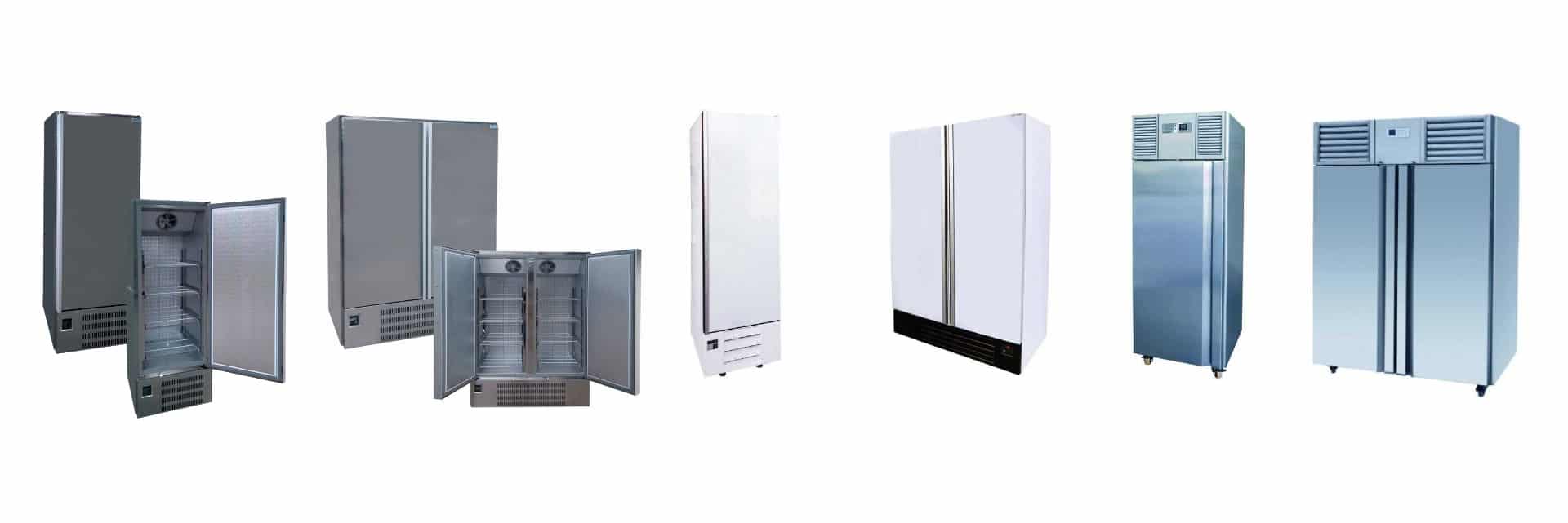
Technical commercial fridges subtleties
The progression to introduce doors on grocery store fridges and freezers is an easy decision. Retailers will profit by lower energy charges, a more atmosphere conscious picture, and at last, more joyful customers. It’s a mutual benefit for everybody, particularly for the climate. Because of environmental change, we basically can’t stand to be so imprudent with energy anymore.
This issue has been on the Commission radar since 2006, when they dispatched a preliminary report on commercial refrigerators and freezers inside the Ecodesign strategy system, with the intent to submit them to energy execution prerequisites. The report clarified proposals and affirmed the considerable energy saving potential in question in Europe, adding up to around 30 TWh of power for every year by 2020. At the end of the day, measures, for example, introducing doors in-store open fridges and freezers can save as much as the absolute private power utilization of Poland and is worth € 3 billion yearly.
Their report confronted reaction from producers who set out to challenge the report discoveries. The Commission reacted by selecting extra specialists to affirm/update the analysis. Progressive meetings were held, however with no unmistakable results. The document was in the end placed aside momentarily.
Commercial fridge upgrades over time
A couple of years after the fact, in 2014, the Commission returned with another arrangement and assembled another discussion meeting. Since market and technology information immediately become obsolete, a refreshed examination must be appointed one more time. The discoveries affirmed potential yearly power investment funds of about 18TWh and up to 58TWh by 2030. This is sufficient to counterbalance the creation of just about 25 medium-size coal power plants. This would be accomplished by presenting minimum execution prerequisites under the Ecodesign system and an Energy Mark to urge purchasers to coordinate the energy sway in their buying choices.
Which carries us to where we are currently: stagnation. From the absence of inspiration to staff changes, the Commission has indeed taken out this subject from its need records, and there is no sign that this will change at any point soon. Meanwhile, open general store cabinets keep on squandering energy for a long time without any justifiable cause. Strategy creators need to take care of this, and they need to do it now. Does it truly take over 10 years to put a door on a shop fridge?