
 0 items –
Butcher shops are a great way to provide fresh meat and poultry to customers. The market is always changing, so it’s important for butcher shop owners to be aware of the latest trends in the industry. Butcher shops are a staple in any small town. They provide the community with fresh, high-quality meat that is responsibly sourced and processed to ensure its safety.
Butchers are responsible for the selection of which animals meet specific health, quality, and safety standards. To do this, they must be well-educated in areas such as food safety, animal welfare, and even cooking for these different types of meats. Butchers are also responsible for packaging meat products, which may include vacuum sealing or freezing certain cuts to ensure optimum freshness.
The butcher industry has been in existence for centuries and will likely always be a staple of society. Butchers are a critical part of a community, selling meat to restaurants and grocery stores.
Butchers make a living off the animals that society deems most valuable, such as cows and pigs. Butchers can make a good living, but they must work hard to make sure the business is successful.
To run a successful butcher’s business, it’s important to understand the basics of the meat industry. This includes knowing how to cut meat, prepping meat for display, and being able to sell meat while providing customers with accurate information about the cuts they are buying. It can also be helpful to have a general understanding of animal physiology so that you know how different cuts of meat should look.

What is a Butcher Shop?
Butcher shops are retail stores that sell meat and other animal products. They provide a variety of meats and other animal products for consumption.
Butcher shops also provide other services such as cutting, wrapping, and packaging meat for customers. They can also help customers with cooking instructions and recipes. Butcher shops may also offer food items such as cheese, eggs, bread, and vegetables to compliment the meats they offer.
A butcher shop is a place where people can get their meat processed or cut up into smaller pieces by the butcher themselves or request it to be done for them by the butcher shop employees.
Butchering Process
The butcher can be a person who slaughters animals, or a person who sells meat from those animals. The term includes the people who operate slaughterhouses and meatpacking plants, as well as people who work in shops for the retail sales of the meat. In common usage, it includes those who produce processed or prepared cuts of beef, lamb, pork, and other animal meats.
Butchers traditionally cut the meat by hand with a knife. They are known for their speed and efficiency, which is why they are common in restaurants in metropolitan areas. However, a more recently machine known as a band saw has been used to cut through the bones of animals that are too large to be butchered by hand. This machine is used so that humans can more easily butcher animals for meat.
Once the meat has been cooked and cooled, it can either be eaten as a meal or used for other purposes. Such as, making sausages, salami, beef jerky or ham.

Tips for Running a Successful Butcher Business
1) Location matters: This means that you should check the location of your market or grocery store to see if there are any competitors in the area before establishing your business.
2) Know your market: It is important to know what you want to sell before opening your business. If you want to sell beef, then it is important that you know the different cuts of beef and what they are used for so that you can offer a variety of products.
3) Setting up your Butchers Shop: You will need a space where people can come in and buy things.
4) Promote your Business: Promoting your business is an important aspect in order to run a successful butcher shop.
Read also about:
- How to Start a Grocery Store
- How to store fruits and vegetables in a grocery store
- 10 Ways to Improve Supermarket Food Sales
- How to Maintain the Food Fresh in a Store
- How to Organise your Commercial Fridge in the store
- Essential Ideas for Butcher Shop Owners
- How to Increase your Sales with a Commercial Fridge
Choose the Location for your Butchers Store
The location of the butcher’s store is a major consideration. In order to make a profitable business, it is necessary to get a good location for your butcher’s store. The general rule is that the butcher should be near the market or near the residential area.
In order to find out whether or not a particular site will be suitable for a butcher’s shop, you need to consider the following points:
1) The place should have easy access from all directions and should be large enough for parking of vehicles and loading of goods. It should also have enough space for storage and display of goods.
2) The place should also have sufficient space for storage and display of goods, including perishable items such as meat, fish, poultry etc, which require refrigeration.
Analyze the Butchers Market
The butcher market is a competitive market that is regulated by the government. The government sets the prices for meat and other items. They also set the quality of meat, which determines how much consumers are willing to pay.
The competition in this industry is high because there are many players in the industry who are constantly trying to outdo one another. Consumers have a lot of choices when it comes to where they want to buy their meat, so they can easily switch suppliers if they find that their current supplier is not meeting their needs or expectations.
It is important to take a look at the prices of the butchers’ competitors. This will give insight on how to get a competitive edge. The butchers’ competitors’ prices should be compared for things such as:
- Price per pound
- What cuts of meat are offered
- Price per unit
- Availability of product
The butchers’ competitor prices can be determined by finding and comparing them online or by going to the store.
Setting Up your Butcher Shop
Butcher shops have been around since medieval times and have always been there as a place where people can find fresh meat. In some countries, butchers are still an important part of society as they provide people with fresh food that they cannot get elsewhere.
In order to start a butcher shop, you need a few essential things. First, you need a commercial refrigerator or freezer to store the meat. Second, you need a cutting table for cutting the meat and thirdly, you need knives for cutting the meat.
Another important thing to consider when setting up a butcher shop is what tools you need.
If you are just starting out, it is best to start with the basics. You will need a meat saw for cutting meat and a meat cleaver for trimming fat and bone from your cuts of meat.
You will also need a table saw for cutting large pieces of raw wood into smaller pieces.
You should also have a variety of knives on hand at all times, including boning knives, carving knives, and paring knives.
It is also important to have some sort of chopping block or butcher block available in your shop so that you can cut your meats up before cooking them or serving them to customers.
Commercial Freezers
Commercial freezers are designed to have the ability to keep food cold for a long period of time without any interruption. Commercial butcher’s freezers are used in many types of environments. They can be found in butcher shops, restaurants, and grocery stores.
The meat freezer is an important fixture in a butcher shop. Its main purpose is to keep the meat fresh. The cold temperature of the deep freeze slows down bacterial growth. However, the undercounter meat freezer can also be used for other purposes. For example, iced meat can be stored in the freezer to make it more presentable and appetizing.
Butcher shops often have freezers in which they store iced meat and other frozen products.

Commercial Refrigerators
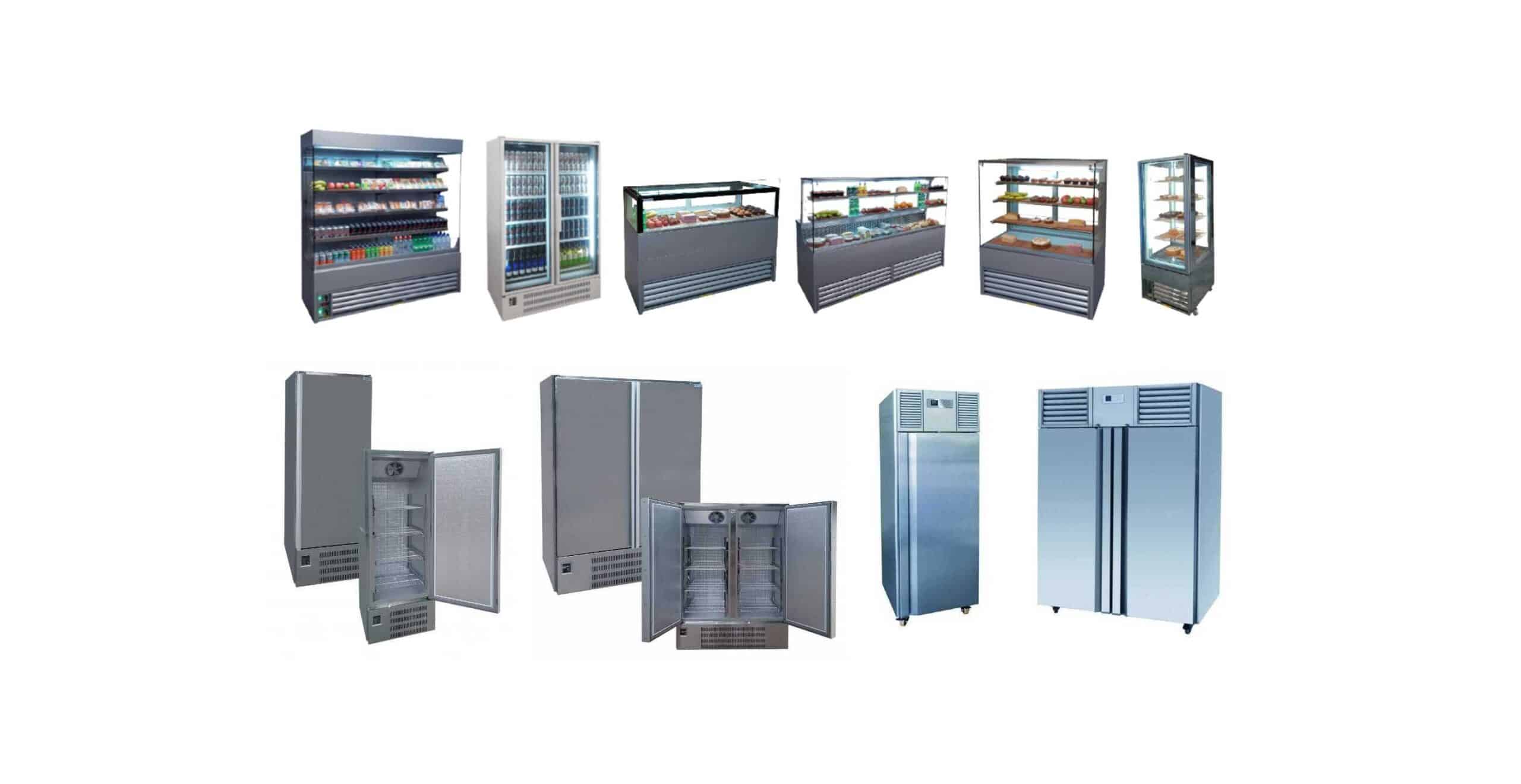
Commercial fridges are a must-have for any meat packaging and storage facility. These deli counter fridges can keep the temperature at a steady zero degrees which is perfect for the meat to be stored in. For anyone looking to start a butcher’s shop business, buying these fridges will provide all the cold storage necessary for cold and frozen goods.
Read also about:
- Commercial Fridges vs Domestic Refrigerators
- How Does a Fridge Work?
- Guide to Selecting the Right Fridge for Your Shop
- How to Maintain your Commercial Fridge
Fryers
A fryer is a large metal container in which food is cooked by the application of heat. Fryers are used in many different types of establishments, including restaurants, cafeterias, and butcher’s shops.
Fryers are often used in restaurants to cook french fries, chicken fingers, onion rings, and other fried foods. The food cooks through contact with hot oil in the fryer, thereby reducing the need for added fats and oils to produce the desired texture.
Meat slicers
A meat slicer is a machine that cuts meat into thin slices. They are often found in butcher shops where they are used to slice meat such as beef, turkey and ham to make it easier to cook and to make it look like a professional cut. Meat slicers can be motorized or manual and they can also be used for other meats such as cheese and vegetables.
Cutting boards
One of the more important pieces of equipment in a butcher’s shop is the cutting board. Cutting boards are used to cut meat on, and to store meat. They come in a variety of materials and can be made from plastic, rubber, or wood.
A butcher needs a cutting board to cut their meat. The type of cutting board a butcher uses is typically a wooden cutting board. Wooden cutting boards usually have a rounded edge so that the meat does not get caught or stuck. This edge is also called an “ogee” edge.

Safety glasses
Safety glasses are a must in a butcher’s shop to protect their eyes from any physical harm or injury. It is necessary to have safety glasses as a part of butchers’ clothing as it is a common risk to experience cuts and possible contamination from meat and other meat products.
Aprons
In a butcher’s shop, the aprons worn by the sales associates are usually white to prevent any blood from getting on them. They are usually made from a heavy material to withstand the weight of the meat, and usually have a front pocket that is designed to hold items like knives.
Butchers knifes
Butcher knives are a type of cutting utensil that can be found in a butcher’s shop and are used to cut meat. They come in many different shapes and sizes to deal with specific types of meat and can be used for other tasks such as slicing vegetables as well as cutting through tough items such as the spine of a fish.
Hammers
A butcher will have a variety of hammers for different purposes such as skinning, breaking down carcasses, and cutting bones.
The skinning hammer is the butcher’s hammer type that they use to remove all the fat and meat around the bones.
The meat mallet is the butcher’s hammer type that they use to break down their carcass into smaller pieces. These are typically made of metal or wood with a flat surface.
The fillet hammer is the butcher’s hammer type that they use to filet their meat. This tool is specially designed to cut through flesh and easily slice it up in a swift motion.
Anvils
Anvils are large, heavy pieces of iron or steel, used in blacksmithing to shape metal. They are forged on the anvil, which is a block of steel with a smooth surface. Butchers use them to chop meat, and they offer a high degree of safety and convenience.
Meat grinders
A meat grinder is a machine used to reduce the size of a product, typically meat. The grinder has a fixed blade that is pushed up against a plate with holes or slots of varying sizes.
People used grinders before the invention of the food processor. But today the meat grinders are mostly used by butchers and chefs alike in kitchens and restaurants, to prepare beef and pork for cooking.
Meat saw
A meat saw is a cutting tool that can be used to cut through bones and animal flesh. It is typically rectangular in shape with a blade fixed at the top of the frame. The blade is either drawn manually or drawn by a motor. The frame of the meat saw sits on two small wheels, which allows it to be pushed along the ground or across a table while cutting.
The butcher is skilled in the art of meat cutting and uses the meat saw to slice through large slabs of beef, poultry, or pork with ease.
Butcher Paper and Boxes for wrapping packages
Butcher paper is a type of paper that has a pattern of light and dark brown stripes. It is usually used to wrap meat or other food items. Boxes for wrapping packages are usually made from cardboard and can be either small or large depending on the size of the package to be wrapped.
Butcher paper is a type of paper that is commonly used in the butcher industry. Butcher paper has many practical uses such as wrapping meat, lining shelves and protecting surfaces from spills and stains. Many butchers use this type of paper to wrap packages and it can be bought in rolls or sheets.
Promote your Butcher Shop Business
The best way to promote a butcher shop business is to advertise its products on social media. Some ways of doing this are by posting pictures of the food that they sell on Facebook, Instagram, and other social media networks. Another way is to post recipes that include the meat that they are selling, and then use influencers to share them on social media.
If you want to promote your butcher shop, create a Google My Business page. This page is a great way for customers to find your business location, offers, website URL, photos, and more. It also helps potential customers find you on Google maps and can be linked to your website.
Conclusion
It is important to remember that most people are not experts in the meat cutting industry. However, if you are interested in getting started in the business, there are many resources available to help you learn about it. These three foundational ideas will help you get started with the butcher’s shop business. This niche has many potential applications in today’s modern market, all of which revolve around the idea of providing natural meat products for consumers.

Read more about:
How to Start a Takeaway Business
Top Commercial Fridges for Takeaway Shops
How To Comply With The Food Safety Rules In A Restaurant
Best practices for storing meat in a restaurant fridge