 0 items –
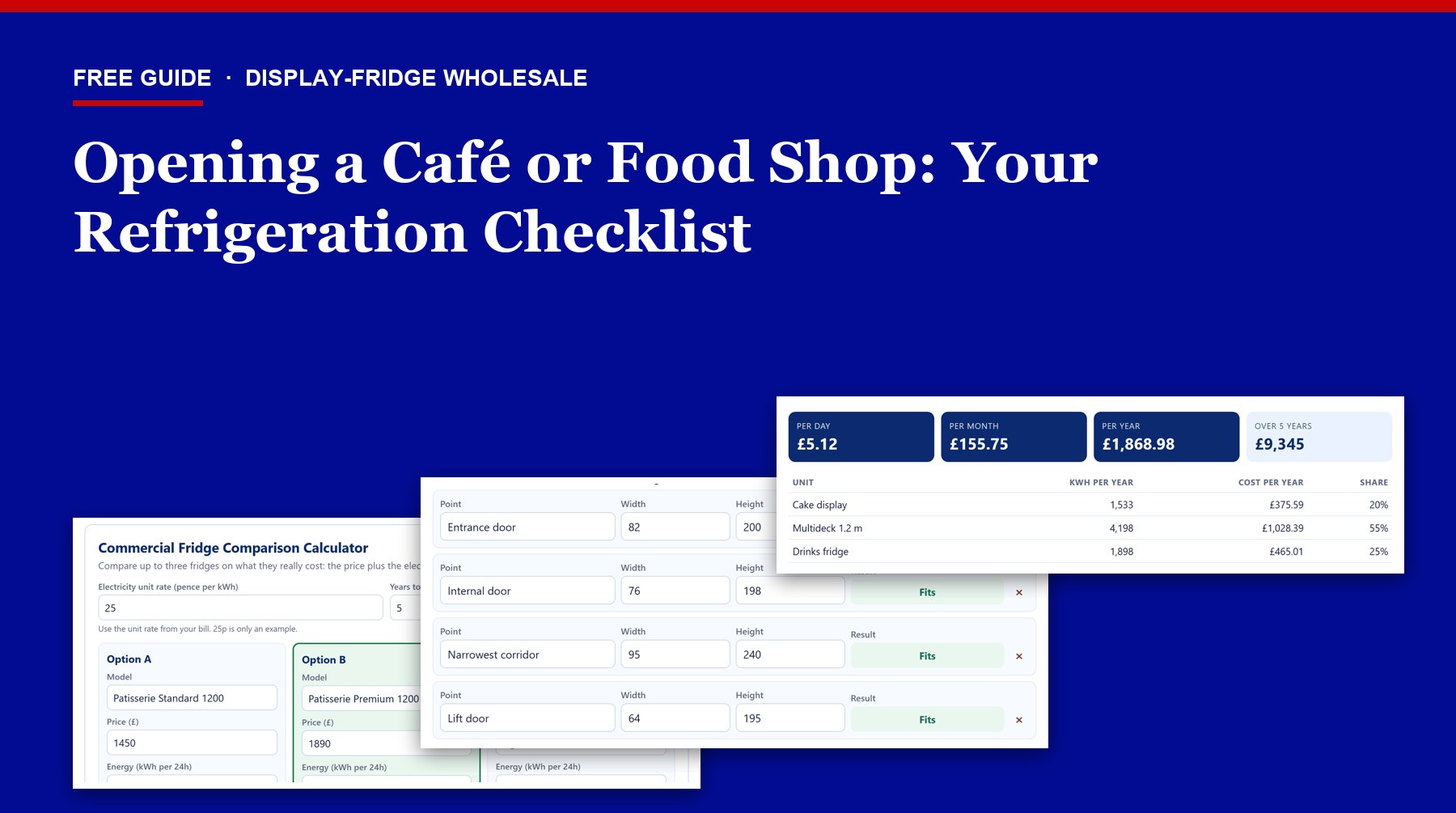
Refrigeration is one of the biggest purchases when you open a café, deli, bakery or food shop, and one of the hardest to change later. Choose a display fridge that is too small and you lose sales; choose one that cannot cope with a warm shop and it struggles all summer; order one that does not fit through the door and the delivery goes back. Most of these mistakes are avoidable with a little planning before you order.
This checklist takes you through the decisions in order: what you will store and sell, which types of fridge and freezer you need, whether the room and the route are suitable, and what each unit will cost to run. Each step links to a free tool or checklist that does the sums for you.
💡 Key takeaways
- Start with what you will sell and store, then choose the cabinet types: display, storage and freezer.
- Check the climate class: class 3 is tested up to 25°C and 60% humidity, class 4 up to 30°C and 55%.
- Measure every door, corridor and turn on the delivery route before you order.
- Compare price plus five years of electricity, not price alone.
- Set up temperature logs, a cleaning schedule and an equipment register from day one.
Step 1: Work out what you will store and sell
Before you look at a single fridge, list what will need to be kept cold and where. Separate it into three groups:
- Food on display that customers see and choose: cakes, sandwiches, salads, drinks, deli meats.
- Food in storage behind the scenes: ingredients, back-up stock, prepared food waiting for service.
- Frozen food, both for sale and for the kitchen.
Think about volume on your busiest day, not an average one. If you plan to sell hot food as well, add a heated display cabinet to the list: hot food on display must stay at 63°C or above. Our Commercial Fridge Storage Guide shows how raw and ready-to-eat food should be kept apart, which affects how many storage fridges you need.
Step 2: Choose the right types of fridge and freezer
Display fridges: where the sales happen
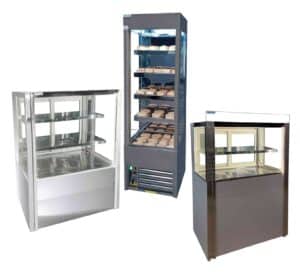
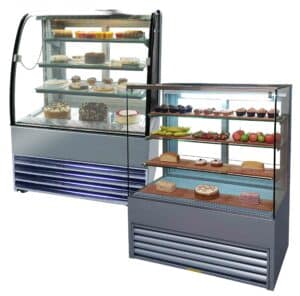
Cafés and cake shops usually start with a patisserie or cake display fridge, which shows cakes and pastries behind glass on several shelves. A countertop display fridge works where floor space is tight. For sandwiches, salads and drinks that customers pick up themselves, a grab and go fridge or an open multideck fridge keeps everything in reach and encourages impulse buys.
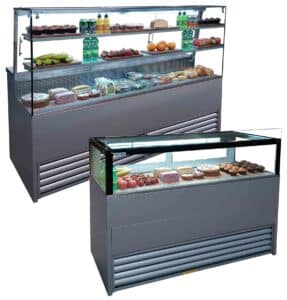
Delis, butchers and fishmongers serve over the counter, so a deli or serve over counter is the usual choice: a chilled display deck facing the customer with storage underneath for staff. Convenience stores and food shops rely on multidecks and glass door drinks fridges. Our comparison of open multidecks and glass door chillers explains the trade-off between easy access and energy use.
Storage fridges: behind the scenes
Every food business needs storage that customers never see. An upright storage fridge gives the most capacity for its floor space, while an under counter fridge keeps ingredients next to the prep area. Where possible, use separate fridges for raw and ready-to-eat food.
Freezers
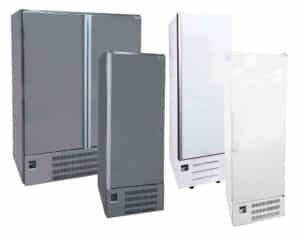
For frozen stock in the kitchen, choose an upright storage freezer or an under counter freezer. For frozen food on sale, such as ice cream, lollies or ready meals, a sliding glass lid chest freezer or a glass door display freezer lets customers see what you stock. Freezers should run at −18°C or colder.
Step 3: Check the room before you choose
Display fridges are tested to hold their temperature in a particular room climate. Climate class 3 means up to 25°C and 60% relative humidity; climate class 4 means up to 30°C and 55%. A unit rated for class 3 in a shop that reaches 30°C in summer will struggle. Measure your room on a hot day, near the windows and the coffee machine, and choose accordingly.
Leave space around each cabinet for ventilation, as the manufacturer specifies, and keep it away from ovens, radiators and direct sunlight. A fridge that cannot get rid of its heat works harder, costs more to run and fails sooner. Check that you have a suitable socket for each unit: many of our cabinets plug into a standard 13 A socket, and some larger ones need two.
Step 4: Make sure it will fit through the door
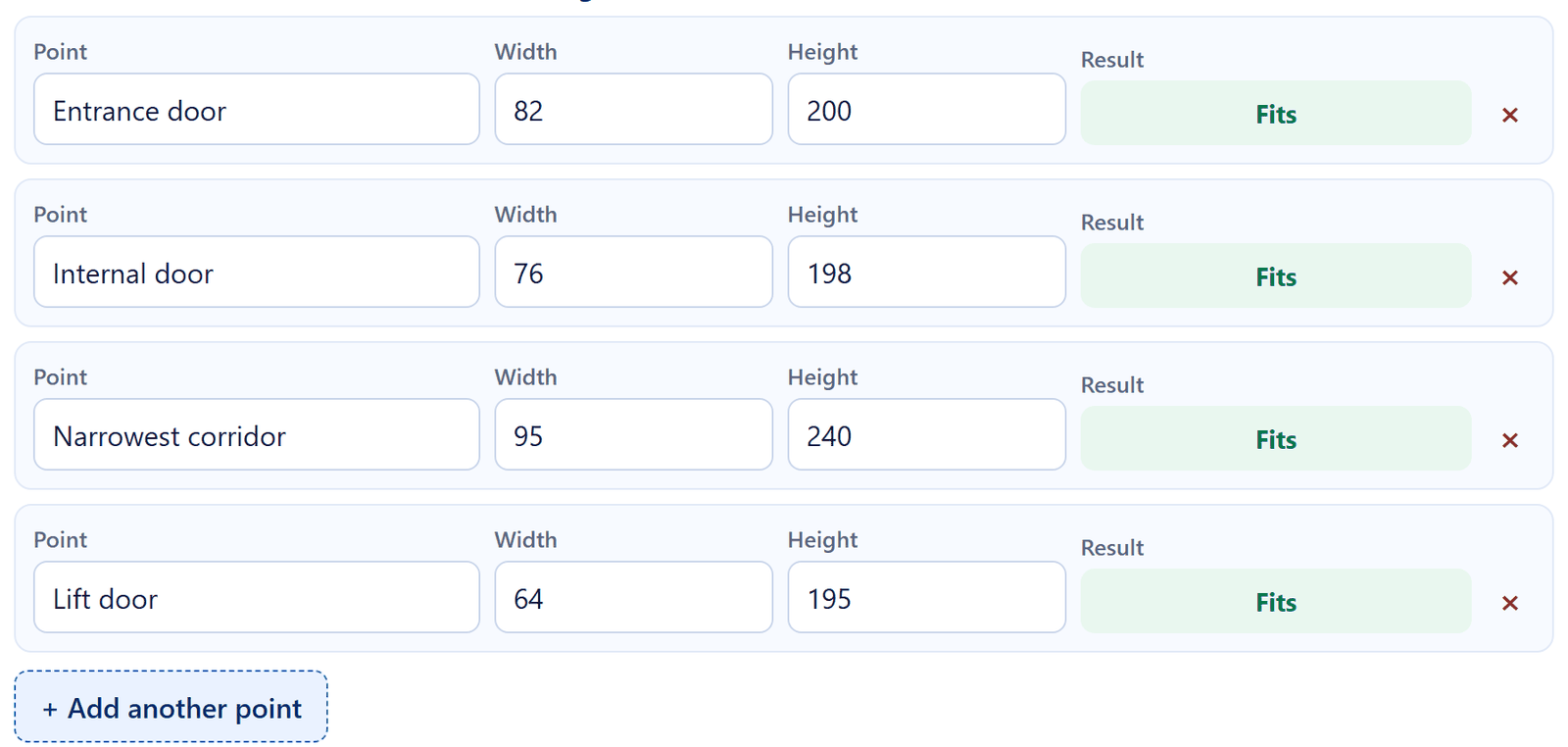
Most failed fridge deliveries have the same cause: a door, a staircase or a lift that nobody measured. A commercial fridge is often wider and taller than a domestic one, and it arrives in packaging that adds a few centimetres more. Measure the clear width and height of every door on the route at its narrowest point, every corridor and every turn, as well as the final position.
Plan the route from the kerb to the final position. Our shipping policy explains that cabinets are delivered to the front door of ground floor locations, and that the driver may help move a cabinet further inside at their discretion and at the customer’s risk. Arrange help in advance if the fridge has to go further, and check our delivery regions for your postcode.
Step 5: Compare running costs, not just prices
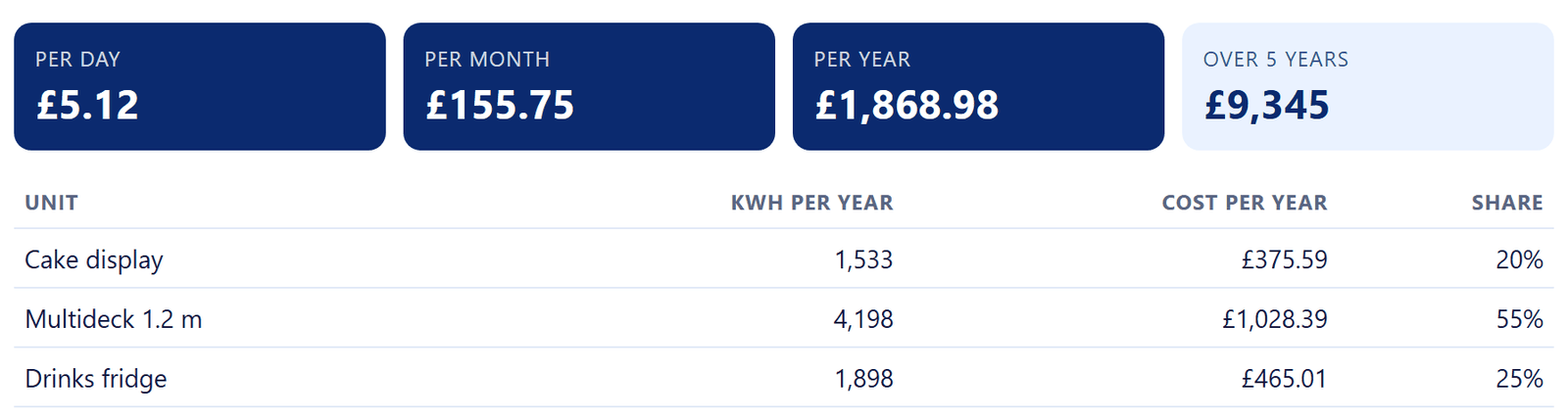
A commercial fridge runs 24 hours a day, 365 days a year, so over five years the electricity can cost as much as the unit itself, or more. The sum is simple: energy use in kWh per 24 hours × 365 days × your unit rate. A cake display that uses 4.2 kWh a day costs about £375 a year at 24.5p per kWh; a 1.2 metre open multideck using 11.5 kWh a day costs over £1,000 a year at the same rate.
Find the energy use in kWh per 24 hours on the specification sheet or the product page for each model you are considering, and use your own electricity unit rate rather than an average. The cheapest fridge to buy is not always the cheapest to own.
Our Refrigeration Energy-Saving Checklist shows the habits that keep those costs down once the fridges are in: night blinds, closed doors, clear load lines, clean condensers and sound door seals.
Step 6: Plan installation and commissioning
Under our shipping policy, the buyer is responsible for having the equipment installed and commissioned by a qualified refrigeration engineer, following the installation guidelines in the manufacturer’s manual. The same policy says the equipment should not be installed where the room temperature exceeds 25°C or the humidity is above 60%. Book your engineer before the delivery date, and read the manual for each unit before it arrives.
Check every cabinet when it is delivered, before you sign. If equipment arrives damaged or with missing parts, the delivery must be refused at the door, so take a few minutes to look it over properly.
Step 7: Set up your food safety records from day one
Your first inspection may come soon after you open, and it is much easier to start good habits on day one than to fix them later. Before you take your first delivery, set up:
- a fridge and freezer temperature log, with every new unit named;
- a delivery and goods-in log for chilled and frozen deliveries;
- a cleaning schedule for every cabinet;
- a refrigeration equipment register with the model, serial number, warranty and installation date of each unit;
- a daily opening and closing checklist so every shift follows the same routine.
Our guide to starting a grocery store covers the wider business side of opening a food shop, and all thirteen of our free resources are on the food safety resources page.
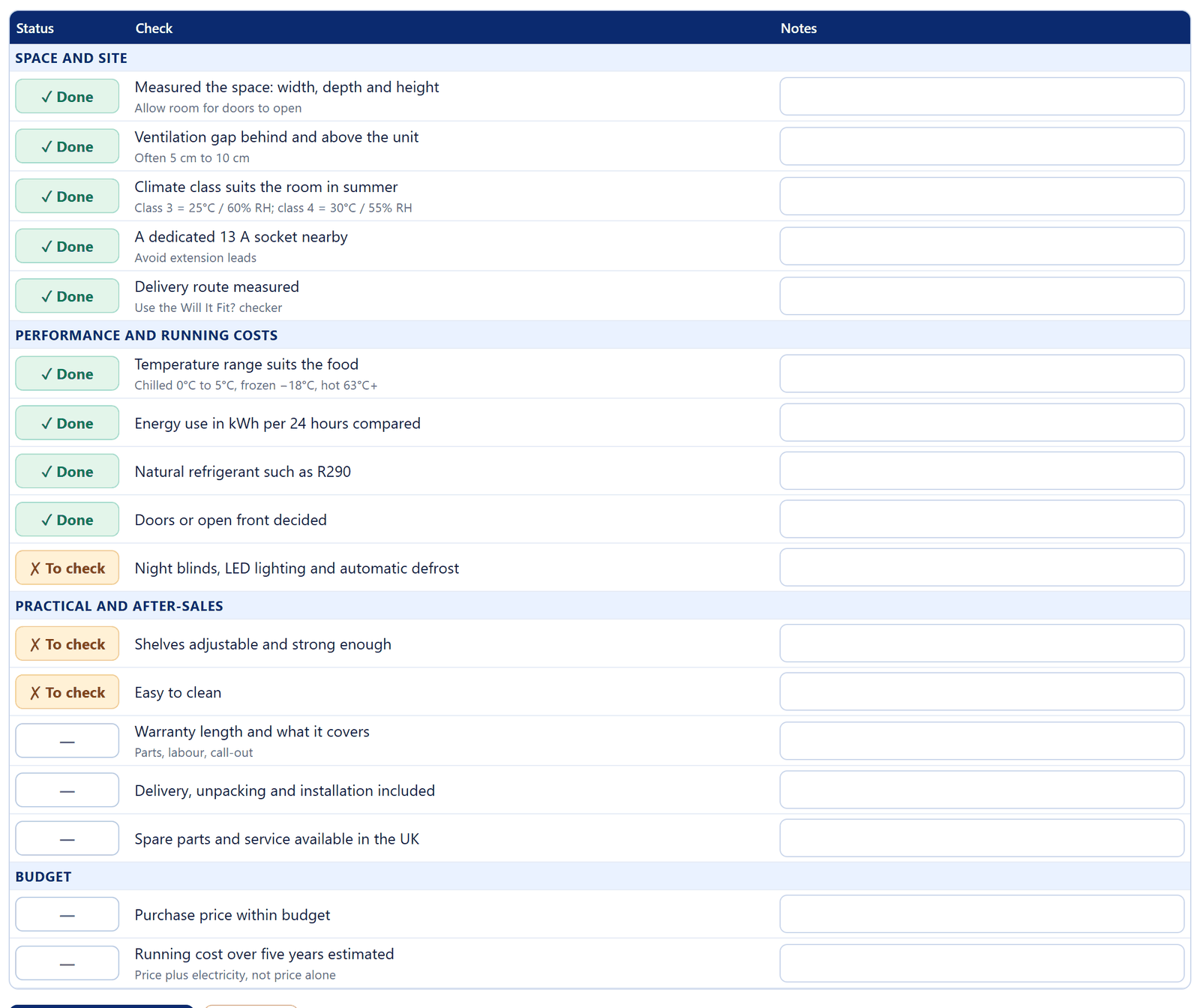
Your refrigeration checklist in one place
| Step | What to do | Free resource |
|---|---|---|
| 1 | List what you will display, store and freeze | Storage Guide |
| 2 | Choose display, storage and freezer types | Commercial fridges, freezers |
| 3 | Check room temperature, humidity, ventilation and sockets | Buying Checklist |
| 4 | Measure the delivery route | Will It Fit? checker |
| 5 | Compare price plus five years of electricity | Running Cost Calculator |
| 6 | Book installation and check every unit on delivery | Shipping policy |
| 7 | Set up logs and records before the first delivery | All free resources |
Frequently asked questions
What fridges do I need to open a café?
Most cafés need a display fridge for what customers buy, such as a cake display or a grab and go fridge, at least one storage fridge for ingredients, often an under counter fridge by the prep area, and a freezer. Add a heated display cabinet if you sell hot food.
What climate class should a café display fridge be?
Choose the class that matches your room on a hot day. Climate class 3 is tested up to 25°C and 60% relative humidity; climate class 4 up to 30°C and 55%. A class 3 unit in a room that reaches 30°C will struggle.
How much does it cost to run a commercial fridge?
Multiply the energy use in kWh per 24 hours by 365 and by your electricity unit rate. For example, a cake display using 4.2 kWh a day costs about £375 a year at 24.5p per kWh, and a 1.2 metre open multideck using 11.5 kWh a day costs over £1,000 a year.
How do I make sure a commercial fridge fits through my door?
Measure the clear width and height of every door, corridor, lift and turn on the route at its narrowest point, and compare them with the fridge size plus its packaging before you order.
Who installs a new commercial fridge?
Under our shipping policy, cabinets are delivered to the front door of ground floor locations, and the buyer is responsible for installation and commissioning by a qualified refrigeration engineer, following the manufacturer’s manual.
About Display-Fridge Wholesale
Opening a food business is a long list of decisions, and refrigeration is one you will live with for years. We are happy to talk through your layout, your menu and your budget before you order.
We are a UK supplier of commercial fridges and commercial freezers by Frost-Tech, based in Buckingham and supplying food businesses across the country. Our range covers multideck open fridges, glass door drinks fridges, cake and patisserie displays, deli and serve over counters, grab and go fridges, heated display cabinets, upright storage fridges, under counter fridges, glass door display freezers and chest freezers, most of them in a Standard and a Premium version so you can match the cabinet to your budget.
We also stock spare parts such as door gaskets, fan motors and controllers, deliver free to most of mainland England and Wales, and publish free food safety resources for UK food businesses. Not sure which cabinet you need? Read more about us, browse the frequently asked questions or call us on 01280 852139 and we will help you choose.




👉 SHOP OUR COMMERCIAL FREEZERS