
 0 items –
Master airflow rules for commercial coolers. Learn food storage health codes to keep produce fresh and compliant with UK regulations.
Understanding the complex dynamics of temperature management is crucial for any business handling perishable goods. As a technical specialist in commercial refrigeration, I frequently encounter setups where the basic principles of thermodynamics are entirely overlooked. Have you ever opened a seemingly functioning unit, only to find that items on the top shelf are warm while those at the bottom are frozen solid? This phenomenon is rarely a mechanical failure. Contrarily, it is almost always a failure to understand and implement proper airflow rules commercial cooler regulations. When air cannot circulate freely, the internal environment of your equipment becomes unstable, leading to rapid bacterial growth, food spoilage, and severe compliance issues with UK health and safety legislation.
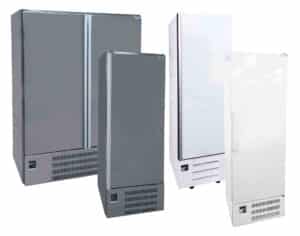


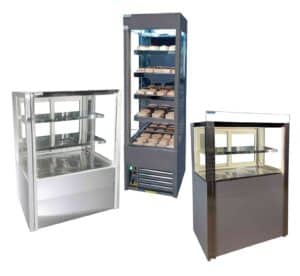

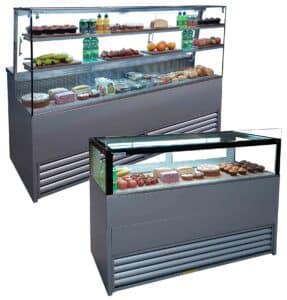

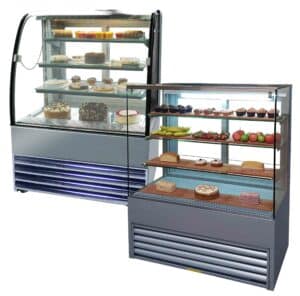
👉 SHOP OUR COMMERCIAL FREEZERS


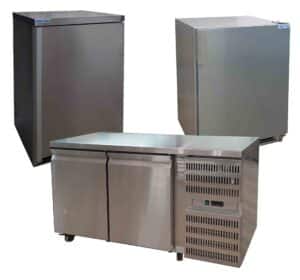

We must examine why the Food Standards Agency (FSA) and local Environmental Health Officers (EHOs) place such a heavy emphasis on how you position your stock. The physical layout inside your refrigeration unit dictates its efficiency. Proper food storage health code commercial refrigerators compliance relies entirely on maintaining a consistent, unhindered flow of chilled air around every single container, box, and vacuum-packed parcel. So, why exactly do health codes dictate that you must keep food off the floor and away from internal walls? The answer lies in the mechanics of convective cooling. Regardless of how powerful your compressor is, cold air must travel. When you block its path, you create dangerous thermal dead zones.
Display-Fridge Wholesale is committed to providing you with the technical knowledge required to operate your equipment safely and efficiently. We supply top-tier refrigeration solutions, but the longevity of your produce ultimately depends on how you load those shelves. Still, navigating the myriad of UK health codes can seem daunting. Anyway, breaking down these regulations into actionable, everyday practices will protect your inventory, lower your energy bills, and ensure you pass your next hygiene inspection with flying colours. Let us explore the absolute necessities of commercial refrigeration airflow.
👉 Ready to upgrade your kitchen? Discover our premium, compliance-ready commercial refrigeration equipment at Display-Fridge Wholesale today!
Key Takeaways
💡 Cold air acts like a fluid; it needs clear pathways to flow around produce and maintain consistent temperatures throughout the entire cabinet.
💡 Pushing stock directly against the internal walls blocks the return air pathways, causing the compressor to overwork and leading to mechanical failure.
💡 Storing food on the floor of a cooler creates a physical barrier that traps dirt, prevents proper sanitation, and entirely halts bottom-level air circulation.
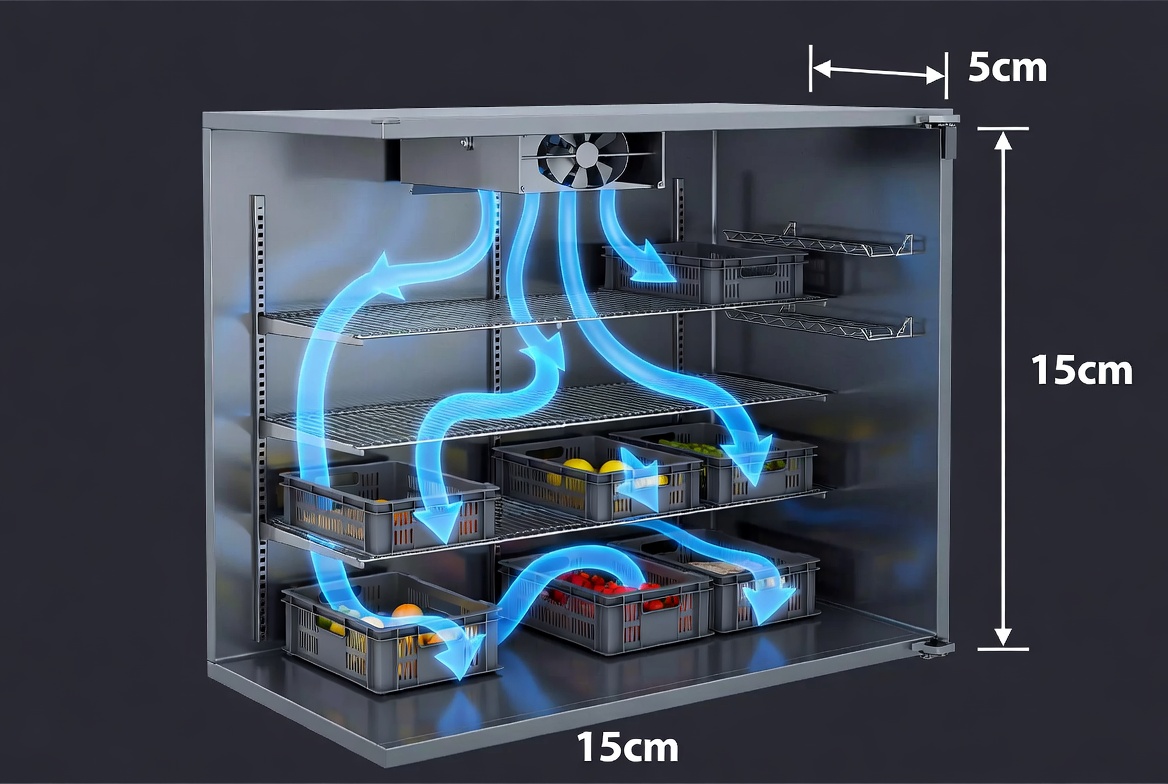
💡 UK health codes strictly enforce a minimum clearance gap (usually around 15cm from the floor and 5cm from walls) to guarantee food safety and hygiene.
💡 Wire shelving is infinitely superior to solid shelving in commercial settings because it allows chilled air to drop seamlessly through the vertical space.
💡 Overstocking is the primary cause of uneven temperature distribution, rendering your food storage health code commercial refrigerators compliance completely void.
💡 Upgrading to purpose-built equipment, such as Upright Storage Fridges or Multideck Open Fridges, naturally encourages better stock organisation and airflow.
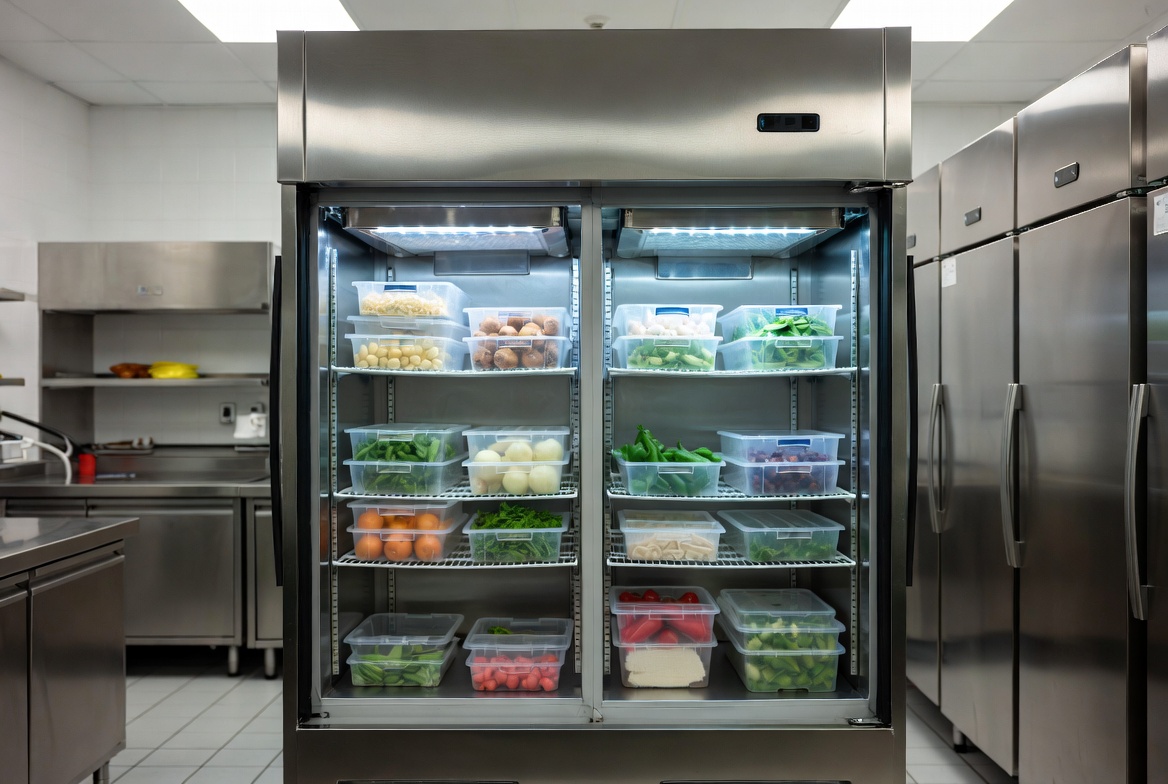
The Physics of Cooling and Airflow Rules Commercial Cooler Environments
To truly grasp why regulations are so strict, we need to understand exactly how a commercial fridge removes heat. A refrigeration unit does not simply pump cold air into a box. Rather, it extracts ambient heat from the enclosed space. The evaporator coil absorbs the heat, and the internal fans distribute the newly chilled air. Think of this process like the human respiratory system. If you constrict the airways, the system struggles to function. When you place a large, solid box of produce directly in front of the evaporator fan, you are essentially suffocating the appliance. The chilled air bounces off the obstruction, creating a localised freezing zone, whilst the rest of the cabinet remains dangerously warm.
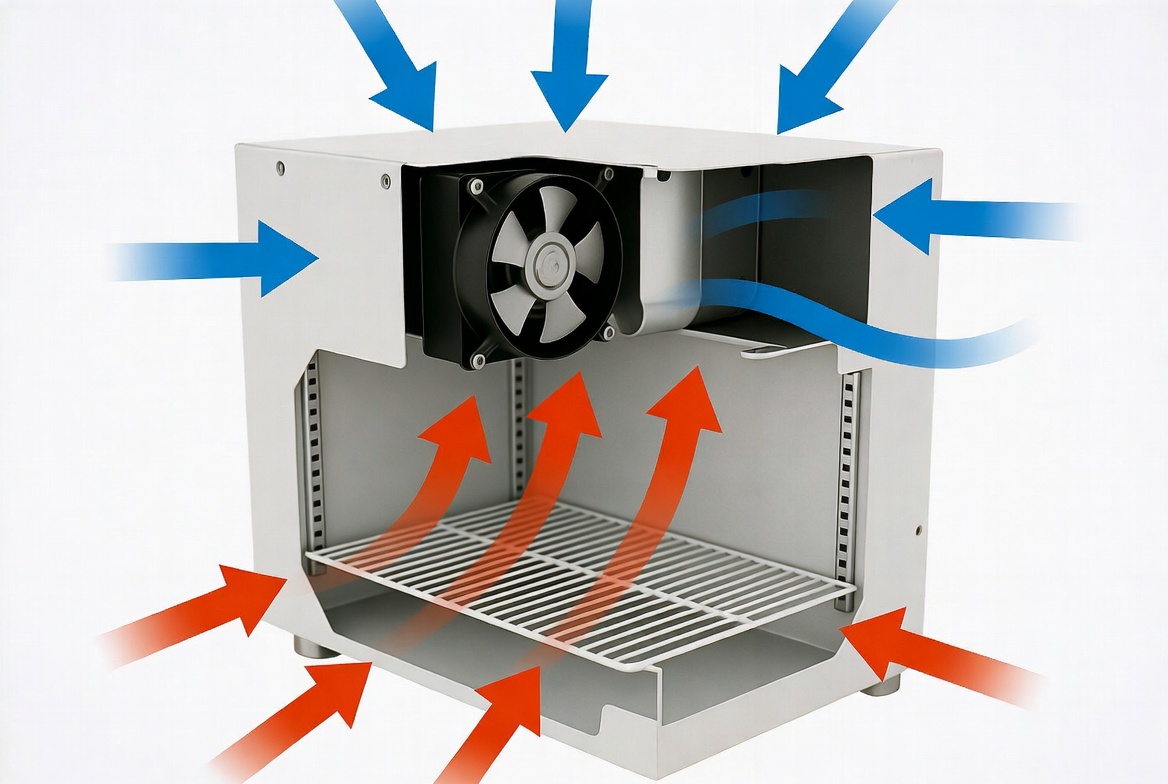
However, air behaves much like water. It follows the path of least resistance. If the centre of your fridge is packed tightly with no gaps, the cold air will simply slide down the outer edges, entirely bypassing the food in the middle. This is why understanding airflow rules commercial cooler dynamics is non-negotiable. The air must be able to wrap around individual items to extract heat efficiently. Furthermore, cold air is denser than warm air, meaning it naturally sinks. Your appliance relies on internal fans to push this heavy, cold air up and around the cabinet to create a consistent temperature loop. When you disrupt this loop, you compromise the entire system.
You can learn more about safe temperature regulations via high-authority resources such as the Food Standards Agency. They outline precisely why maintaining a core temperature of below 8°C (ideally between 1°C and 5°C) is a legal requirement in the UK. Yet, achieving this uniform temperature is mathematically impossible if your airflow is restricted. We frequently see businesses investing in premium cooling units, only to pack them so tightly that the glass mists over and the compressor runs continuously. Therefore, mastering the layout of your unit is just as important as the quality of the unit itself.
👉 Keep your beverages perfectly chilled and fully visible.
👉 Shop our high-efficiency Drinks Fridges and maximise your retail sales!
The Mechanics of Convection and Circulation
Convection is the primary method of heat transfer inside your refrigeration unit. As the internal fans blow chilled air, it absorbs heat from the food. This slightly warmed air then rises back towards the evaporator fan at the top of the unit to be cooled again. This continuous cycle forms a convection loop. If you block the bottom of the fridge by placing items directly on the floor, you sever the bottom half of this loop. The cold air hits the floor, cannot circulate under the stock, and becomes stagnant. Consequently, the warm air rising from the produce gets trapped.
Imagine a bustling motorway. If all lanes are clear, traffic flows smoothly at a consistent speed. But, if a lorry breaks down across two lanes, everything grinds to a halt, causing massive congestion behind the blockage and empty roads ahead. Your commercial fridge operates on the exact same principle. A solid wall of cardboard boxes is the broken-down lorry. To prevent this, you must leave deliberate gaps between items. A good rule of thumb is to ensure you can easily slide your hand between different batches of produce. If your hand cannot fit, the air certainly cannot flow.
👉 Prevent overcrowding in your main storage units.
👉 Browse our space-saving Under Counter Fridges to keep frequently used ingredients close at hand.
How Blockages Cause Dangerous Hot Spots
When the convection loop is broken, hot spots form. These are isolated pockets within the fridge where the temperature exceeds the safe legal limit, even though the thermostat reads a perfect 3°C. The thermostat only measures the air immediately surrounding its sensor. It cannot tell you that the meat tucked into a stagnant back corner is currently sitting at 9°C. These hot spots are breeding grounds for harmful bacteria like Salmonella and Listeria. Therefore, your food storage health code commercial refrigerators strategy must actively combat the formation of these invisible danger zones.
Moreover, hot spots trick your appliance into working harder. The system senses that heat is not being removed efficiently, so the compressor runs continuously, attempting to lower the temperature. This leads to massive energy wastage and premature mechanical wear. You might think you are saving money by cramming every last inch of space with stock, but you are actually increasing your electricity bills and drastically reducing the lifespan of your equipment.
👉 Need more vertical space for unhindered air circulation? Upgrade today with our heavy-duty Upright Storage Fridges!
Food Storage Health Code Commercial Refrigerators and UK Law
The regulations enforced by local EHOs in the United Kingdom are not arbitrary suggestions; they are stringent laws designed to prevent public health crises. When an inspector visits your premises, one of the first things they check is the internal layout of your refrigeration equipment. They are looking for clear evidence that you understand and apply airflow rules commercial cooler guidelines. The law dictates that food must be protected from contamination at all stages of storage. Placing food directly on the floor or leaning it against internal walls constitutes a severe breach of these hygiene standards.
But why are these specific areas targeted by health codes? The floor of any commercial environment, including the inside of a walk-in cooler or a large cabinet fridge, is inherently unclean. Even with rigorous daily cleaning schedules, floors attract condensation, spilt liquids, and debris from staff footwear. If you store a box of fresh produce on the floor, the bottom of that box acts as a sponge, soaking up stagnant moisture and bacteria. Furthermore, items placed on the floor completely block the vital return airflow pathways. Still, many operators make the mistake of using the floor as “bonus” storage space during busy periods. This is a critical error that can result in immediate penalties or closure.
If you are running out of space, the solution is not to compromise on hygiene by using the floor. Instead, you should invest in appropriately sized equipment. Remember, EHOs expect to see a minimum clearance of 15cm (about 6 inches) between the floor and the lowest shelf. This gap serves two purposes: it allows cold air to sweep under the produce, and it provides enough room for staff to visually inspect and mop the base of the unit without having to remove heavy stock.
👉 Maximise your compliant usable volume effortlessly. Explore our highly adjustable Storage Fridges designed for professional kitchens.
Why the Floor is a Danger Zone
We have established that the floor harbours bacteria, but the physical implications for airflow are equally damaging. When you place a solid object on the base of the fridge, you create a thermal dam. Cold air dropping from the top shelves hits this object and stops moving. The heat transfer process halts. Imagine standing outside on a freezing winter day wearing a thick coat, but no shoes. The cold will seep in from the ground up, while your body heat struggles to regulate itself. Food on the floor experiences a similar thermal shock, leading to rapid degradation of quality and safety.
Additionally, the base of many commercial units houses crucial return vents or sits directly above the condenser. Blocking this area forces the machine to choke on its own exhaust. To keep your ingredients safe and your kitchen compliant, you must utilise shelving. If your current setup lacks adequate shelving, it is time to upgrade.
👉 Showcase your chilled goods safely to customers. Discover our beautifully illuminated Display Fridges with scientifically spaced wire shelves.
The Internal Wall Clearance Rule
The internal walls of a commercial refrigerator are not load-bearing supports for your stock. Pushing boxes, bags, or containers directly against the back or side walls is a direct violation of food storage health code commercial refrigerators protocols. The walls are where condensation naturally forms as warm air enters the cabinet during door openings. If a cardboard box is touching the wall, it will absorb this condensation, become soggy, and eventually collapse. More importantly, this moisture creates a perfect microclimate for mould and bacterial growth.
Furthermore, the space along the internal walls acts as a chimney for airflow. Cold air needs these perimeter gaps to drop down to the bottom shelves, whilst warm air uses them to rise back to the evaporator. By blocking the walls, you effectively board up the chimney. EHOs require a minimum clearance of roughly 5cm (2 inches) between the stock and the internal walls. To maintain this gap effortlessly, always use the designated shelf guards and avoid the temptation to squeeze in one extra row of products.
👉 Does your menu demand high volume without the restriction of closed walls? View our cutting-edge Multideck Open Fridges now!
Practical Strategies for Organising Your Refrigeration Unit
Implementing correct airflow rules commercial cooler procedures requires a systematic approach to stock management. You cannot simply throw items onto shelves and hope for the best. A well-organised fridge is a safe fridge. By adopting specific organisational strategies, you can drastically reduce the risk of cross-contamination, ensure optimal air circulation, and prolong the life of your expensive compressor. The following list outlines the most critical best practices you must adopt to satisfy UK health regulations.
Here are the essential rules for organising your commercial cooler:
- Utilise Wire Shelving: Never use solid plastic or metal sheets as shelves. Wire shelving provides minimal surface area resistance, allowing chilled air to cascade down freely from the top to the bottom of the unit.
- Implement the First-In, First-Out (FIFO) Method: Always rotate your stock. Place newer items at the back and bring older items to the front. This prevents food from rotting in hidden, stagnant corners where airflow is historically weakest.
- Respect the 15cm Floor Clearance: Ensure all shelving is raised at least 15 centimetres off the internal base of the cooler. This gap is non-negotiable for sweeping, sanitising, and allowing bottom-tier air circulation.
- Maintain a 5cm Wall Gap: Keep all produce, boxes, and containers at least 5 centimetres away from the back and side walls to prevent condensation absorption and to keep the perimeter air channels open.
- Do Not Overfill Containers: When prepping food, do not fill plastic tubs to the brim. Leave a small gap at the top to allow the cold air to penetrate the lid and cool the core of the ingredients rapidly.
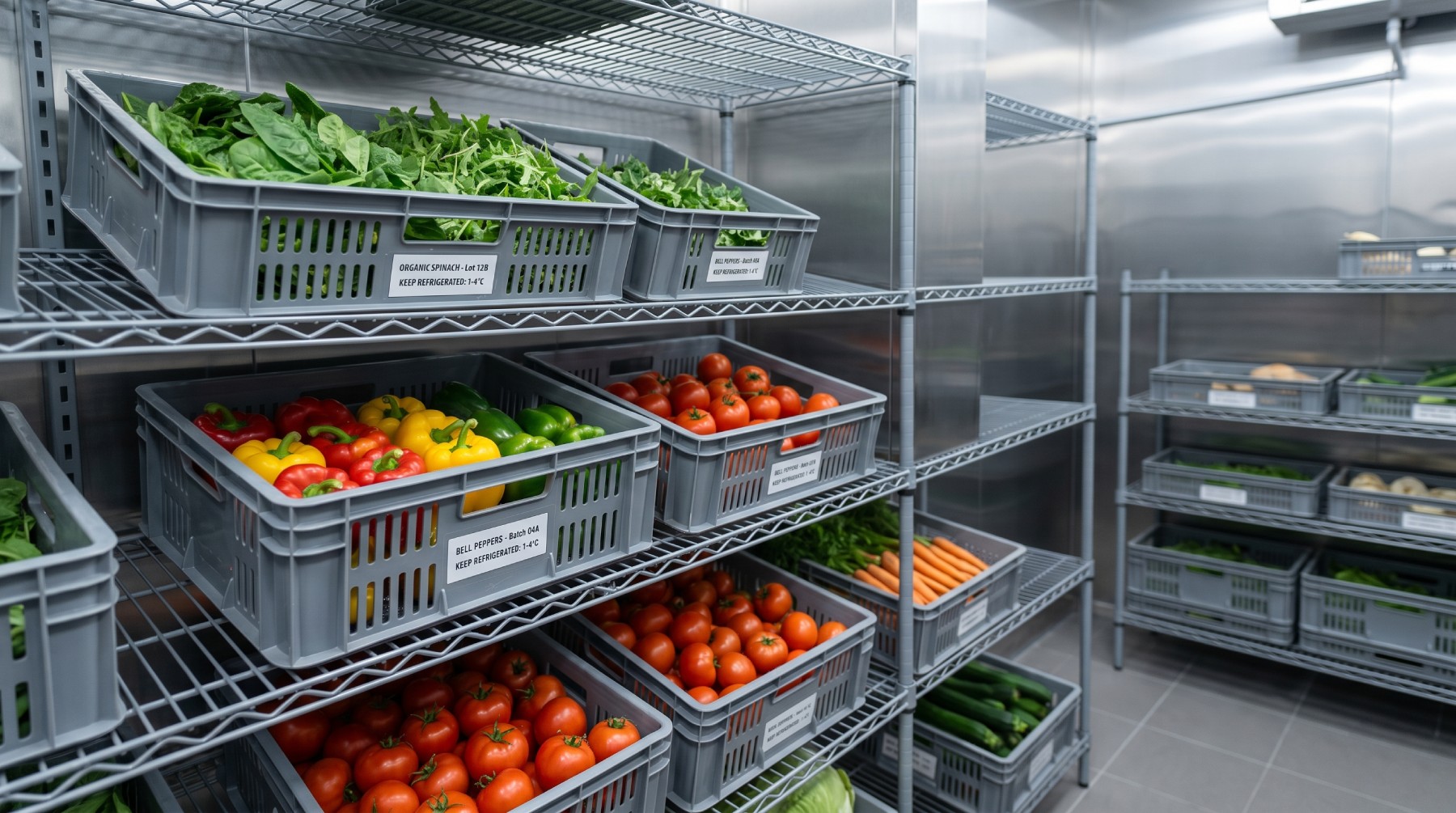
- Use Slotted or Vented Crates: If you must store bulk vegetables or fruits, use crates with perforated sides and bottoms rather than solid cardboard boxes, as cardboard acts as a powerful insulator against cold air.
- Stagger Your Stock: Avoid stacking items in perfect, solid blocks. Stagger them slightly, like a brick wall pattern with gaps, to create multiple winding pathways for the air to travel through.
Adhering to these practical steps will transform your kitchen’s efficiency. Nevertheless, if your current equipment is old and lacks adjustable, high-quality wire shelving, maintaining these standards will be a constant uphill battle. Upgrading your kitchen infrastructure is an investment in food safety.
👉 Circulate air gently around delicate bakes and pastries. Explore our elegant Patisserie Cake Fridges for the perfect front-of-house display.
Choosing the Right Equipment for Optimal Airflow
Not all refrigeration units are created equal. The type of equipment you choose plays a massive role in how easily you can maintain airflow rules commercial cooler compliance. A bustling restaurant kitchen has vastly different needs compared to a quiet cafe or a retail convenience store. Understanding the structural differences between various appliances will help you make an informed decision that aligns with your specific food storage health code commercial refrigerators requirements.
When you purchase wholesale from Display-Fridge Wholesale, you are investing in machinery engineered with airflow in mind. However, you must deploy the right tool for the job. Attempting to use a standard residential fridge in a commercial setting is a guaranteed recipe for failure. Domestic units simply lack the powerful fan-assisted cooling systems required to recover temperatures quickly after frequent door openings. Commercial units use dynamic cooling, blowing air vigorously to ensure rapid temperature stabilisation. Let us look at how different unit types handle air circulation.
👉 SHOP OUR COMMERCIAL FREEZERS
Upright Storage Fridges and Under Counter Fridges
Upright Storage Fridges are the workhorses of the catering industry. Their tall, vertical design takes advantage of the natural tendency for cold air to sink. The evaporator is typically located at the top, blasting chilled air downwards. As long as you maintain the 5cm wall gap and use wire shelves, these units are incredibly efficient. They offer immense volume, making it easier to leave those crucial gaps between products. Still, operators must resist the urge to stack heavy items directly under the fan, which causes an immediate blockage.
Contrarily, Under Counter Fridges present a unique challenge. Because they are compact and sit low to the ground, the internal space is highly premium. The convection loop in an under counter unit is much shorter. Therefore, overstocking these units has an immediate and catastrophic effect on internal temperatures. They are designed for quick access to prep ingredients, not for long-term bulk storage. To maintain airflow, you must be disciplined; only store exactly what you need for the current service.
👉 Keep your active prep area safe and organised. Check out our extensive range of compact Under Counter Fridges!
Display Fridges and Multideck Open Fridges
Retail environments require appliances that showcase products while maintaining strict health codes. Display Fridges use glass doors and bright lighting, but glass is a poor insulator compared to solid steel. To compensate, these units rely on powerful internal fans to wash the glass with cold air, preventing condensation and keeping the drinks or food chilled. If you push bottles right up against the glass door, you disrupt this air wash, leading to misty doors and warm beverages. Always keep products behind the designated load line on the shelf.
Multideck Open Fridges take airflow engineering to the next level. They do not have doors; instead, they use an invisible ‘air curtain’. A fan blows a continuous stream of chilled air from the top canopy down into a return grille at the base, creating a barrier that keeps the cold in and the warm ambient air out. Because they rely entirely on this fragile curtain, blocking the return grille at the base with promotional signs or dropped food is disastrous. The air curtain will break, and the food will spoil rapidly.
👉 Keep your grab-and-go items perfectly chilled and highly visible. Browse our advanced Multideck Open Fridges today.

Common Airflow Mistakes and How to Avoid Them
Even with the best equipment and intentions, human error remains the biggest threat to proper food storage. EHOs repeatedly cite the same layout mistakes during their inspections. These errors usually stem from a lack of staff training or a simple misunderstanding of how a fridge actually breathes. Addressing these common pitfalls is the fastest way to ensure your business remains compliant with all food storage health code commercial refrigerators regulations.
The most frequent mistakes involve treating the fridge like a static storage cupboard rather than a dynamic machine. We often see kitchens where every cubic centimetre is crammed with ingredients. This is a fundamental violation of airflow rules commercial cooler physics. You must train your staff to view empty space inside a fridge not as wasted capacity, but as a critical operational necessity. Let us break down the specific errors that cause the most significant temperature fluctuations.
Overstocking the Shelves
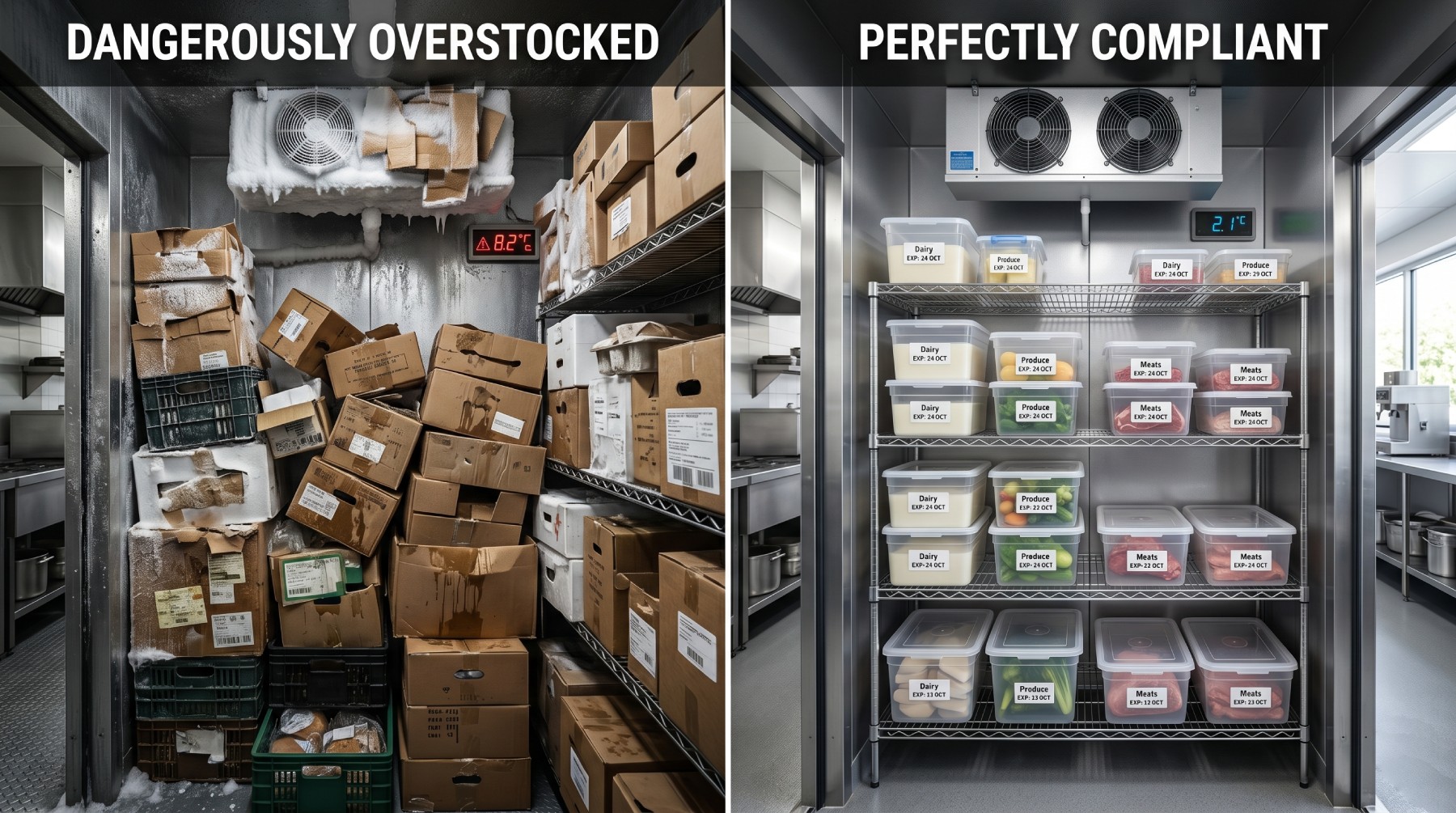
Overstocking is the cardinal sin of commercial refrigeration. When a shelf is packed edge-to-edge and front-to-back, it essentially becomes a solid floor. The cold air from the top cannot penetrate this barrier, meaning everything below that shelf receives little to no cooling. Have you ever noticed that your compressor is constantly running, yet the bottom shelves are barely cold? This is the textbook symptom of overstocking.
To fix this, implement a strict maximum capacity policy. Shelves should never be more than 75% full. There must be visible gaps between all containers, allowing air to flow vertically and horizontally. If your kitchen routinely hits 100% capacity, you do not have an organisation problem; you have an equipment shortage problem. It is far cheaper to buy an additional unit than to risk a food poisoning outbreak and a massive EHO fine.
👉 Free up valuable room in your main cabinets efficiently! Upgrade your capacity with our handy Countertop Fridges.
Blocking the Evaporator Fans
The evaporator fan is the beating heart of your appliance. It is responsible for drawing in warm air, passing it over the cooling coils, and expelling it back into the cabinet. If you place a large, flat object—like a baking tray or a wide cardboard box—directly in front of or beneath this fan, you choke the system. The cold air is immediately deflected, creating a highly pressurised cold zone at the top of the fridge, while the rest of the unit starves for chilled air.
Staff often do this inadvertently when rushing to put away deliveries. You must create a designated “no-fly zone” around the fan housing. Usually, leaving a clear gap of at least 10cm around the fan is sufficient. Tape a red line on the top shelf if necessary to visually remind staff not to place items there. Proper fan operation is non-negotiable.
👉 Serve freshly prepared cold foods? Protect your delicate ingredients from harsh fan blasts with our specialised Deli Counter Fridges.
Using Inappropriate Containers
The containers you use dictate how quickly heat can be extracted from your food. Heavy, thick plastic tubs or, worse, solid cardboard boxes act as powerful thermal insulators. If you place a massive, sealed plastic bucket of hot soup into a fridge, the air will cool the outside of the bucket, but the core of the soup will remain dangerously warm for hours, well within the bacterial danger zone.
Always transfer bulk items into shallow, wide containers before refrigeration. This maximises the surface area exposed to the cold air, facilitating rapid heat exchange. Furthermore, remove produce from cardboard delivery boxes immediately. Cardboard not only insulates but also harbours pests and absorbs moisture, severely impacting the hygiene of your cabinet. Transferring goods to ventilated, food-safe storage crates guarantees that air can penetrate the produce.
👉 Store beverages safely and allow proper air circulation around every bottle. View our sturdy Drinks Fridges featuring built-in wire racking.
Maintenance Checks to Ensure Consistent Airflow
Airflow rules commercial cooler guidelines are not just about how you place your food; they are also about how you maintain the machine itself. A fridge can be perfectly organised, but if the mechanical components facilitating the airflow are compromised, the system will fail. Regular, preventative maintenance is a legal requirement under UK health and safety laws, and it is vital for upholding your food storage health code commercial refrigerators compliance.
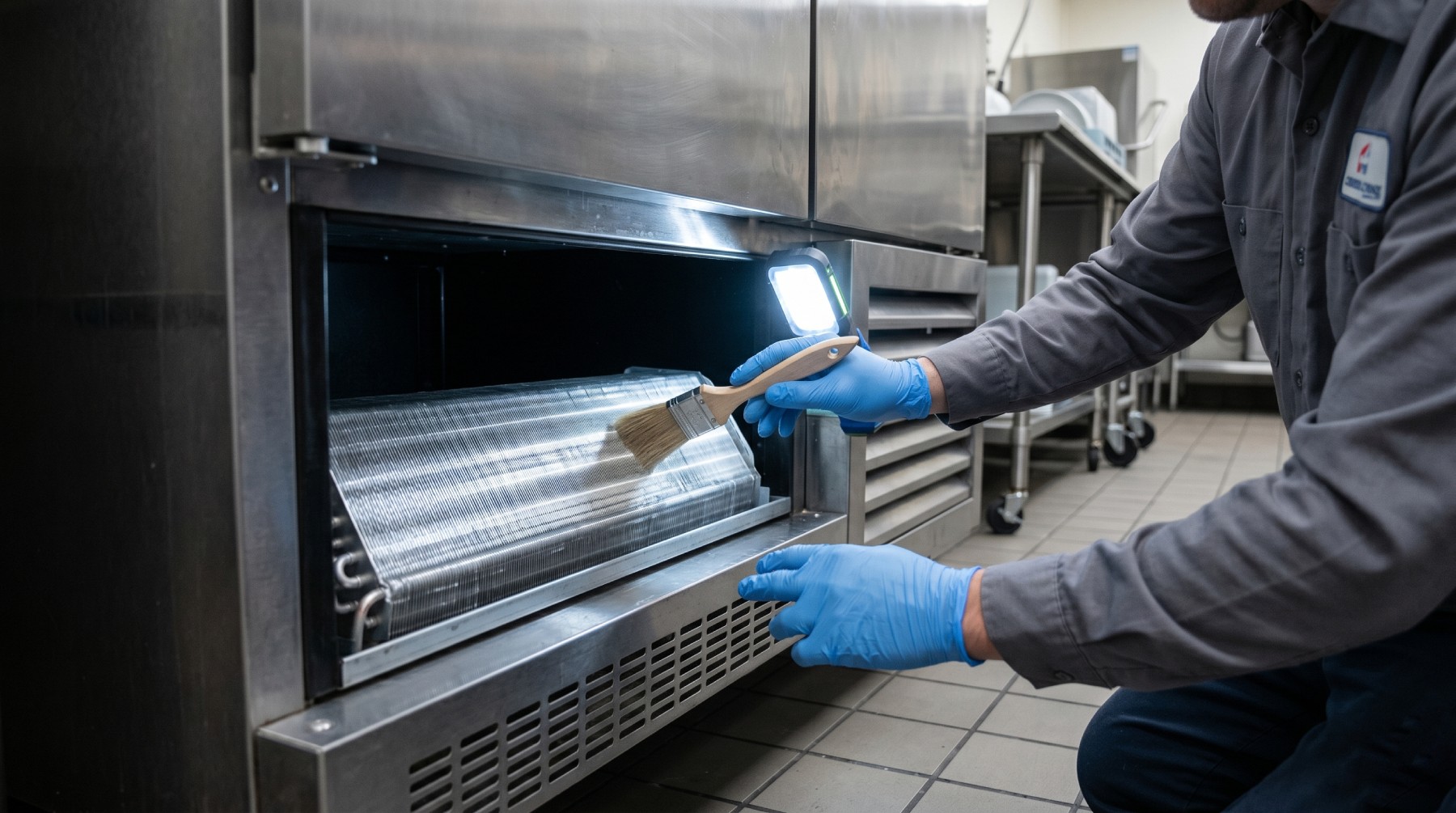
Dust and grease are the enemies of airflow. In a busy commercial kitchen, the air is thick with aerosolised cooking oils and flour. This debris is inevitably drawn into the refrigeration units. Over time, it coats the fan blades and clogs the condenser coils. A dirty fan blade cannot push air efficiently; it spins at the same speed but moves a fraction of the volume. Therefore, establishing a routine cleaning schedule is paramount.
You should perform weekly visual inspections of all internal and external vents. Check the fan grilles for dust build-up and wipe them down with a damp, sanitised cloth. More importantly, inspect the condenser coils (usually located at the back or bottom of the unit). If the coils are choked with dust, the fridge cannot expel the heat it has absorbed, causing the internal temperatures to skyrocket regardless of how well you have organised your shelves. Use a soft brush and a vacuum to clean these coils monthly.
👉 Handle high turnovers of raw ingredients? Make routine maintenance straightforward and fast with our accessible Upright Meat Freezers.
Specific Storage Rules for Different Food Types
Different foods carry different risks. The way you apply airflow rules commercial cooler strategies must adapt to the type of produce you are storing. The FSA categorises foods into high-risk and low-risk groups. High-risk foods (like raw meat, poultry, and dairy) support the rapid multiplication of bacteria if they enter the danger zone (above 8°C). Consequently, the placement of these items within your fridge is highly regulated by food storage health code commercial refrigerators protocols to prevent both thermal abuse and cross-contamination.
Airflow plays a hidden role in cross-contamination. As the internal fans circulate air, they can also circulate airborne bacteria or microscopic droplets of raw meat juices if they are placed incorrectly. Therefore, the hierarchy of storage is critical. Ready-to-eat foods must always be stored above raw foods. This is not just to prevent physical drips; it ensures that the cold air blowing down from the top does not carry contaminants from raw chicken onto your fresh salads.
Raw Meat and Poultry Guidelines
Raw meat must always be stored on the very bottom shelves of your main storage units (but still respecting the 15cm floor clearance rule). This placement guarantees that any accidental leaks of blood or juices will not drip onto foods stored below. However, because the bottom of the fridge is where the cold air eventually settles, it is crucial that the air can reach the meat efficiently.
Do not stack raw meat containers directly on top of each other in massive columns. This traps the heat inside the middle containers. Instead, use shallow trays and place them side-by-side. If your establishment handles significant quantities of raw protein, relying on a mixed-use fridge is highly risky. The safest and most compliant approach is to invest in dedicated, specialised equipment.
Dairy and Ready-to-Eat Produce
Dairy products, cooked meats, and prepared salads must occupy the top and middle shelves. These items are ready to consume, meaning any bacterial contamination will not be killed by a subsequent cooking process. Because warm air rises, you might think the top shelf is the warmest, but in a fan-assisted commercial fridge, the top shelf is closest to the evaporator fan, making it the coldest and safest place for high-risk, ready-to-eat items.
Again, do not push these items against the internal walls or the fan housing. Leave generous gaps between milk bottles, cheese blocks, and salad tubs. If you run a sandwich shop or a cafe, presentation is just as important as preservation. Your customers need to see your fresh produce, but it must be kept strictly regulated.
👉 Offer maximum visibility while keeping products perfectly chilled. Browse our stylish Grab & Go Sandwich Fridges now!

The Financial Impact of Poor Airflow Management
Ignoring airflow rules commercial cooler regulations does not just invite EHO fines; it burns a massive hole in your operating budget. The physics are simple: if cold air cannot circulate, the thermostat cannot register the correct temperature. As a result, the compressor—the engine of your fridge and the largest consumer of electricity in your kitchen—will run continuously. It will fight a losing battle against the thermal blockages you have created.
A compressor designed to run in cycles of 15 minutes may end up running for 45 minutes every hour. This drastically increases your energy consumption. In a climate of rising energy prices across the UK, an inefficient fridge can add hundreds, if not thousands, of pounds to your annual electricity bill. Moreover, this continuous strain causes the compressor to overheat and burn out prematurely. Replacing a commercial compressor is exceptionally expensive, often making it more economical to replace the entire unit.
Furthermore, poor airflow leads to food spoilage. If you are throwing away lettuce because it froze against the back wall, or dumping milk because it soured in a warm corner, you are literally throwing your profits in the bin. Proper food storage health code commercial refrigerators practices protect your inventory investment. By taking 10 minutes a day to reorganise your shelves and ensure the 5cm wall gaps and 15cm floor clearances are maintained, you are safeguarding your profit margins.
👉 Reduce your running costs instantly. Upgrade to a modern, energy-efficient model from our robust Storage Fridges collection.
Selecting Freezers That Maximise Air Circulation
While we have focused heavily on fridges, airflow rules commercial cooler physics apply equally to freezing equipment. In fact, poor airflow in a freezer is often more visible because it manifests as rapid ice build-up. When warm, ambient air enters a poorly organised freezer, the moisture instantly freezes onto the nearest surface—usually the evaporator coils or the internal walls. This ice acts as a powerful insulator, forcing the freezer to work twice as hard to maintain its -18°C set point.
Therefore, your food storage health code commercial refrigerators strategy must include strict rules for your freezing units. Never put hot food directly into a freezer; always chill it in a fridge first. The massive heat load will disrupt the entire freezer’s ecosystem. Also, do not pack the freezer so tightly that the internal fans cannot move the heavy, freezing air. We offer a comprehensive range of freezing solutions tailored to different operational needs, ensuring you can maintain airflow regardless of your layout.
👉 Display your frozen goods brilliantly. Discover our sleek and reliable Display Freezers for your retail floor.
Display Freezers and Sliding Glass Chest Freezers
For retail environments, Display Freezers are essential for merchandising frozen goods. Like display fridges, they use glass doors and require careful loading to ensure the glass remains clear and the internal air washes over the products evenly. Never stack boxes beyond the designated load line, as this will block the air vents and cause the top items to thaw.
Sliding Glass Chest Freezers operate slightly differently. Because cold air sinks, chest freezers are naturally very efficient; when you open the lid, the cold air stays pooled inside rather than falling out. However, you must still use wire baskets to separate products. If you dump bags of frozen peas in a solid pile at the bottom, the items in the centre of that pile will not receive adequate cold air circulation, leading to freezer burn and quality degradation.
👉 Organise your stock easily and maintain perfect airflow. Shop our Sliding Glass Chest Freezers equipped with adjustable baskets.
Upright Glass Door Freezers and Storage Freezers
For back-of-house storage or high-capacity retail displays, Upright Glass Door Freezers offer excellent vertical storage. They utilise powerful top-mounted fans to blast freezing air down through the shelves. The same rules apply here as with upright fridges: use wire shelves, leave gaps between boxes, and never push stock against the back wall. If you block the downward flow of air, the bottom shelves will quickly creep above the safe -18°C threshold.
If visibility is not required, solid-door Storage Freezers are the most robust and energy-efficient option for bulk storage. Their heavy insulation retains the cold perfectly, but internal organisation is still paramount. Use heavy-duty wire shelving to allow the freezing air to circulate underneath large boxes of chips or frozen meats. If your kitchen is struggling with disorganised, icy chest freezers, it is time to upgrade to vertical efficiency.
👉 Streamline your frozen storage and guarantee compliance. View our professional range of Storage Freezers and Under Counter Freezers today.

FAQs on Airflow Rules Commercial Cooler
Why is there ice building up on the back wall of my fridge?
Ice build-up on the internal back wall is a classic symptom of poor airflow. When you push products directly against the back wall, you block the air channels. As warm, moist air enters the fridge when the door is opened, it gets trapped behind your products against the cold evaporator plate or back wall. This moisture rapidly freezes. To resolve this, pull all stock forward by at least 5cm to allow the internal fans to circulate air and evaporate that moisture naturally.
Can I store heavy boxes on the floor of my commercial cooler if I use a pallet?
While using a pallet is slightly better than placing boxes directly on the floor, standard wooden shipping pallets are often discouraged by UK Environmental Health Officers. Wood is porous, absorbs spills, and harbours bacteria. Furthermore, a low pallet may not provide the legally required 15cm clearance needed for proper bottom-tier air circulation and underneath sanitation. It is always safer and more compliant to use purpose-built, raised metal or heavy-duty plastic shelving racks designed specifically for food storage health code commercial refrigerators compliance.
How far away from the ceiling fan should I store food?
You must never block the evaporator fan, which is usually located at the top or ceiling of the unit. A minimum clearance of 10cm to 15cm should be maintained directly below and around the fan housing. If you stack boxes right up to the ceiling, the cold air blasting from the fan will hit the boxes and bounce right back, causing the thermostat to read cold while the bottom of the fridge remains dangerously warm. Always leave the top section clear.
Does wire shelving really make a difference compared to solid shelves?
Absolutely. Wire shelving is arguably the most critical component for maintaining proper airflow rules commercial cooler environments. Solid shelves act as impenetrable physical barriers, trapping cold air on the shelf above and preventing it from circulating down to the lower levels. Wire shelves allow the heavy, chilled air to drop naturally through the gaps, ensuring a consistent temperature gradient throughout the entire vertical space of the cabinet.
What temperature should my commercial fridge display, and how does airflow affect this?
In the UK, the law requires high-risk foods to be kept at 8°C or below, but best practice dictates maintaining your commercial fridge between 1°C and 5°C. Airflow directly affects this because the digital display only shows the temperature of the air near the sensor. If your airflow is blocked, the display might read a safe 3°C, while stagnant pockets in the corners or on the bottom shelf could easily reach 10°C, leading to rapid bacterial growth and failed health inspections.
Mastering Airflow for a Safer, More Profitable Kitchen
Navigating the stringent landscape of UK food safety regulations does not have to be an overwhelming task. By understanding and applying the fundamental airflow rules commercial cooler physics, you empower your business to operate safely, efficiently, and legally. The dictation from health codes to keep food off the floor and away from internal walls is not an arbitrary rule; it is a critical safeguard designed to maintain the fragile convection loops that keep your produce fresh and your customers safe. Ignoring these rules leads to the creation of dangerous hot spots, massive mechanical strain on your equipment, inflated energy bills, and severe breaches of food storage health code commercial refrigerators legislation.
Ultimately, your refrigeration equipment is only as effective as the way you use it. Respect the 15cm floor clearance, maintain the 5cm wall gaps, utilise wire shelving, and never overstock your units. If you find yourself constantly battling for space and compromising on these golden rules, it is a clear sign that your business has outgrown its current infrastructure. Upgrading your equipment is an investment in compliance, food quality, and peace of mind.
Display-Fridge Wholesale provides superior commercial fridge equipment to hospitality markets all over the United Kingdom. We supply commercial refrigerators and freezers to businesses throughout England at a wholesale price. Whether you need an expansive Upright Storage Fridge for a bustling kitchen, a sleek Multideck Open Fridge for your retail floor, or robust Storage Freezers for bulk ingredients, we have the perfect, compliance-ready solution for you. Do not let poor airflow ruin your reputation or your stock.
👉 Purchase an affordable commercial fridge now! Visit Display-Fridge Wholesale and secure the future of your food storage today.
👉 SHOP OUR COMMERCIAL FREEZERS