
 0 items –
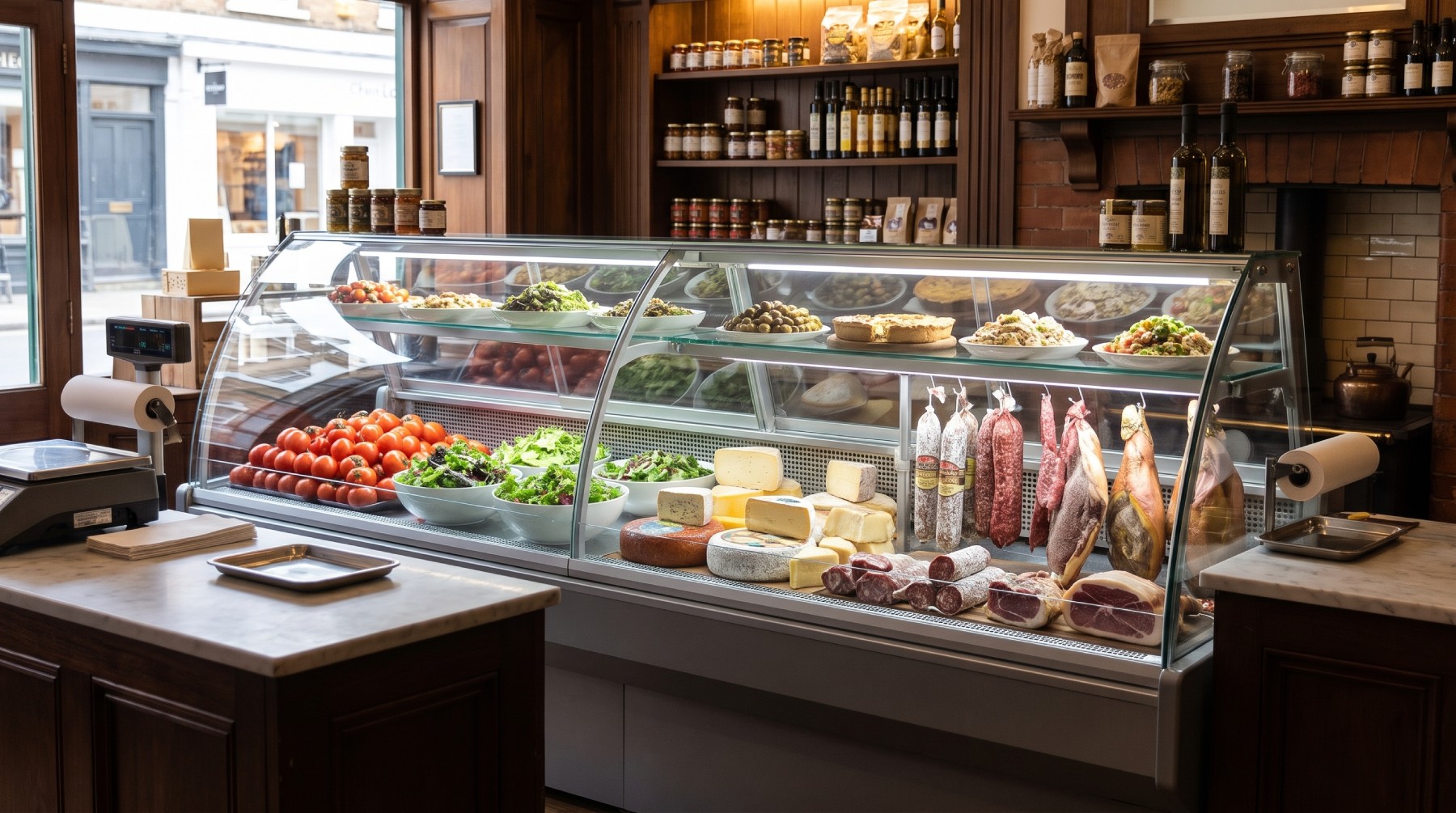
Spectral science explains something every shopkeeper already knows: the same strawberries can look ripe and tempting in one display fridge and dull in the next. The fruit has not changed. The light has. Every colour your customers see is the result of the light falling on the food, the way the food reflects that light and the way the human eye and brain interpret it.
In this guide we look at the science behind food presentation in commercial refrigeration: how light becomes colour, what colour temperature and colour rendering really measure, how colour affects buying decisions, and how the wrong light can even damage food. We also cover the line between attractive and misleading presentation under UK food law. For the practical side of energy use and lighting upgrades, read our companion guide on the importance of lighting in commercial fridges.




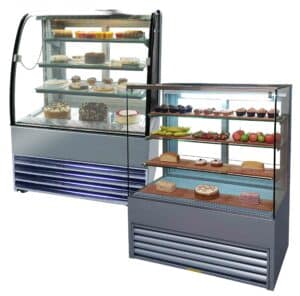
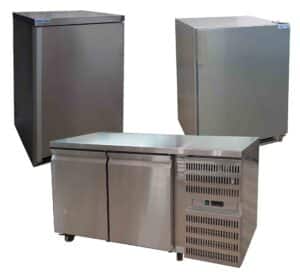
👉 SHOP OUR COMMERCIAL FREEZERS



💡 Key Takeaways
- The colour of food depends on the spectrum of the light that falls on it, so two “white” LEDs can make the same product look very different.
- Colour temperature (in kelvin) sets the mood of a display; colour rendering (CRI, R9 and TM-30) sets how true the colours look.
- Ask for a CRI of at least 80, and 90 or more with a high R9 value for meat, fresh produce and patisserie.
- Light can damage food: blue and ultraviolet light speeds up off-flavours in milk and beer and the browning of fresh meat.
- Lighting must make food look its best without misleading customers about its freshness or quality.
How Light Becomes Colour: Spectra and the Human Eye
Visible light is a narrow band of electromagnetic radiation, with wavelengths from roughly 380 nanometres (violet) to around 750 nanometres (deep red). A light source does not emit all of these wavelengths equally. Its spectral power distribution (SPD) describes how much energy it gives out at each wavelength, and that shape decides which colours it can reveal.
Food has no colour of its own in the dark. A ripe tomato looks red because its pigments absorb most of the blue and green light that reaches it and reflect the red. If the light source contains very little red energy in the first place, there is little red to reflect, and the tomato looks dull or brownish, however fresh it is.
The human eye reads this reflected light with three types of cone cells, sensitive to short (blue), medium (green) and long (red) wavelengths. The brain compares their signals to produce the colour we perceive. Two different spectra can produce the same signal and look like the same white light, yet render food very differently. This effect, called metamerism, is why two LED strips that look identical when you switch them on can make the same cake look tempting under one and flat under the other.
Most white LEDs used in display fridges are blue LED chips coated with a phosphor that turns part of the blue light into yellow, green and red. Cheaper phosphors leave gaps in the spectrum, often a weak band in the cyan region and very little deep red. Better phosphors fill those gaps, which is what high colour rendering LEDs are designed to do.
Colour Temperature: Warm, Neutral and Cool White
Colour temperature, measured in kelvin (K), describes whether white light looks warm and yellowish or cool and bluish. Lower numbers are warmer and higher numbers are cooler. Colour temperature sets the mood of a display, and different foods benefit from different moods.
| Colour temperature | How it looks | Works well for |
|---|---|---|
| 2700–3000 K | Warm, golden, cosy | Bread, pastries, cakes and hot food displays |
| 3500–4000 K | Neutral, natural daylight | Fresh meat, deli counters, cheese and mixed fresh food |
| 4000–5000 K | Bright and fresh | Fruit, vegetables, salads and grab and go food |
| 5000–6500 K | Cool, crisp, blue-white | Drinks, dairy and frozen food, where a cold, clean feel helps |
These ranges are a guide, not a rule. A café with a warm interior may prefer 3000 K in its drinks fridge so that the cabinet matches the room, while a supermarket chiller aisle may run cooler throughout.
Consistency matters as much as the choice itself. Mixing colour temperatures in one display, or replacing a single failed strip with a different shade, makes the whole display look patchy and less professional. When you replace lights, match the original specification. Our lights and LED drivers section lists replacement parts for our cabinets.
Colour Rendering: CRI, R9 and TM-30 Explained
Colour temperature tells you the shade of the light. Colour rendering tells you how accurately that light shows the true colours of the things it falls on. The two are independent: a warm light can render colours well or badly, and so can a cool one.
CRI (Ra)
The Colour Rendering Index, or CRI (also written Ra), scores a light source from 0 to 100 by comparing how it renders eight standard pastel test colours with a reference light. A CRI of 80 is the usual minimum for retail lighting; 90 or more is considered high fidelity.
R9: the deep red that CRI leaves out
The eight colours behind the CRI score do not include a saturated red. That red is measured separately as R9. An LED can score a respectable CRI of 80 and still have a very low, or even negative, R9 value, which means reds look weak. For meat, berries, tomatoes, red peppers and many cakes, R9 matters more than the headline CRI.
TM-30: fidelity and saturation
The newer TM-30 method from the Illuminating Engineering Society uses 99 colour samples and gives two main numbers: Rf (fidelity, how true the colours are, from 0 to 100) and Rg (gamut, whether colours look more saturated than under the reference light; 100 is neutral, above 100 is more vivid). Lights with an Rg slightly above 100 can make food look more vibrant, but too much saturation starts to look unnatural.
When you compare display fridges or replacement lights, ask for the CRI, the R9 value and, if available, the TM-30 figures, not just the wattage and colour temperature.
The Psychology of Colour and Freshness in Food Displays
Shoppers judge food quickly and mostly by eye. Before they read a label or check a price, they have already formed an impression from colour, brightness and how the display looks as a whole. That is why lighting has such a strong effect on what people buy.
Colour as a freshness cue. People learn to link certain colours with freshness and ripeness: bright red meat, vivid green leaves, glossy fruit, golden pastry. When lighting weakens these colours, food looks older or less appetising, even when it is perfectly fresh.
Brightness and contrast attract attention. A well-lit cabinet stands out from its surroundings and draws the eye from across the shop. Products in shadow at the back or bottom of a shelf are noticed less and bought less.
Warm and cool light set expectations. Warm light feels comfortable and indulgent, which suits bakeries, cake displays and coffee shops. Cooler light feels clean, cold and refreshing, which suits drinks and dairy. When the light matches what customers expect from the product, the display feels right.
Uniformity builds trust. Even light across every shelf, without dark corners, glare or flicker, makes a display look cared for. Uneven lighting suggests neglect, and customers tend to extend that impression to the food.
For more on how presentation turns into sales, see our guide on organising drinks in the fridge for maximum impact.

Matching the Light Spectrum to the Product
Each food group responds differently to light. Matching the spectrum and colour temperature to what you sell is one of the simplest ways to improve a display.
Meat and fish
Fresh meat needs strong reds without looking artificial. Choose neutral white (around 3500 to 4000 K) with a high CRI and a high R9 value. Avoid heavily red-tinted lighting that exaggerates the colour; it misleads customers and makes the meat look strange next to anything else. Our article on the best butcher fridge to present your meat covers the cabinet side.
Fruit, vegetables and salads
Fresh produce benefits from bright, neutral to cool light with good rendering across the whole spectrum, so that greens, reds and oranges all look natural. Multideck open fridges with shelf lighting help here, together with the right humidity; see humidity control in display fridges.
Bread, cakes and patisserie
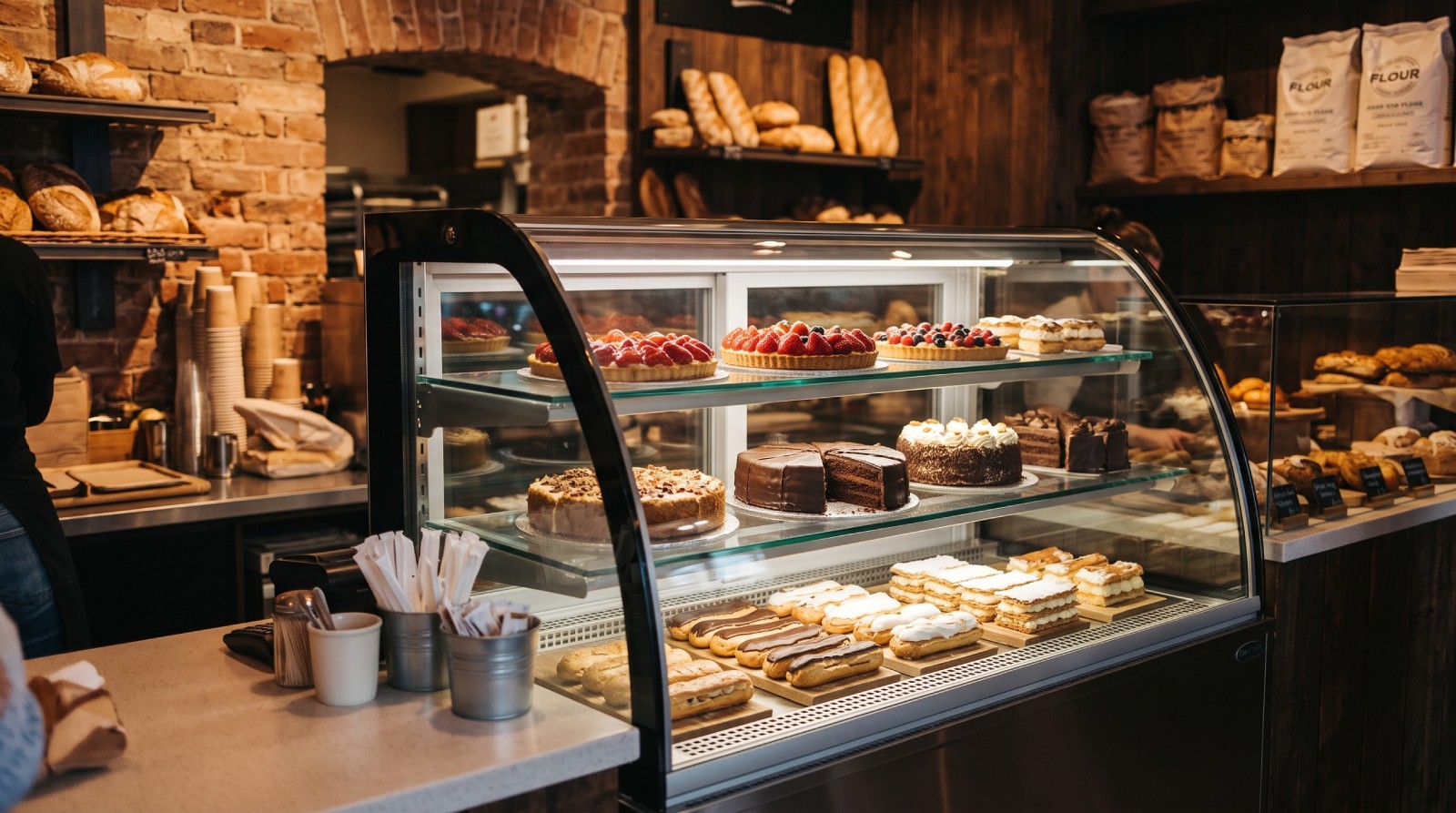
Warm white light (around 3000 K) brings out golden crusts, caramel and chocolate, while a high CRI keeps fruit toppings and cream looking fresh. Our patisserie display fridges are designed to show cakes on several levels, and our guide to presenting cakes in a patisserie fridge has more ideas.
Dairy, deli and ready meals
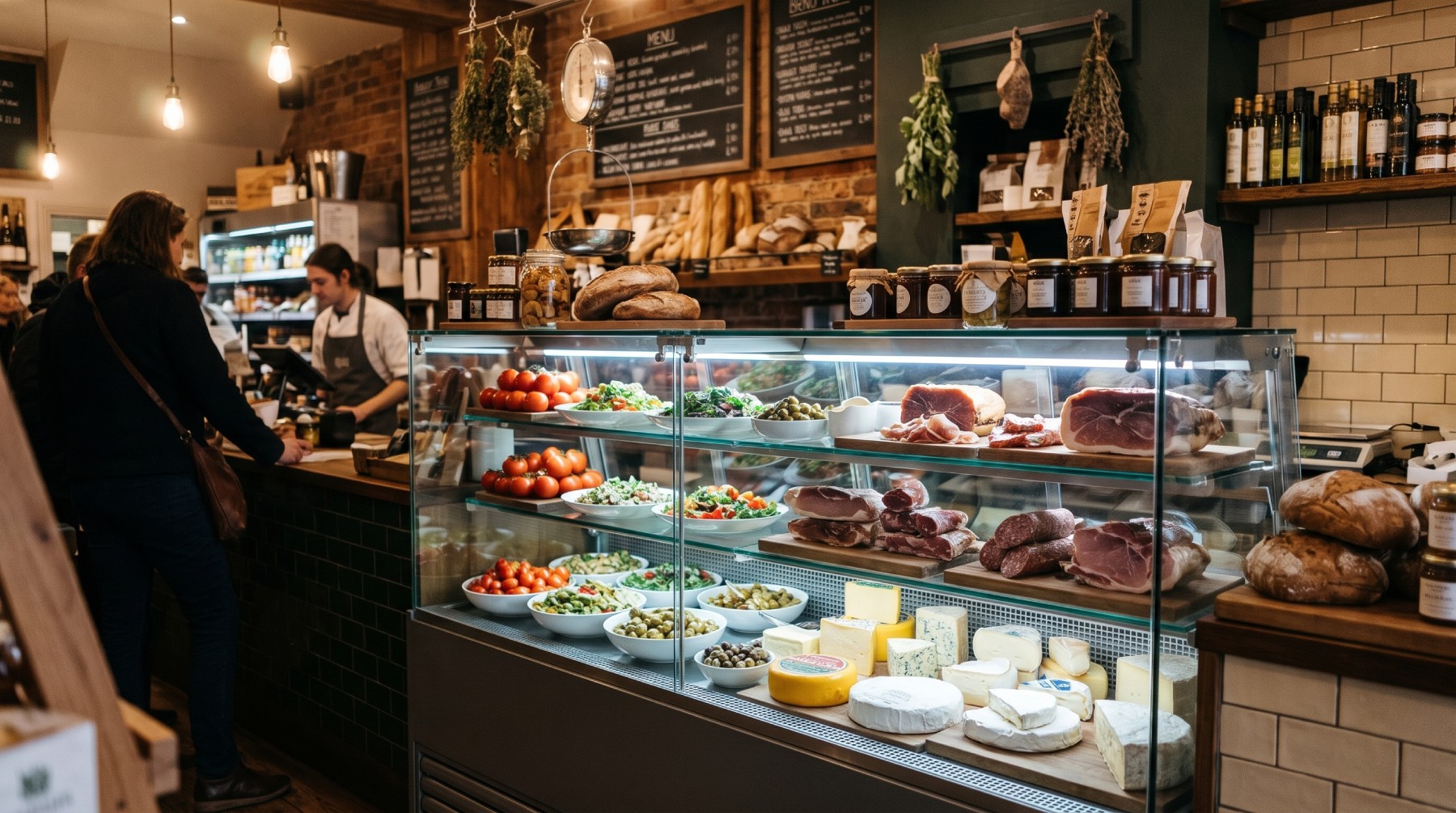
Neutral white light makes cheese, salads and prepared food look natural. In deli and serve over counters, keep the light even across the whole display so that products at the front and back look equally fresh.
Drinks
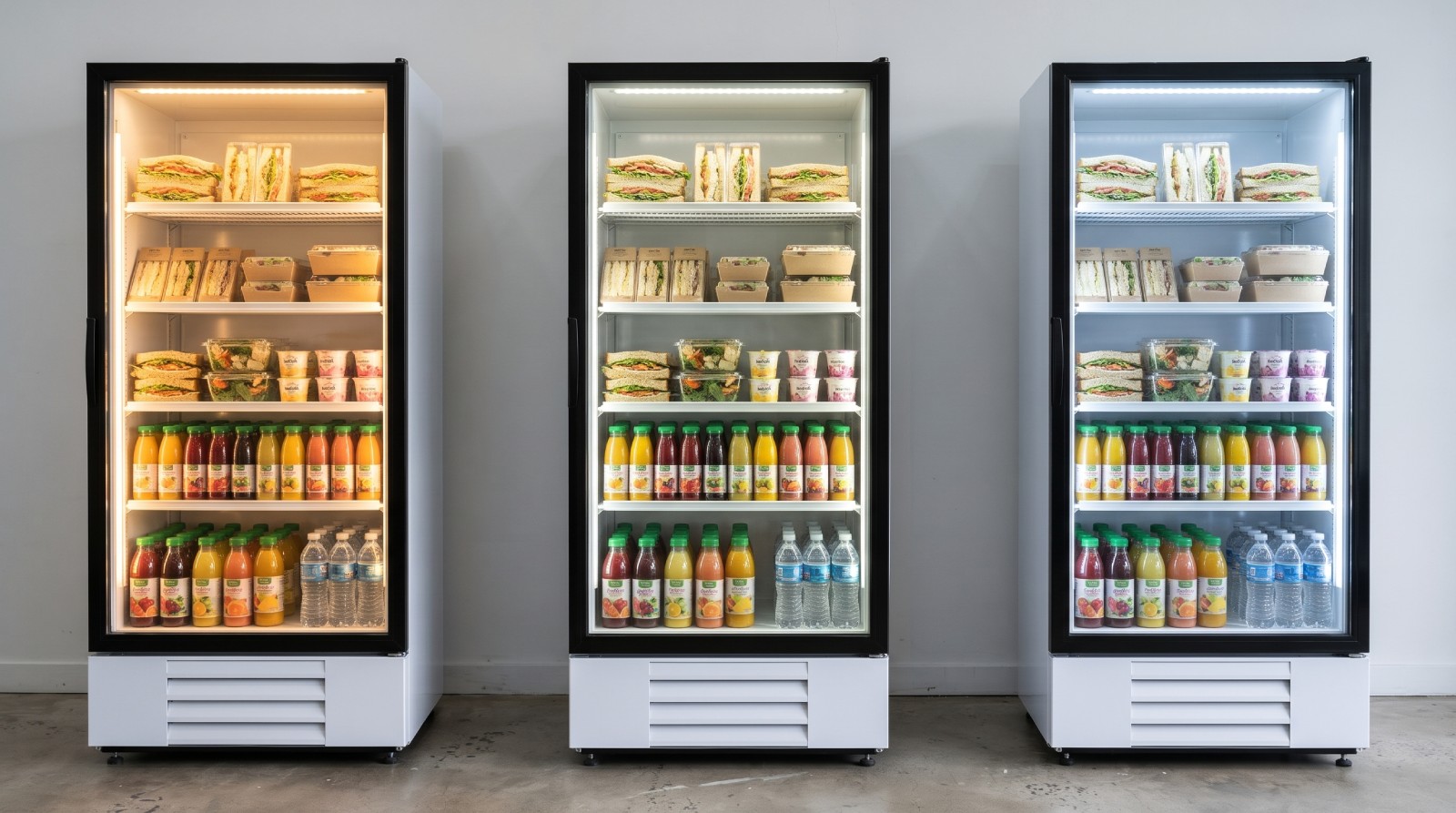
Cooler white light emphasises cold and refreshment, and lights mounted at the door edges or under the shelves show off labels and bottle colours in glass door drinks fridges.
When Light Damages Food: Heat, UV and Photo-oxidation
Light does not only change how food looks. It can also change the food itself, a process known as photo-oxidation.
Milk and dairy. Riboflavin (vitamin B2) in milk absorbs blue and ultraviolet light and triggers reactions that create a “light-oxidised” off-flavour, while also destroying some of the riboflavin. Milk in clear packaging under bright light is most at risk, which is why many dairies use opaque or tinted bottles.
Beer. Light, especially in the blue and ultraviolet range, breaks down compounds from hops into a sulphur-containing molecule that gives “light-struck” or “skunky” beer its unpleasant smell. Brown glass gives the most protection; clear and green bottles give much less.
Fresh meat. The bright red colour of fresh meat comes from oxymyoglobin. Over time it turns into brown metmyoglobin, and light and warmth both speed up that change. Strong light can shorten the time meat keeps its attractive colour on display.
Heat from the light source. Older fluorescent tubes and halogen lamps add heat to the cabinet, which raises the product temperature and makes the compressor work harder. LEDs produce far less heat at the shelf and almost no ultraviolet, which is one reason they have replaced older lighting in modern display fridges. Temperature also affects nutrients; our article on how temperature affects nutrient retention in fresh foods explains why.
You can reduce the risk by rotating stock (first in, first out), not leaving light-sensitive products at the front of a brightly lit shelf for days, and switching display lights off or fitting night blinds when the shop is closed.
Honest Presentation: Lighting, Trust and UK Food Law
There is a clear line between showing food at its best and making it look better than it is. Food information law requires that the way food is presented must not mislead consumers, and that includes the setting in which it is displayed. You can read the wording in Article 7 of the Food Information to Consumers Regulation, which still applies in the UK.
In practice, that means lighting should reveal the true colour of the food, not disguise its age. Heavily tinted lights that make tired meat look freshly cut or fading produce look bright can mislead customers, and once a customer gets home and sees the real colour, the damage to trust is hard to repair.
High-fidelity lighting (a high CRI or Rf with a high R9) with only a modest boost in saturation is the safest approach. It makes good food look good while still showing it honestly, which builds the repeat business that every shop depends on.
A simple lighting check for your displays
- Look at your displays from where customers stand, at different times of day.
- Check that every light works, that none flicker and that all match in colour.
- Compare a product inside the fridge with the same product in daylight. If the colours look very different, the lighting needs attention.
- Ask your supplier for the CRI, R9 and colour temperature of any replacement lights.
- Clean the glass and light covers regularly; dirt reduces brightness and changes the colour of the light.
Frequently Asked Questions
What is the best light spectrum for a food display fridge?
A full, even spectrum with a high colour rendering index (CRI 90 or more) and a strong R9 value suits most food. Choose the colour temperature by product: warm white for bakery, neutral white for meat, deli and mixed fresh food, and cooler white for drinks and dairy.
What CRI should LED lighting in a display fridge have?
A CRI of at least 80 is the usual minimum for food retail. For meat, fresh produce and patisserie, CRI 90 or more with a high R9 value shows reds and natural colours much more accurately.
What is R9 in display fridge lighting?
R9 measures how well a light source renders a saturated red. It is not included in the standard CRI score, so an LED can have a reasonable CRI and still make meat, berries and tomatoes look dull if its R9 value is low.
Does the colour temperature of display fridge lighting affect sales?
Colour temperature changes how customers feel about the food. Warm light makes baked goods look golden and inviting, while cool light makes drinks look cold and refreshing. When the light suits the product, the display looks more appealing and shoppers are more likely to choose from it.
Can display fridge lighting damage food?
Yes. Blue and ultraviolet light can cause off-flavours in milk and beer and speed up the browning of fresh meat. LEDs give out very little ultraviolet and heat, but rotating stock and switching lights off when the shop is closed still helps.
Is it legal to use coloured lighting to make food look fresher?
Food must not be presented in a way that misleads customers, and that includes the setting in which it is displayed. Lighting that makes food look fresher or better quality than it really is could be treated as misleading, so aim for natural, accurate colour.

Light Your Food the Way Customers Want to See It
Spectral science turns lighting from an afterthought into a tool. When you understand how the spectrum, colour temperature and colour rendering work together, you can choose lights that make each product look fresh, natural and appetising, protect light-sensitive food and keep your customers’ trust.
The right cabinet makes all of this easier. Display-Fridge Wholesale supplies commercial fridges and commercial freezers by Frost-Tech to shops, cafés, pubs, restaurants and hotels across the United Kingdom at wholesale prices, from our base in Buckingham. Our multideck display fridges, patisserie fridges, deli counters, grab and go fridges and glass door drinks fridges come with LED lighting designed for food display, and we stock replacement lights and LED drivers to keep your displays bright.
Browse our commercial fridges and commercial freezers, explore our free resources for food businesses, or call us on 01280 852139 for advice on the right display for your products.
👉 SHOP OUR COMMERCIAL FREEZERS