 0 items –
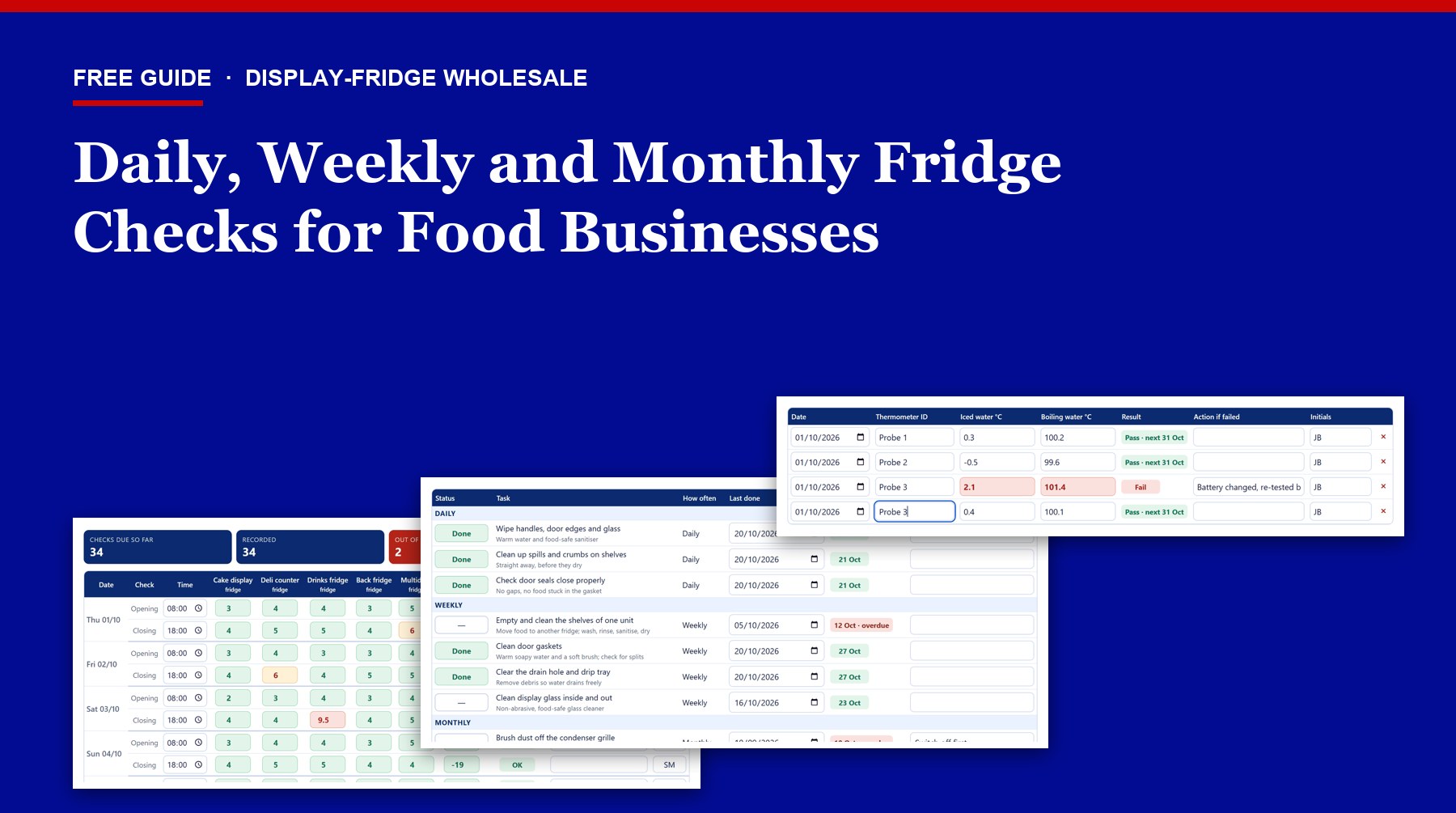
Most fridge problems do not start with a breakdown. They start with a door seal that has split, a condenser covered in dust or a fridge that has been running at 7°C for a fortnight without anyone noticing. By the time food is warm, the stock is already at risk. A short routine of fridge checks, split into daily, weekly, monthly and yearly jobs, catches these problems early, keeps your food safe and gives an inspector the evidence they want to see.
This guide sets out that routine for cafés, bakeries, delis, food shops and kitchens. For every check, we explain what to do, why it matters and which of our free resources makes it quicker. Everything follows Food Standards Agency (FSA) guidance for England, Wales and Northern Ireland; if your business is in Scotland, check the guidance from Food Standards Scotland as well.
💡 Key takeaways
- Check and record every fridge and freezer at least twice a day: before you open and after you close.
- Chilled food must be kept at 8°C or below by law; aim to run fridges between 0°C and 5°C.
- Clean shelves and door gaskets weekly, and brush dust off the condenser grille every month.
- Test every probe thermometer monthly in iced water (−1°C to +1°C) and boiling water (99°C to 101°C).
- Book a professional service at least once a year, or every six months for units in hot or busy areas.
Why a fridge check routine matters
Temperature is the single most important control for chilled food. Bacteria multiply fastest between 8°C and 63°C, so a fridge that drifts a few degrees too warm shortens the safe life of everything inside it. Display fridges are especially at risk: their doors are opened all day, their lights add heat and many stand on a warm shop floor.
A routine also protects your equipment. Dust on the condenser makes the compressor work harder, which raises electricity bills and shortens its life. Dirty or torn door seals let warm air leak in all day. These are cheap to fix when you spot them early and expensive when you do not. Our guide to making a commercial fridge more energy efficient shows how much these small jobs add up.
Finally, a routine gives you records. The law requires food businesses to have food safety procedures based on HACCP principles, and written checks are the usual way to show that those procedures work. When an inspector asks how you know your fridges are cold enough, a month of completed logs answers the question in seconds.
The routine at a glance
| How often | Check | Free resource |
|---|---|---|
| Every day | Opening and closing checks, fridge and freezer temperatures, hot-holding checks | Opening & Closing Checklist, Temperature Log |
| Every delivery | Temperature and condition of chilled and frozen goods | Delivery Temperature Log |
| Every week | Clean shelves and door gaskets, compare fridge displays with a probe | Cleaning Schedule |
| Every month | Deep clean, condenser grille, probe thermometer test | Calibration Record |
| Every year | Professional service of every unit | Equipment Register & Service Log |
Daily fridge checks
Before you open
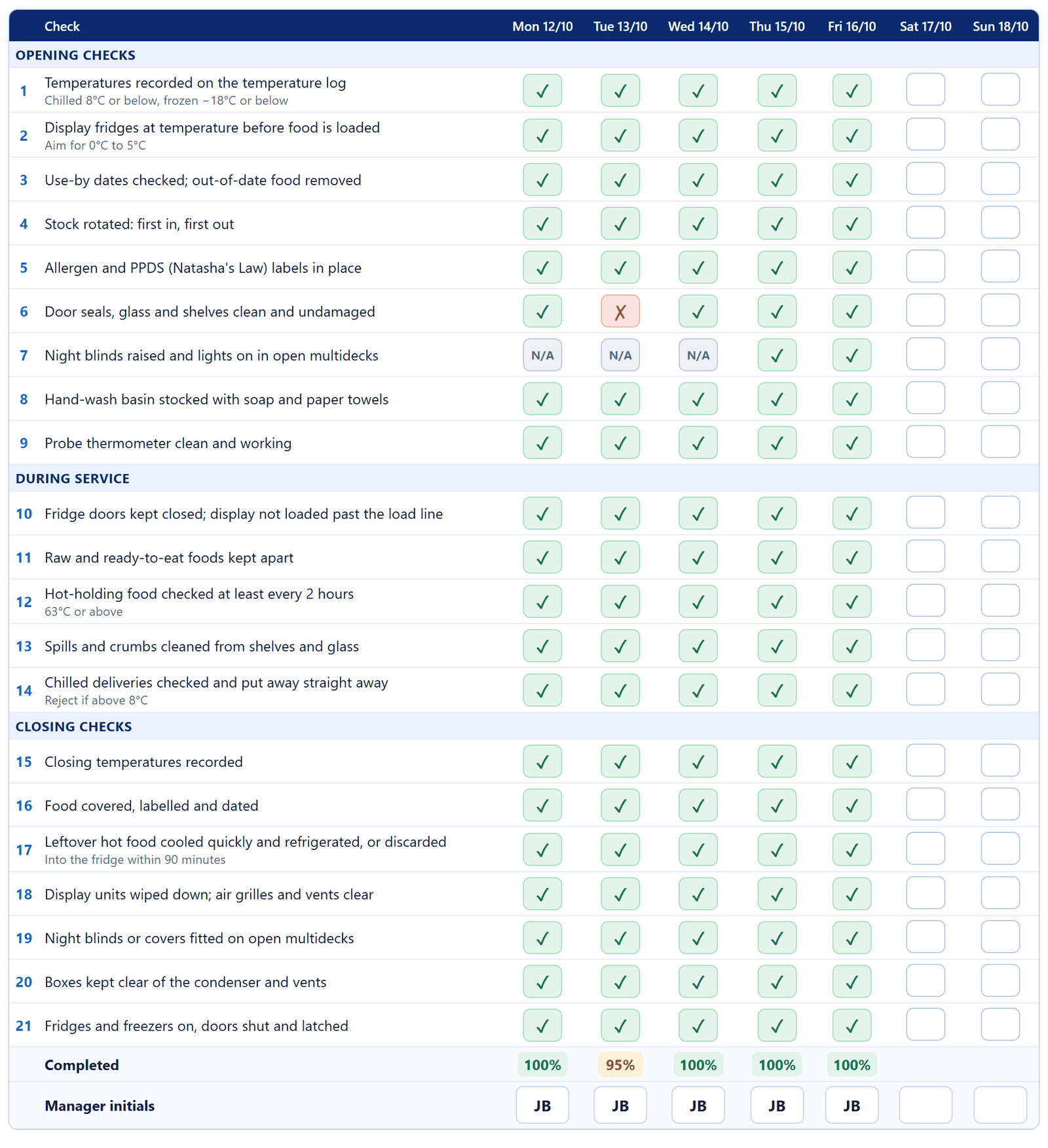
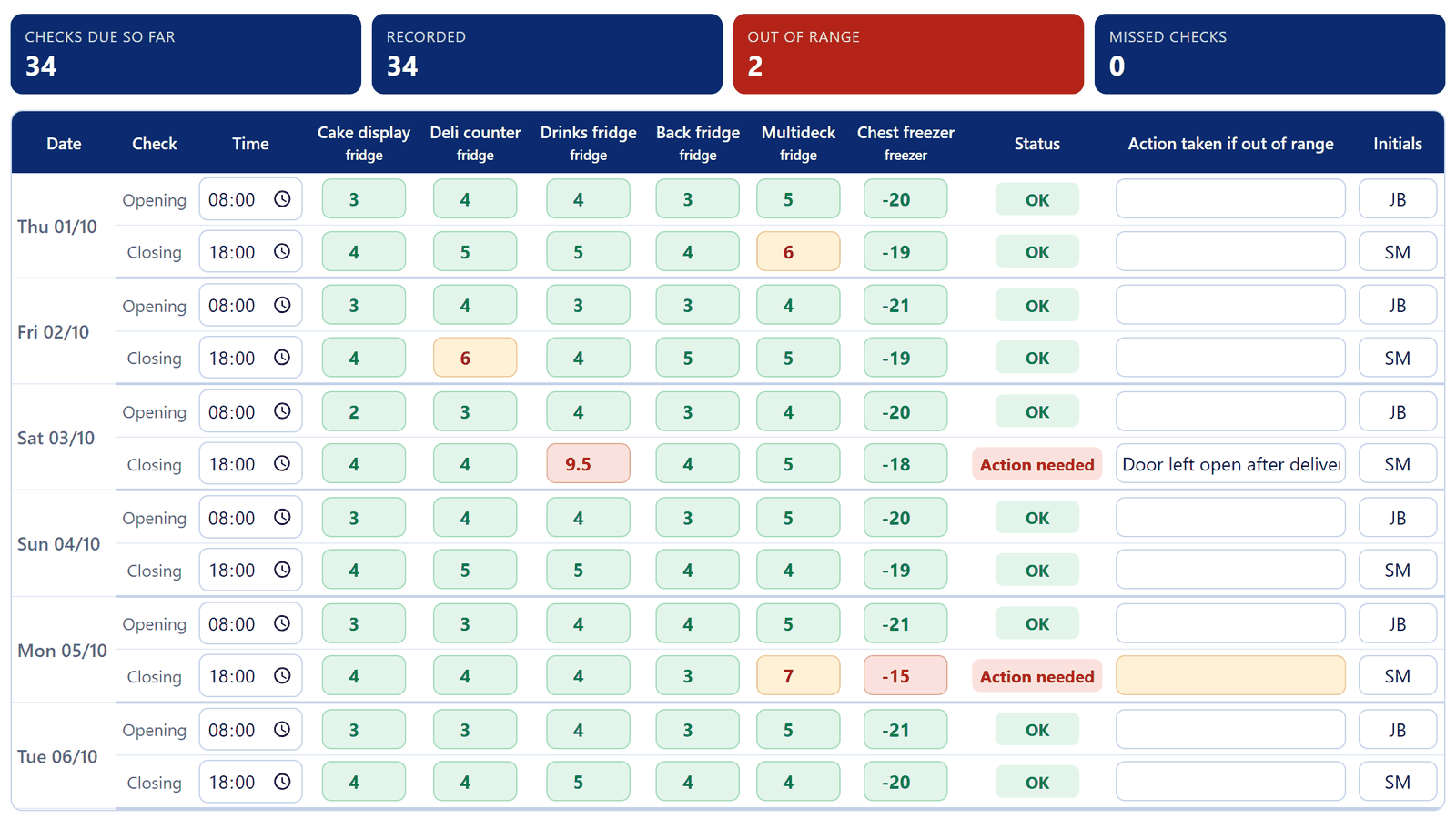
The first job of the day is the temperature check. Read every fridge, display cabinet and freezer before the first customer arrives, write the reading down and initial it. Chilled food must be at 8°C or below; aim for 0°C to 5°C so that you have a margin. Freezers should be at −18°C or colder.
Use the same walk round to look for anything that happened overnight: a door left ajar, a night blind still down on an open multideck fridge, ice building up in a glass door freezer or water on the floor. Then check dates, rotate stock so the oldest is used first and make sure everything is covered, labelled and stored in the right order.
During the day
Check display fridges more often on hot days, after deliveries and if a unit has had a problem recently. If you sell pies, pasties or sausage rolls from a heated display cabinet, probe the centre of the food at least every 2 hours: hot food on display must stay at 63°C or above. Hot food can be kept below 63°C for a single period of up to 2 hours; after that, reheat it until steaming hot or throw it away, as your food safety procedure says.
If you cook and cool food, record when cooking finished and when the food went into the fridge. The FSA’s Safer Food, Better Business guidance is to cool food as quickly as possible, ideally within 90 minutes, before it goes into the fridge. The Food Cooling Log works out the minutes for you and flags anything over 90.
After you close
Take the second temperature reading after the last customer has gone. Pull down night blinds, close every door properly and make sure nothing is blocking the air vents or stacked above the load line. Cold air needs gaps to reach every shelf, as our article on airflow rules for food storage explains.
What to do when a reading is too high
Do not just write the number down and walk away. Re-check with a probe thermometer, then check the door, the seals, the load line and the air vents, and re-check after 30 minutes. If the fridge is still too warm, move the food to a working unit and call your engineer. Write what you did in the action column.
Food that has been above 8°C for an unknown time should be dealt with according to your food safety procedure: if in doubt, throw it out. Our Fridge Breakdown Emergency Plan sets out the first ten minutes step by step, and our article on how long food can stay in a broken commercial fridge explains the decision in more detail.
Every delivery
Check chilled and frozen deliveries before you sign for them. Chilled food should arrive at 8°C or below, and ideally 5°C or below; probe between two packs rather than piercing packaging that will be sold. Frozen food should be hard frozen. Reject anything that is too warm, thawing, damaged or out of date, record the reason and put chilled and frozen goods away first, within 15 minutes if you can.
Weekly fridge checks
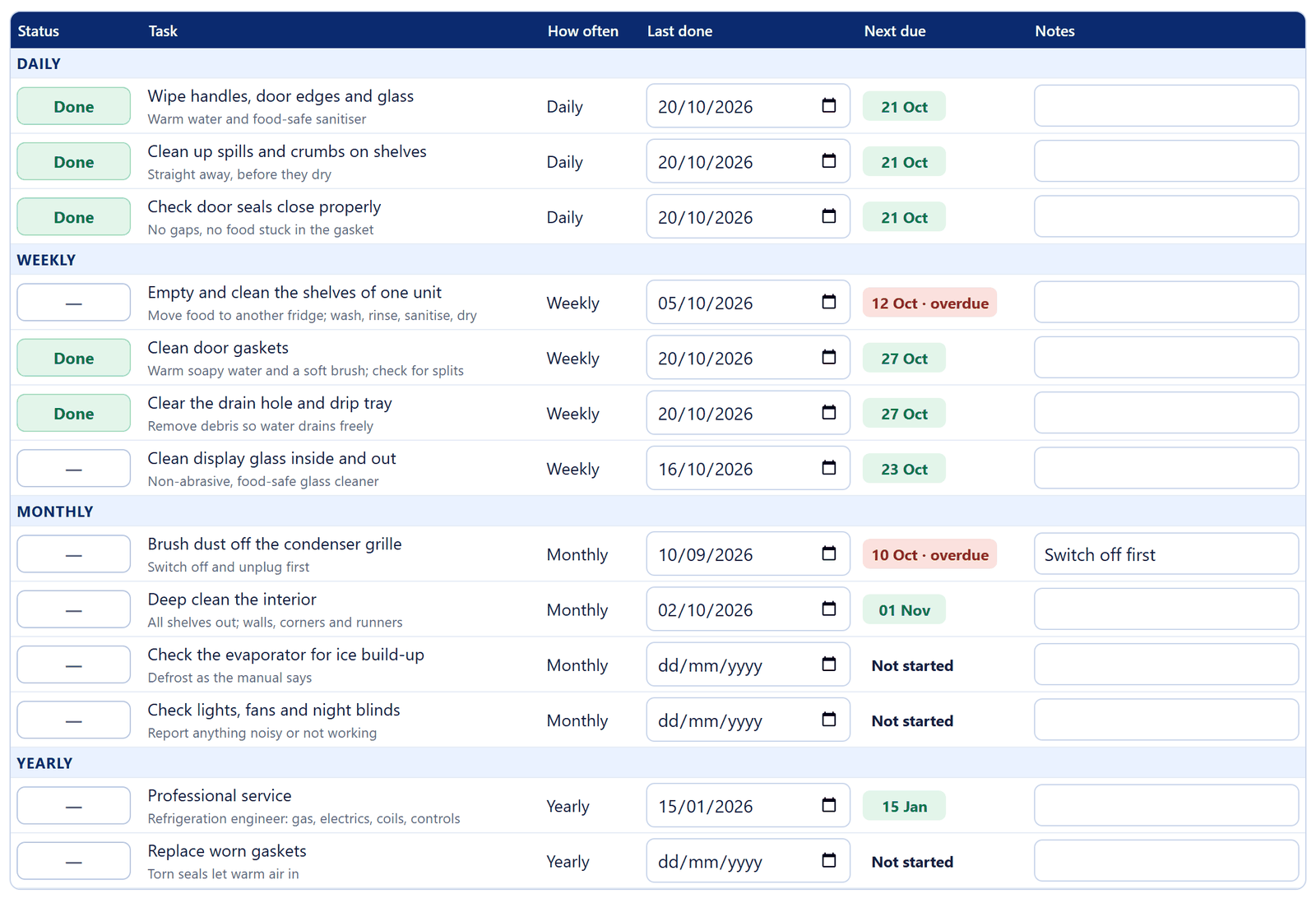
Once a week, empty each fridge in turn, clean the shelves and the inside walls, and wipe the door gaskets. Dirty seals stop doors closing properly and let warm air in all day. Look for splits and gaps as you clean: a worn gasket is cheap to replace and our replacement door gaskets fit many Frost-Tech models. Our step-by-step guide to cleaning commercial fridge door gaskets shows how.
Use the same day to compare each fridge display with your probe thermometer. If the two are more than 2°C apart, the display or the thermostat needs attention, so book a service before the difference becomes a problem.
Monthly fridge checks
Deep clean and condenser
Once a month, give each unit a deeper clean and, with the unit switched off, brush the dust off the condenser grille. It takes five minutes, and a clean condenser can make a noticeable difference to how hard the compressor works and how much electricity it uses. Check that nothing has been pushed against the back or sides of the cabinet and blocked the ventilation.
Probe thermometer test
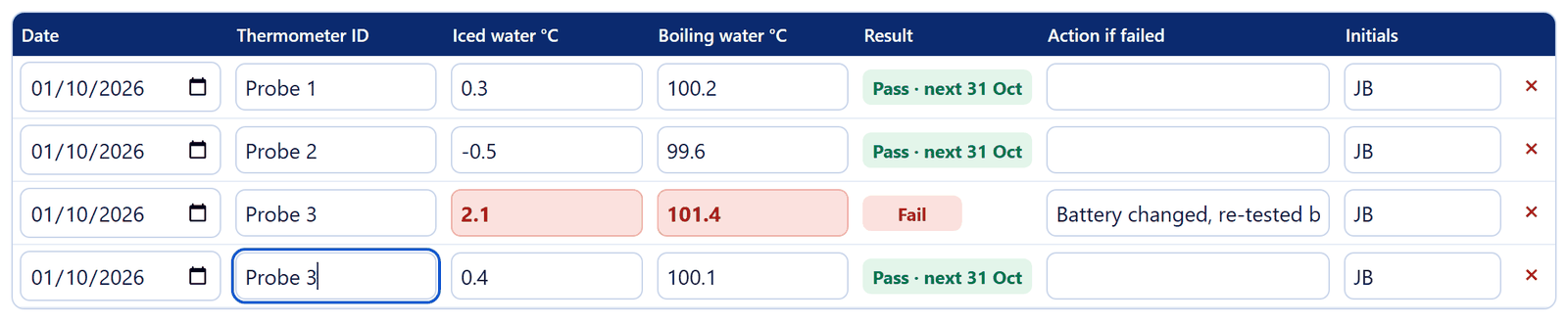
Every temperature you record depends on your probe thermometer being accurate. A probe that reads 2°C low will tell you a fridge at 9°C is at 7°C. Test every probe once a month:
- Iced water: fill a glass with crushed ice and top it up with cold water. Stir, wait a minute and put the probe in the centre, not touching the glass. It should read between −1°C and +1°C.
- Boiling water: put the probe in rapidly boiling water, away from the bottom of the pan. It should read between 99°C and 101°C. Take care with steam.
If a probe fails either test, change the battery and test again. If it still fails, replace it, and record the result either way.
Review the month
At the end of the month, look back through the logs. A unit that keeps creeping above 5°C in the afternoon, a supplier whose deliveries are often warm or a probe that failed twice are all early warnings. Deal with them now, while they are cheap to fix.
Yearly checks: the professional service
A professional service at least once a year is a sensible minimum. Units in hot kitchens, next to ovens or in busy shops may need servicing every six months, or as the manufacturer recommends. A service typically includes cleaning the condenser, checking fans, controls and electrics, and checking the refrigeration system. Many breakdowns start with a dirty condenser, a failing fan or a worn door seal, so the service often pays for itself.
Keep one list of every fridge, display cabinet and freezer you own, with its model, serial number, installation date, warranty and service history. When a unit breaks down several times a year and its repair bill keeps growing, the list makes the decision to replace it much easier.
When the time comes to replace a unit, compare running costs as well as prices. The Commercial Fridge Running Cost Calculator shows what each unit costs per day, month and year, and how quickly a more efficient model pays for itself.
Making the routine stick
- Put the sheets where the work happens. The temperature log next to the fridges, the cleaning schedule in the kitchen, the service log in the office.
- Give every check an owner. Counter staff for daily checks, a supervisor for weekly cleaning, a manager for monthly tests and the yearly service.
- Write down actions, not just readings. A red reading with no action next to it is the first thing an inspector will ask about.
- Keep the records. Keep enough to show an inspector a full history since their last visit, plus any records linked to a complaint or incident.
These resources support your food safety management system, such as Safer Food, Better Business, and do not replace it. You will find all thirteen of them, free and without sign-up, on our food safety resources page.
Frequently asked questions
How often should fridge temperatures be checked in a food business?
At least twice a day: before you open and after you close. Check display fridges more often on hot days, after deliveries and if a unit has had a problem recently, and record every reading.
What temperature should a commercial fridge be in the UK?
Chilled food must be kept at 8°C or below in England, Wales and Northern Ireland. Aim to run commercial fridges between 0°C and 5°C to give yourself a margin, and keep freezers at −18°C or colder.
How often should a commercial fridge be cleaned?
Wipe handles, glass and spills daily; clean the shelves and door gaskets weekly; deep clean and brush the condenser grille monthly; and have a professional service every year.
How often should probe thermometers be checked?
Test every probe thermometer once a month in iced water, where it should read between −1°C and +1°C, and in boiling water, where it should read between 99°C and 101°C. Record each result.
How often should a commercial fridge be serviced?
At least once a year. Units in hot kitchens, next to ovens or in busy shops may need a service every six months, or as the manufacturer recommends.
What should I do if a fridge check shows a high temperature?
Re-check with a probe, check the door, seals, load line and air vents, and re-check after 30 minutes. If it is still too warm, move the food to a working unit, call your engineer and record what you did. Food above 8°C for an unknown time should be dealt with under your food safety procedure: if in doubt, throw it out.
About Display-Fridge Wholesale
A good routine keeps your fridges safe and efficient, but it works best with equipment that holds its temperature on a busy day. If your logs show a unit that keeps struggling, it may be time to replace it.
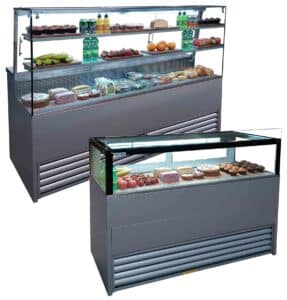
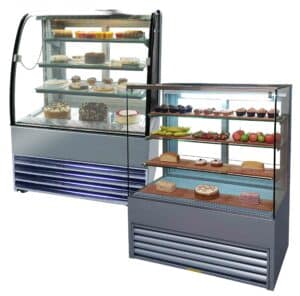
We are a UK supplier of commercial fridges and commercial freezers by Frost-Tech, based in Buckingham and supplying food businesses across the country. Our range covers multideck open fridges, glass door drinks fridges, cake and patisserie displays, deli and serve over counters, grab and go fridges, heated display cabinets, upright storage fridges, under counter fridges, glass door display freezers and chest freezers, most of them in a Standard and a Premium version so you can match the cabinet to your budget.
We also stock spare parts such as door gaskets, fan motors and controllers, deliver free to most of mainland England and Wales, and publish free food safety resources for UK food businesses. Not sure which cabinet you need? Read more about us, browse the frequently asked questions or call us on 01280 852139 and we will help you choose.




👉 SHOP OUR COMMERCIAL FREEZERS