
 0 items –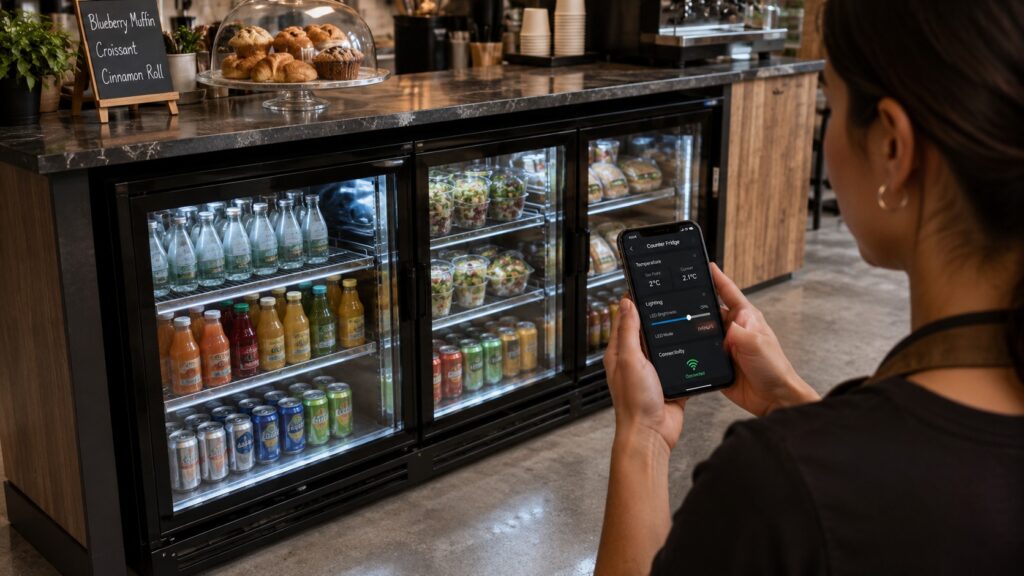
Discover how a smart commercial refrigerator uses IoT technology, Wi-Fi alerts, and remote tracking to protect your food stock.
Stepping into a modern professional kitchen reveals a symphony of humming machinery, yet the humble refrigerator has undergone a quiet revolution. We often think of cold storage as a simple, insulated box with a compressor attached. However, the introduction of the smart commercial refrigerator has completely transformed how hospitality businesses protect their valuable ingredients. So, how exactly do these intelligent machines function? Think of them as highly trained security guards for your food. Instead of passively blowing cold air, they actively monitor, analyse, and report on their own performance.
Have you ever wondered how much stock you might lose if a door was left slightly ajar overnight? It is a common nightmare for chefs and business owners alike. Still, with modern advancements, that anxiety is becoming a thing of the past. By integrating complex sensors with everyday internet connectivity, these appliances provide real-time insights directly to your pocket. We are looking at a fundamental shift in food safety and operational efficiency. Furthermore, adopting IoT commercial fridge technology means your kitchen runs smoother, your energy bills remain manageable, and your compliance logs generate themselves. Regardless of the size of your operation, understanding the mechanics behind these cooling systems empowers you to make better equipment decisions.
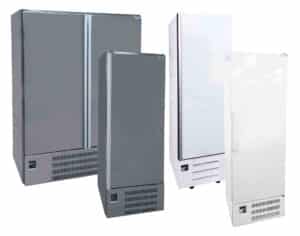


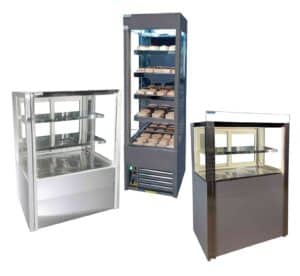

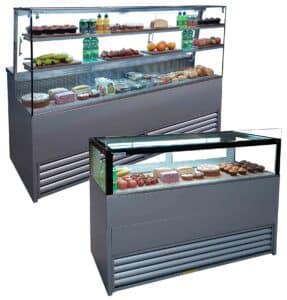

👉 SHOP OUR COMMERCIAL FREEZERS



💡 Key Takeaways
- A smart commercial refrigerator relies on continuous data collection through precision sensors.
- Internet of Things (IoT) connectivity allows the appliance to communicate its status to cloud servers.
- Automated Wi-Fi alerts notify staff immediately if temperatures fluctuate beyond safe parameters.
- Remote smartphone temperature monitoring provides peace of mind outside of working hours.
- Predictive maintenance features can identify failing components before a total breakdown occurs.
- Automated data logging simplifies food safety compliance and health inspections.

The Core Components of Intelligent Refrigeration
Every cooling appliance relies on the basic principles of thermodynamics. A compressor pumps refrigerant gas through coils, absorbing heat from the interior and releasing it outside. Anyway, a smart commercial refrigerator takes this fundamental process and layers it with advanced digital oversight. Traditional fridges use a simple mechanical thermostat, much like an old rotary dial, which switches the compressor on and off based on a rough temperature estimate. Contrarily, intelligent refrigeration utilises digital microprocessors linked to highly sensitive thermistors. These electronic sensors detect temperature changes down to a fraction of a degree.
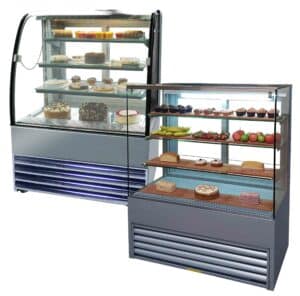
If you are displaying chilled beverages, maintaining that perfect frostiness is crucial for customer satisfaction. Our premium drinks fridges and versatile display fridges often feature digital controllers that form the foundation of this smart capability. The microprocessor acts as the brain, constantly receiving data from the internal thermistors. When the temperature rises slightly—perhaps because a customer opened the door—the brain instantly calculates the exact amount of cooling power required to restore the balance.
So, how does this differ from a standard unit? It is all about precision and communication. A traditional unit might wait until the internal cabinet is significantly warm before kicking into high gear, leading to energy spikes and inconsistent cooling. The intelligent alternative adjusts continuously in small increments. Moreover, these digital brains connect directly to your premises’ wireless network. If you operate a bustling cafe, incorporating modern multideck open fridges or grab & go sandwich fridges with intelligent controllers ensures that even with constant customer interaction, the internal climate remains perfectly stable. After all, protecting your fresh stock is the primary goal of any refrigeration system.
Harnessing IoT Commercial Fridge Technology
Understanding the Internet of Things (IoT) does not require a degree in computer science. Put simply, IoT is a network of physical objects equipped with software that allows them to connect and exchange data over the internet. Imagine a group chat where your kitchen appliances discuss how hard they are working. That is IoT commercial fridge technology in a nutshell. This interconnected system transforms isolated pieces of equipment into a cohesive, communicative network.
Precision Sensors and Constant Vigilance
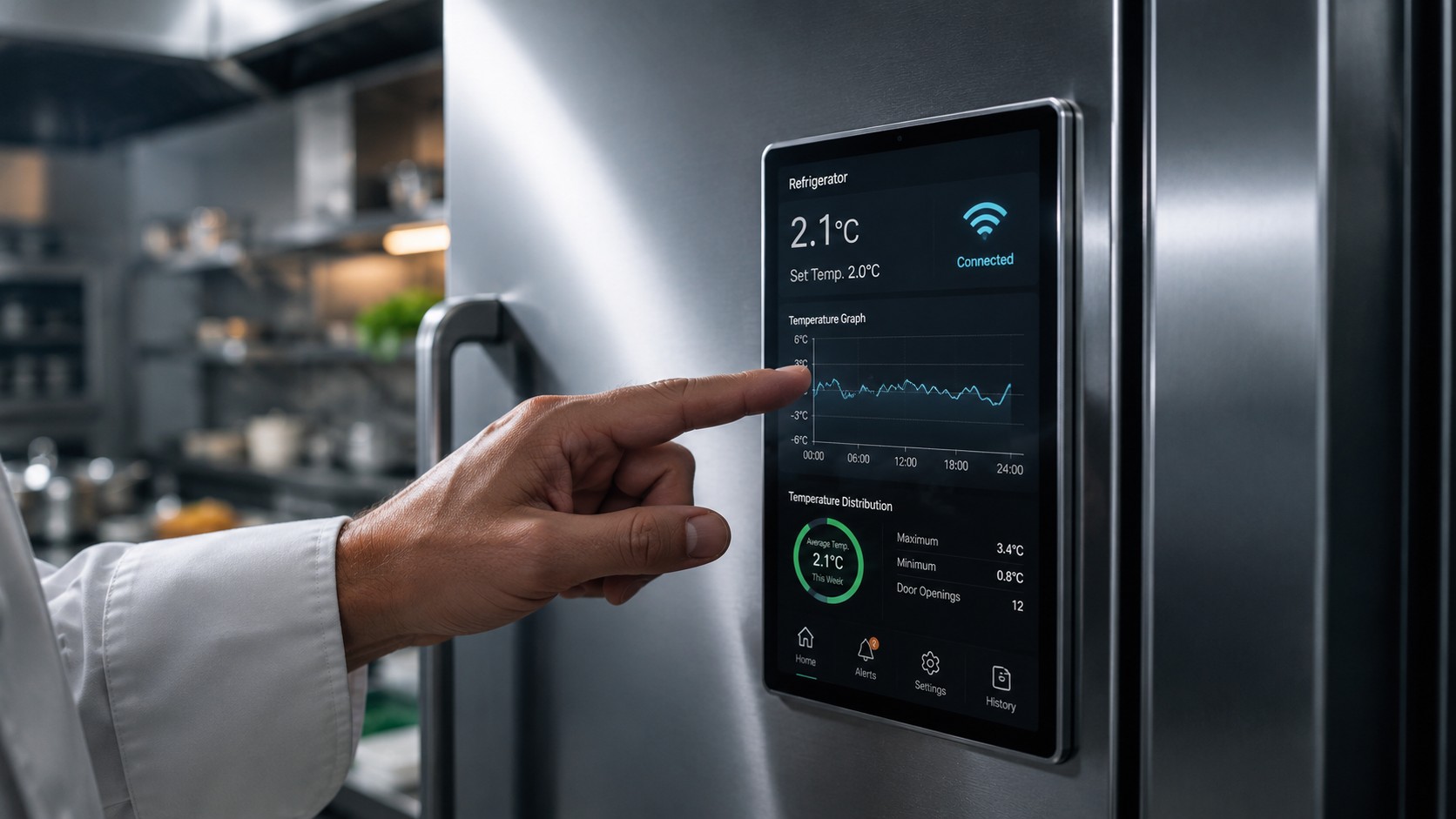
The journey of data begins inside the cabinet. Modern units are packed with various sensors, monitoring more than just the ambient air temperature. They measure humidity levels, door open/close frequencies, and even the electrical current drawn by the compressor. Consider how your smartphone adjusts its screen brightness based on the lighting in the room. In a similar vein, environmental sensors in cake fridges assess the ambient humidity to prevent condensation on the glass, ensuring your delicate pastries remain perfectly visible. These sensors gather thousands of data points every single hour. Yet, collecting data is useless without a mechanism to process it. The constant vigilance of these sensors guarantees that any deviation from the norm is immediately detected, providing the raw material for the intelligent brain to analyse.
Cloud Processing and Advanced Analytics
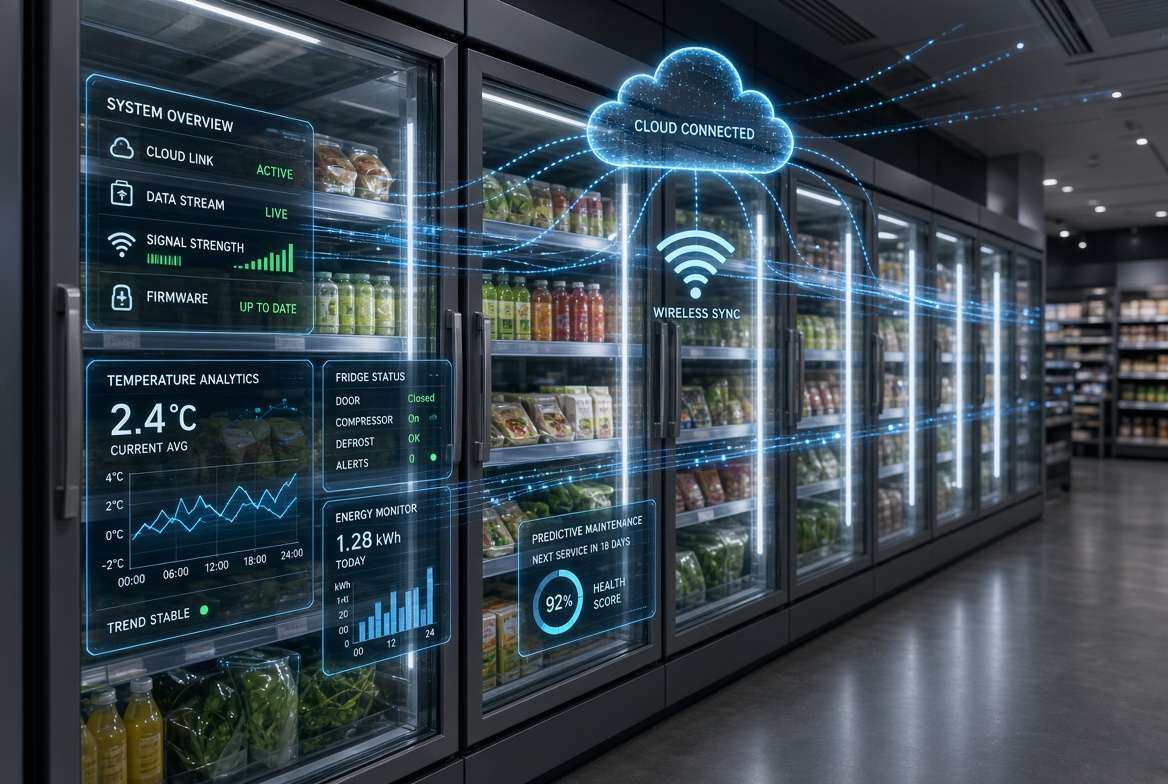
Once the sensors collect the data, the IoT commercial fridge technology transmits this information via your local network to secure cloud servers. You might wonder, what exactly is the cloud doing with your fridge’s temperature readings? Think of the cloud as a massive, highly efficient filing cabinet combined with a brilliant analyst. The server reviews the continuous stream of data, comparing it against historical performance and established safety baselines. For instance, if the cloud analytics detect that your deli counter fridges are suddenly taking thirty minutes longer to reach their target temperature after a defrost cycle, it recognises a pattern of inefficiency. This is where predictive maintenance shines. The system can flag a potential issue with a condenser fan or a minor refrigerant leak weeks before the component actually fails. By spotting these trends early, you avoid emergency call-out fees and catastrophic food spoilage.
Automated Wi-Fi Alerts and Preventative Action
The most tangible benefit of this cloud connectivity comes in the form of immediate notifications. We all know the chaos of a busy service. Staff members are rushing, and it is incredibly easy for a door to be left slightly unlatched. Without smart technology, that minor error might go unnoticed until the following morning. However, with automated Wi-Fi alerts, the system acts as a vigilant supervisor. If the internal temperature of your countertop fridges rises above the safe threshold for more than a specified duration, the system automatically triggers an alert. This could be an email, an SMS, or a push notification to a designated device. The alert prompts immediate preventative action. You can simply walk over and close the door, saving hundreds of pounds worth of artisanal cheeses or fresh meats. This feature shifts kitchen management from a reactive panic to a proactive strategy.
Remote Smartphone Temperature Monitoring
Perhaps the most reassuring feature for any business owner is remote smartphone temperature monitoring. Let us imagine it is a Sunday evening; the restaurant is closed, and you are relaxing at home. Suddenly, you feel a pang of anxiety about the expensive seafood delivery sitting in your cold storage. In the past, you would have to drive to the premises to check. Now, you simply pull out your phone, open an app, and view the real-time temperature graph of your storage fridges. It is exactly like checking your bank balance via a mobile app—instant, accurate, and deeply reassuring. This remote visibility extends to adjusting settings as well. If you know a large delivery of ambient-temperature stock is arriving in the morning, you can remotely lower the target temperature of your upright storage refrigerator the night before, building up a reserve of cold air to handle the sudden thermal load.
Tangible Benefits of Smart Systems in Commercial Kitchens
Investing in advanced refrigeration technology offers returns that extend far beyond simply keeping things cold. The operational advantages reshape how a kitchen functions on a daily basis.
- Effortless Regulatory Compliance: The Food Standards Agency (FSA) requires meticulous temperature logging to ensure food safety. Historically, this meant staff manually checking and writing down temperatures multiple times a day on paper logs. Smart appliances automate this entirely. The system logs the temperature digitally at set intervals, creating an immutable, highly accurate record. If an environmental health officer visits, you can instantly export a pristine temperature history report. You can read more about standard food safety guidelines directly at the Food Standards Agency website (https://www.food.gov.uk/).
- Significant Energy Savings: Commercial kitchens consume vast amounts of electricity. Because smart units constantly optimise their cooling cycles and defrost sequences based on actual usage rather than a blind timer, they draw less power. They learn your operational patterns. If your kitchen is closed between midnight and 6 AM, the system slightly relaxes the cooling parameters during those hours to conserve energy, without ever compromising food safety. The Carbon Trust (https://www.carbontrust.co.uk/) consistently highlights intelligent controls as a primary method for reducing commercial energy waste.
- Drastic Reduction in Food Wastage: The financial impact of throwing away spoiled ingredients is devastating to profit margins. The combination of Wi-Fi alerts and remote smartphone temperature monitoring ensures you are never caught off guard by a malfunctioning appliance.
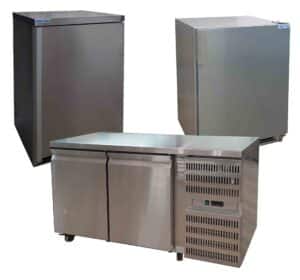
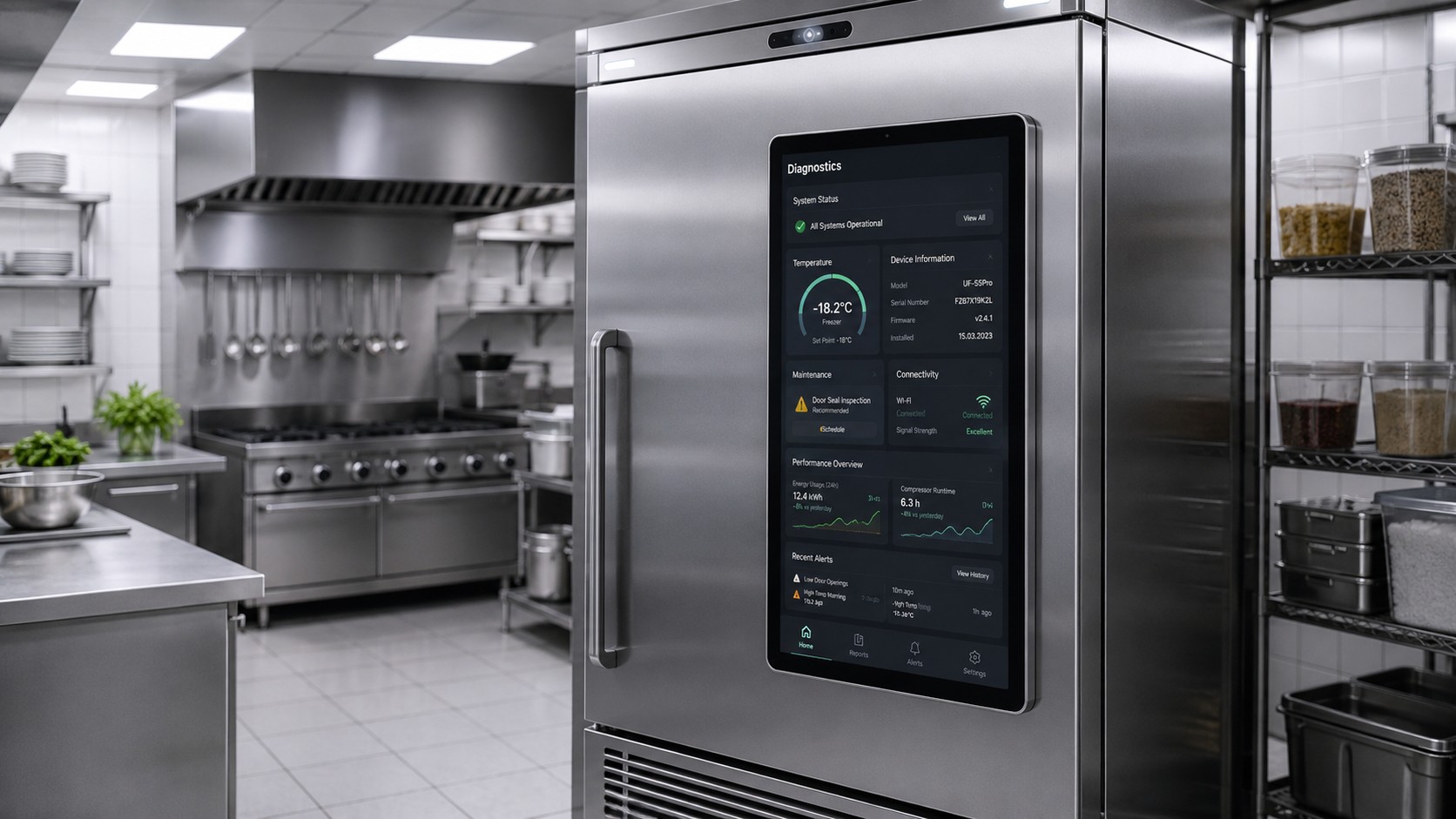
- Streamlined Maintenance Operations: Instead of scheduling maintenance only when a machine breaks down, you can adopt a predictive approach. Technicians can remotely diagnose issues by looking at the performance data, ensuring they arrive with the correct parts. This is particularly vital for heavy-duty equipment like under counter freezers or high-capacity display freezers, where downtime directly impacts your menu offerings.
Integrating Advanced Tech Across Different Equipment Types
You might assume that this high-level technology is reserved exclusively for massive walk-in cold rooms. Contrarily, the smart commercial refrigerator concept has trickled down to almost every format of cooling equipment available today. The integration of digital intelligence is adapting to specific operational needs across the board.
Take the retail sector, for example. Supermarkets and convenience stores rely heavily on visual merchandising. Sliding glass chest freezers and upright glass door freezers are essential for showcasing frozen goods while maintaining stringent sub-zero temperatures. Because glass is inherently less insulating than solid steel, these units must work incredibly hard to fight off the ambient room heat. By implementing IoT commercial fridge technology, these freezers can optimise their anti-condensation heaters. Instead of running the heaters constantly, the smart sensors detect the actual humidity in the aisle and pulse the heaters only when necessary. This subtle adjustment saves a remarkable amount of electricity over a year.
Furthermore, consider the demanding environment of a professional butchery or a high-end steakhouse. Storing expensive cuts of meat requires absolute precision. Upright storage freezers are often packed with high-value inventory. A temperature fluctuation here is not just an inconvenience; it is a massive financial loss. Remote smartphone temperature monitoring is essentially mandatory in these scenarios. Owners demand the ability to track the exact conditions of their dry-aging cabinets or deep-freeze storage 24/7.
Even in the most compact kitchen spaces, intelligence is finding its way in. Under counter fridges, frequently positioned right next to blazing hot ovens or deep fryers, face extreme ambient temperature challenges. The smart controllers in these compact units constantly assess the external heat load. When the kitchen hits its peak dinner service temperatures, the controller proactively ramps up the compressor speed, anticipating the heat ingress rather than waiting for the internal cabinet to warm up. Still, regardless of the shape or size of the appliance, the underlying goal remains identical: preserving quality through proactive data management.
Actionable Recommendations for Modernising Your Kitchen
If you are planning to upgrade your commercial kitchen or retail space, transitioning to intelligent refrigeration requires a bit of strategic planning. It is not quite as simple as plugging the unit into the wall and walking away.
Firstly, you must assess the Wi-Fi infrastructure within your premises. Commercial kitchens are notorious for being Wi-Fi dead zones. The abundance of stainless steel surfaces, thick tiled walls, and dense electrical interference from other heavy machinery can easily block wireless signals. Before installing a new smart commercial refrigerator, test the network strength in the exact location the unit will sit. You may need to invest in a commercial-grade Wi-Fi repeater or a mesh network system to ensure the appliance maintains a stable connection to the cloud. After all, if the machine cannot communicate, you lose the primary benefits of the technology.
Secondly, take the time to train your staff. While the machines are intelligent, human interaction is still required. Ensure your head chef and kitchen managers have the remote smartphone temperature monitoring apps installed on their devices. Establish clear protocols for responding to Wi-Fi alerts. If an alarm triggers at 3 AM indicating a sudden temperature drop in the upright drink fridges, who is responsible for checking it? Defining these procedures beforehand transforms the technology from a simple gadget into a robust security system for your stock.
Moreover, consider your menu and stock turnaround times when selecting equipment. If your operation relies heavily on rapid service, incorporating accessible counter fridges equipped with digital monitoring ensures that the high frequency of door openings does not compromise the internal temperature integrity.
Frequently Asked Questions
How secure is IoT commercial fridge technology from cyber threats?
Security is a common concern when connecting any device to the internet. Reputable manufacturers employ robust encryption protocols to transmit data between the appliance and the cloud. The data being sent is relatively simple (temperature readings, compressor status), meaning it holds little value to malicious hackers. However, it is vital to ensure your premises’ primary Wi-Fi network is secured with strong, unique passwords and modern encryption standards to prevent any unauthorised access to your internal systems.
Do smart refrigeration units consume more electricity due to the continuous monitoring?
No, they actually consume significantly less overall. While the digital microprocessor and sensors do require a tiny amount of power to operate, the energy saved by optimising the compressor’s running times and streamlining the defrost cycles vastly outweighs the energy used by the computer components. The intelligent management of the thermodynamic cycle is designed specifically to reduce total power consumption.
Can I retrofit my existing traditional refrigerators with smart technology?
Yes, to a certain extent. There are aftermarket data loggers and wireless sensor tags available that you can place inside your existing units. These can provide remote smartphone temperature monitoring and basic Wi-Fi alerts. Yet, they cannot control the mechanical functions of the refrigerator itself. They will alert you to a problem, but they cannot proactively adjust the compressor speed or initiate a smart defrost cycle like a purpose-built smart commercial refrigerator can.
Are smart commercial refrigerators significantly more expensive to buy?
The initial purchase price for a smart commercial refrigerator is generally higher than a standard mechanical model. Nevertheless, this upfront cost must be weighed against long-term operational savings. Intelligent cooling optimises energy usage, notably reducing your monthly electricity bills. Furthermore, preventing a single instance of catastrophic stock loss through automated Wi-Fi alerts can often cover the price difference entirely. So, while the initial outlay is greater, the return on investment is often realised well within the appliance’s expected lifespan.
What happens to the monitoring data during a power cut or Wi-Fi failure?
A stable connection is obviously ideal. Still, most modern IoT commercial fridge technology includes built-in redundancies. If your local internet drops, internal data loggers will continue to record temperature readings locally on the microprocessor. Once the wireless connection is restored, the appliance instantly uploads the backlog of data to the cloud servers, ensuring your compliance records remain unbroken. If a total power failure occurs, the unit stops cooling, yet the system is typically designed to send a final emergency alert before shutting down, warning you of the immediate issue.
Do intelligent cooling systems require specialised maintenance technicians?
The core thermodynamic components—compressors, condensers, and evaporators—are fundamentally the same as those found in traditional units. Any qualified commercial refrigeration engineer can service them. However, diagnosing specific electronic faults might require a technician familiar with digital control panels. Contrarily, the predictive maintenance features actually make routine servicing much easier. The appliance can often self-diagnose an anomaly, meaning the engineer arrives already knowing what part requires attention, significantly cutting down on expensive hourly labour rates.

Concluding Thoughts on How Do Smart Commercial Fridges Work?
The evolution of cold storage is moving rapidly towards complete digital integration. Understanding how a smart commercial refrigerator works demystifies the technology, revealing it as a highly practical, money-saving tool rather than a complicated luxury. By utilising IoT commercial fridge technology, businesses can shift away from manual, error-prone checking routines and embrace automated, precise oversight. The combination of sensitive digital components, cloud-based data analysis, and instant Wi-Fi alerts creates an environment where food safety is guaranteed, and operational costs are minimised. Whether you are checking your stock via remote smartphone temperature monitoring on a weekend or relying on predictive maintenance to keep your kitchen running smoothly, intelligent refrigeration is undeniably the backbone of a modern, efficient food enterprise.
Display-Fridge Wholesale provides superior commercial fridge equipment to hospitality markets all over the United Kingdom. We supply commercial refrigerators and shop freezers to businesses throughout England at a wholesale price. Browse our extensive online catalogue to find the perfect intelligent cooling solution tailored to your exact business requirements.
👉 SHOP OUR COMMERCIAL FREEZERS