
 0 items –

Have you ever stopped to think about how your commercial fridge actually works? It’s a bit of a marvel, isn’t it? That box of cold air, humming away in the corner, keeping everything from milk to fresh sandwiches perfectly chilled. As a technical specialist in commercial refrigeration, I’ve spent years understanding the inner workings of these machines, and I’ve come to appreciate the elegant science that underpins them. It’s not magic; it’s all about the fascinating world of physics, particularly the principles of thermodynamics. The entire system is designed to absorb thermal energy from the refrigerated space and reject it into the outside environment, which is typically warmer. This constant transfer of energy is what maintains the precise, chilled temperatures needed for safe food storage. Without a deep understanding of these principles, it’s impossible to design or select truly effective and reliable commercial refrigeration equipment. So, let’s explore the journey of heat and discover the elegant dance of science that keeps your business running smoothly. What do you think about that? It’s a bit more than just a plug and a switch, isn’t it?
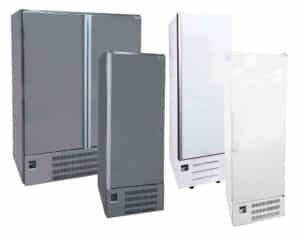


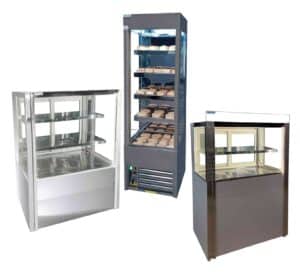

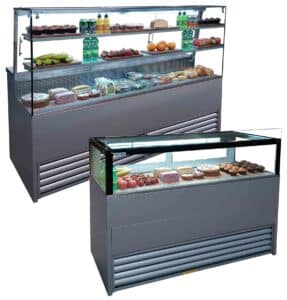

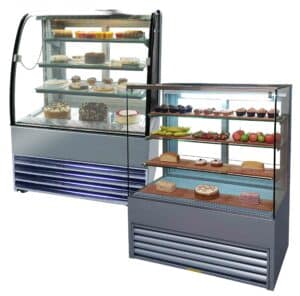
👉 SHOP OUR COMMERCIAL FREEZERS


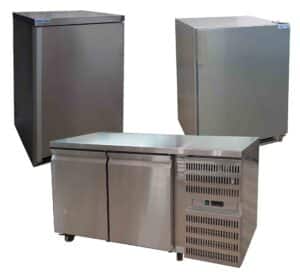

What is Refrigeration?
At its core, refrigeration isn’t about creating cold; that’s a misconception. It’s a process of taking heat from one place and moving it somewhere else. We’re essentially just heat transporters. This process is governed by the laws of thermodynamics, working against the natural flow of heat which always moves from a warmer object to a colder one. To force heat to move from a colder space to a warmer one, the system requires a constant input of energy. The elegant design of modern refrigeration units allows this to happen with incredible efficiency, making it an indispensable technology for preserving food and other temperature-sensitive products.
The Foundations of Cold: Thermodynamics and Refrigeration
When we talk about refrigeration, we’re really talking about the laws of thermodynamics in action. The first law, the law of conservation of energy, tells us that energy can neither be created nor destroyed, only converted from one form to another. So, the energy that’s removed from inside a fridge doesn’t just vanish. It’s converted and moved. The second law is perhaps even more crucial to understanding this process. It states that heat naturally flows from a warmer object to a colder one. Think of a hot cup of tea cooling down in a room; the heat leaves the tea and disperses into the cooler air. Refrigeration, however, is a non-spontaneous process. We are forcing heat to move against its natural direction—from a cold space (inside the fridge) to a warmer one (the outside room). This is why a fridge needs power. It takes energy to do this unnatural work. The work is done by a compressor, which acts as the heart of the system, circulating the refrigerant and adding the necessary energy to move the heat. Without this compressor, the natural flow of energy would simply have the warmer air outside warming up the items inside the fridge. It is a constant battle against the second law of thermodynamics, one that we’ve engineered a beautiful solution for.
The Vapour-Compression Cycle Explained
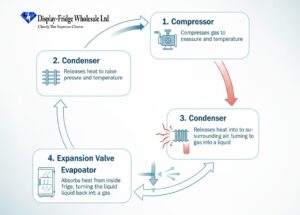
The entire process of commercial refrigeration is built around a closed-loop system known as the vapour-compression cycle. It’s a sequence of four fundamental stages that work together continuously to move heat. First, we have the compressor. This is the workhorse of the system. It takes the low-pressure, low-temperature refrigerant gas from the evaporator and compresses it. This compression raises the temperature and pressure of the gas significantly. Think of it like a bicycle pump; when you compress the air, the pump gets hot. It’s a similar principle. After that, the high-pressure, high-temperature gas moves to the condenser. The condenser, which you might find on the back or top of a commercial fridge, is a set of coils where the hot gas releases its heat into the cooler surrounding air. As the gas loses heat, it cools down and condenses, turning back into a high-pressure liquid. This is the stage where the heat is actually rejected from the system. Next, this high-pressure liquid flows through an expansion valve (or a capillary tube). This valve causes a sudden pressure drop. When the pressure suddenly falls, the liquid refrigerant expands and its temperature drops dramatically, becoming a cold, low-pressure liquid-vapour mixture. Finally, this very cold liquid-vapour mixture enters the evaporator coils, which are located inside the refrigerated cabinet. Here, the refrigerant absorbs heat from the air and products inside the fridge. As it absorbs this heat, it boils and evaporates, turning back into a low-pressure gas. This is the magical part where the cooling effect happens. The now warm gas then returns to the compressor to start the cycle all over again.
Heat Exchange Processes and the Magic of Latent Heat
The concept of heat exchange is fundamental to refrigeration. It’s all about how thermal energy is transferred from one substance to another. In our context, this transfer happens through three primary mechanisms: conduction, convection, and radiation. Conduction is the transfer of heat through direct contact; this is how heat moves from a warm bottle to the cold evaporator coil. Convection is the transfer of heat through the movement of fluids, like air. In a display fridge, fans circulate the cold air to ensure an even temperature. Radiation is the transfer of heat through electromagnetic waves, which is why sunlight can warm up a fridge’s contents even through a glass door. But the real magic, the thing that allows a small amount of refrigerant to move a huge amount of heat, is a concept called latent heat. Latent heat is the energy required to change a substance’s state—from liquid to gas or vice versa—without changing its temperature. In refrigeration, we exploit this process. The refrigerant absorbs a massive amount of latent heat when it evaporates inside the evaporator, and it releases that same amount of latent heat when it condenses in the condenser. This is why the process is so efficient. It’s not about making the air a few degrees colder with sensible heat, it’s about a complete state change that siphons away vast quantities of thermal energy. It’s clever, isn’t it? Have you ever thought about how much heat is actually being moved out of your fridge every single day?
Condensers and Evaporators in Action
Condensers and evaporators are the workhorses of the heat exchange process within any refrigeration unit. Think of the evaporator as the cooling engine inside the fridge cabinet. It’s a network of coils designed to have a large surface area. The cold, low-pressure refrigerant flows through these coils, and as it passes, it absorbs the heat from the surrounding air and products. This absorption causes the refrigerant to boil and turn into a gas. This change of state from liquid to gas is where the significant heat transfer happens, thanks to latent heat. The air inside the fridge gives up its thermal energy to the refrigerant, which is why the air temperature drops. Now, what about the condenser? It’s essentially the opposite process. It’s usually a large, finned coil on the outside of the unit, often with a fan blowing air over it. Here, the hot, high-pressure refrigerant gas that came from the compressor releases its absorbed heat into the cooler ambient air. As it releases this heat, it condenses back into a high-pressure liquid. It’s a bit like when you see steam from a boiling kettle turn back into water droplets on a cold window. The ambient air acts as the heat sink, taking the thermal energy that was once inside the fridge. These two components are a perfect pair, one absorbing heat, the other rejecting it, all to keep the contents of the cabinet at a consistent, safe temperature.
What is a Refrigerant?
Refrigerants are the lifeblood of any cooling system. They are the working fluids that absorb heat and transfer it from one place to another within the refrigeration cycle. Their properties are carefully chosen to make this process as efficient as possible.

The Critical Role of Refrigerants
- A Brief History of Refrigerants: Historically, the industry used refrigerants like ammonia and sulphur dioxide. While effective, they were toxic and flammable, posing significant safety risks. This led to the development of synthetic alternatives like CFCs (chlorofluorocarbons) and HCFCs (hydrochlorofluorocarbons).
- The Problem with CFCs and HCFCs: These early synthetic refrigerants were revolutionary in terms of safety but came with a significant environmental cost. They were found to deplete the stratospheric ozone layer, which protects us from harmful ultraviolet radiation. This discovery led to the Montreal Protocol, an international treaty designed to phase out these substances.
- HFCs and Their Successors: HFCs (hydrofluorocarbons) were developed as a replacement. They didn’t deplete the ozone layer, which was a huge step forward. However, they were found to have a high Global Warming Potential (GWP), contributing to climate change. This led to the Kigali Amendment, which aims to phase down their use.
- The Rise of Natural Refrigerants: Today, the industry is increasingly turning to natural refrigerants, such as carbon dioxide (), hydrocarbons (like propane and isobutane), and ammonia. They have a very low GWP and are considered much more environmentally friendly.
- The Future of Refrigeration: The trend is clearly moving towards more sustainable, energy-efficient, and environmentally responsible refrigerants. We are always looking for new and better ways to do our jobs while protecting the planet.
Choosing the Right Refrigerant for Commercial Use
Selecting the right refrigerant for a commercial fridge is a complex decision that involves balancing several key factors. First, we have to consider thermodynamic performance. How efficiently does the refrigerant transfer heat? Some refrigerants are better suited for specific applications and operating temperatures. We need a fluid that can boil at a very low temperature and condense at a temperature that’s manageable by the ambient air. Then there’s safety. The refrigerant must be non-toxic and, ideally, non-flammable. This is especially important in a commercial setting where a leak could pose a serious risk to staff and customers. For example, ammonia is an excellent refrigerant in terms of efficiency, but its toxicity means it’s generally only used in large industrial systems with strict safety protocols. Furthermore, we must consider the environmental impact. As a responsible supplier, we must ensure that our equipment uses refrigerants with a low Global Warming Potential (GWP). Regulations, like the F-Gas Regulation in the UK, are driving the industry towards refrigerants with a lower climate impact. You can learn more about this on the UK government’s website. Finally, cost and availability are also practical considerations. A great refrigerant is no good if it’s too expensive to use or difficult to source. The move towards natural refrigerants means that we also need to ensure the manufacturing processes and components are compatible with them.
Keeping It Cool: Food Safety and Refrigeration
This is perhaps the most important reason for having a reliable commercial fridge: food safety. When you are a business serving food to the public, there can be no room for error. The primary goal of refrigeration is to slow down the growth of microorganisms, such as bacteria, yeast, and mould, which cause food to spoil and can lead to food poisoning. These microorganisms thrive in what’s known as the “danger zone,” which is a temperature range between 5circC and 63circC. By keeping food at a temperature below 5circC, you significantly inhibit the reproduction rate of these pathogens, preserving the freshness, flavour, and safety of your products. Think of it like putting them into a state of slumber. The bacteria are still there, but they are multiplying at an incredibly slow rate. Without proper refrigeration, a small number of bacteria can double every 20 minutes in the right conditions. This means what was a perfectly safe product can become a health hazard in just a few hours. This happened when I was helping a client with a failing fridge; they thought it was fine because it felt cool, but a thermometer check showed it was at 9circC. After all, this small temperature difference was enough to put their entire stock at risk. This is why having a reliable and well-maintained commercial fridge isn’t just a convenience; it’s a legal and ethical requirement for any food business.
Temperature Monitoring and Best Practices
Maintaining a consistent and safe temperature isn’t just about having the right equipment; it’s about following best practices. A commercial food business must have a strict routine for temperature monitoring. The Food Standards Agency (FSA) recommends that chilled food should be stored at or below 8circC, although the best practice is to keep it at or below 5circC to provide a buffer against temperature fluctuations. You can check out their guidance for more detail on their official website. Regular checks, ideally at least once or twice a day, should be a standard part of your business’s food safety management system. It’s not enough to just trust the fridge’s internal display. An independent, calibrated thermometer should be used to double-check the temperature of the air and the food itself. What would you do if you found your fridge was running a few degrees too warm? You’d have to act fast! This reminds me of a time I was called out to a small café; their fridge had been running warm all weekend, and they were trying to salvage their stock. We found the condenser was completely blocked with dust, which meant the heat couldn’t escape. It was a simple fix, but it highlighted how crucial regular cleaning and maintenance are. Other best practices include not overloading the fridge, as this restricts airflow, and ensuring doors are sealed properly.
Beyond the Basics: Advanced Refrigeration Concepts
Once you understand the basics of the refrigeration cycle, you can start to appreciate the more nuanced concepts that contribute to a unit’s efficiency and performance. For instance, superheating and subcooling are critical parts of the cycle’s design. Superheating refers to the amount of heat added to the refrigerant vapour after it has fully evaporated in the evaporator. It ensures that only gas enters the compressor, which prevents liquid from damaging the sensitive components inside. Subcooling is the opposite; it’s the extra cooling of the liquid refrigerant after it has condensed in the condenser. This makes the refrigerant denser, so a smaller amount of fluid can absorb more heat in the evaporator, improving efficiency. The expansion valve, which we mentioned earlier, is the component that precisely controls the flow of refrigerant into the evaporator. This is a crucial role, as it has to constantly adjust to the heat load in the fridge, ensuring the perfect amount of fluid is boiling off at any given moment.
Energy Efficiency in Commercial Refrigeration
For any business, energy costs are a major concern, and refrigeration equipment can be a significant part of the electricity bill. Therefore, energy efficiency is no longer just a nice-to-have; it’s a crucial design feature. The key lies in optimising every part of the refrigeration system. We now see inverter compressors being widely used, which can vary their speed to match the cooling demand. This is much more efficient than traditional compressors that are either on or off at full power. It’s like the difference between driving with your foot on the accelerator and brake versus a car with cruise control. Oh, and LED lighting is also a huge factor. Older fridges used fluorescent lights that gave off a lot of heat, forcing the fridge to work harder. LED lights, however, produce very little heat and use a fraction of the electricity. Furthermore, the use of better insulation and multi-layered glass doors minimises the heat ingress from the outside. These little things really add up. Over the course of a year, an energy-efficient fridge can save a business hundreds of pounds, and that goes directly to the bottom line. It’s a prime example of how good engineering can directly translate into business benefits.
From Physics to Your Plate
The physics of refrigeration is a complex but fascinating topic that underpins the entire food service industry. It’s a continuous, energy-driven process of moving heat from a cold space to a warm one, a battle against the natural flow of energy. We’ve explored the fundamental laws of thermodynamics that govern this process, the intricate workings of the vapour-compression cycle, and the crucial role of refrigerants in the transfer of heat. Moreover, we have seen how this entire system is inextricably linked to food safety, protecting businesses and consumers from harm. The journey of a single molecule of refrigerant, as it cycles through compression, condensation, expansion, and evaporation, is a testament to the ingenuity of modern engineering. Understanding these principles helps us to appreciate the importance of choosing high-quality, reliable, and energy-efficient commercial refrigeration equipment. It’s what separates a functional fridge from a truly professional piece of kit.
We, at Display-Fridge Wholesale, have made it our mission to understand these principles inside and out. We use our technical expertise to source and supply a wide range of superior commercial refrigeration equipment to hospitality markets throughout the United Kingdom. We supply commercial refrigerators and freezers that are designed with energy efficiency and reliability in mind, all at a competitive wholesale price. We believe that every business, regardless of its size, deserves the best equipment to protect its products and its reputation. So, why not take the next step in ensuring the safety and quality of your stock? Purchase an affordable commercial fridge now! Find the perfect fridge for your business today!
👉 SHOP OUR COMMERCIAL FREEZERS