
 0 items –

Discover the legal, environmental, and technical requirements to safely recharge a commercial refrigerator with freon in the UK.
Keeping your catering business running smoothly means ensuring your food and beverages stay at exactly the right temperature. If you run a bustling kitchen or a busy café, discovering that your equipment is blowing warm air is a serious headache. Often, the immediate thought is to simply recharge commercial refrigerator freon to get things working again. However, dealing with chemical cooling agents is far more complex than filling up your car with petrol.
Think of your refrigeration unit like the human circulatory system. The cooling gas flows in a completely sealed, continuous loop. If you lose gas, it means there is a puncture or a leak somewhere in that closed system. You would never just add more fluid to a leaking pipe without fixing the hole first. Still, understanding how to add refrigerant to commercial fridge systems correctly is crucial for compliance and environmental safety. We will explore the precise legal boundaries, the environmental impacts, and the strict technical procedures required to restore your equipment safely.
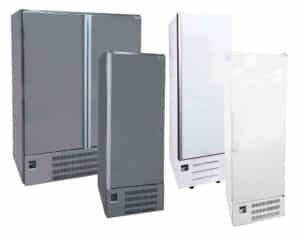




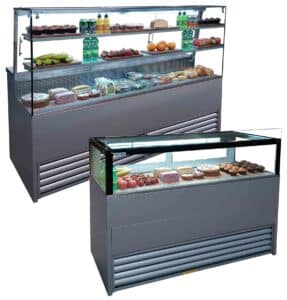


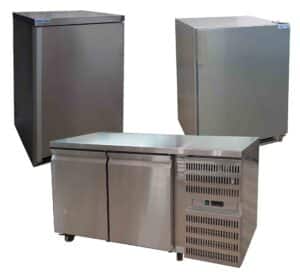
👉 SHOP OUR COMMERCIAL FREEZERS



💡 Key Takeaways
- Recharging a fridge requires diagnosing and permanently repairing the leak first.
- Handling chemical refrigerants in the UK requires specific F-Gas certification; it is illegal to do this yourself without qualifications.
- Older gases carry severe environmental penalties and are actively being phased out by government regulations.
- Upgrading to modern equipment often proves more cost-effective than repeatedly repairing leaking, outdated systems.
- Using the wrong type or incorrect weight of cooling gas can permanently destroy your compressor.
Understanding the Basics of Commercial Fridge Refrigerants
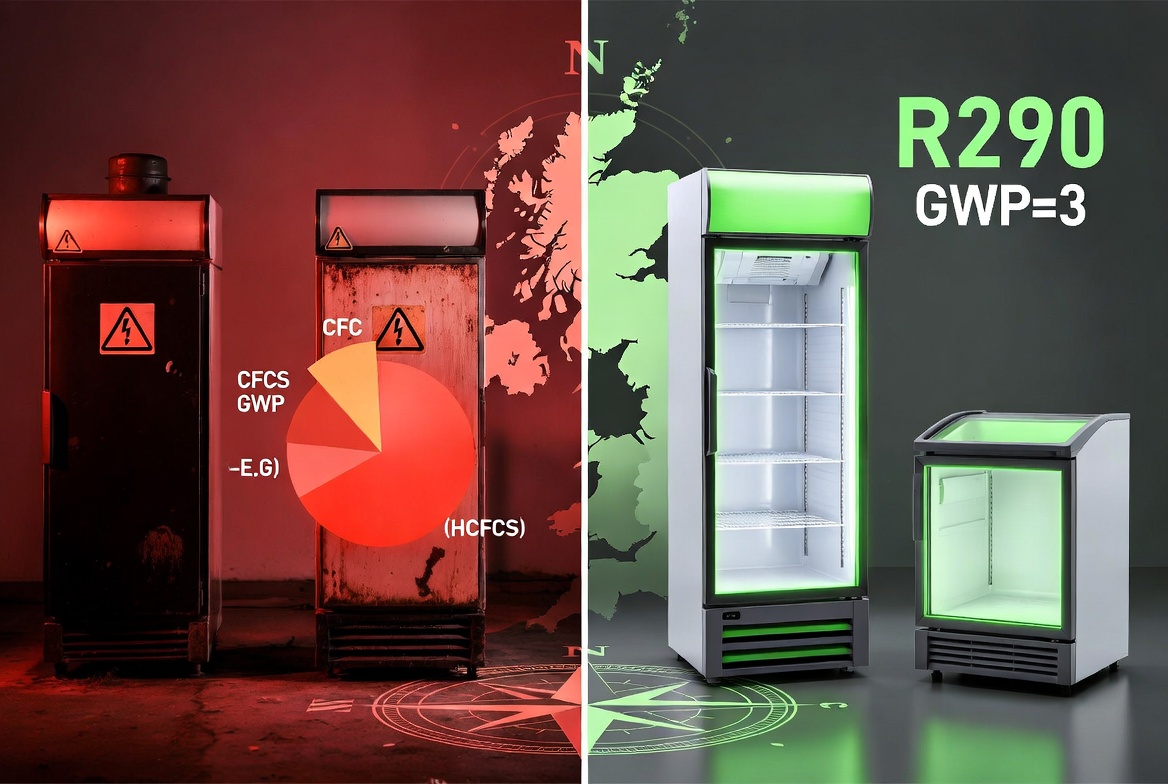
Before we look at the mechanics of topping up your system, we need to understand what these chemical agents actually are. The term ‘freon’ is essentially a legacy brand name that people still use universally to describe any cooling gas. Decades ago, this referred to specific chlorofluorocarbons (CFCs) and hydrochlorofluorocarbons (HCFCs), like the infamous R22. These older chemicals were highly effective at absorbing and releasing heat. Anyway, they were eventually banned because they severely damaged the earth’s ozone layer.
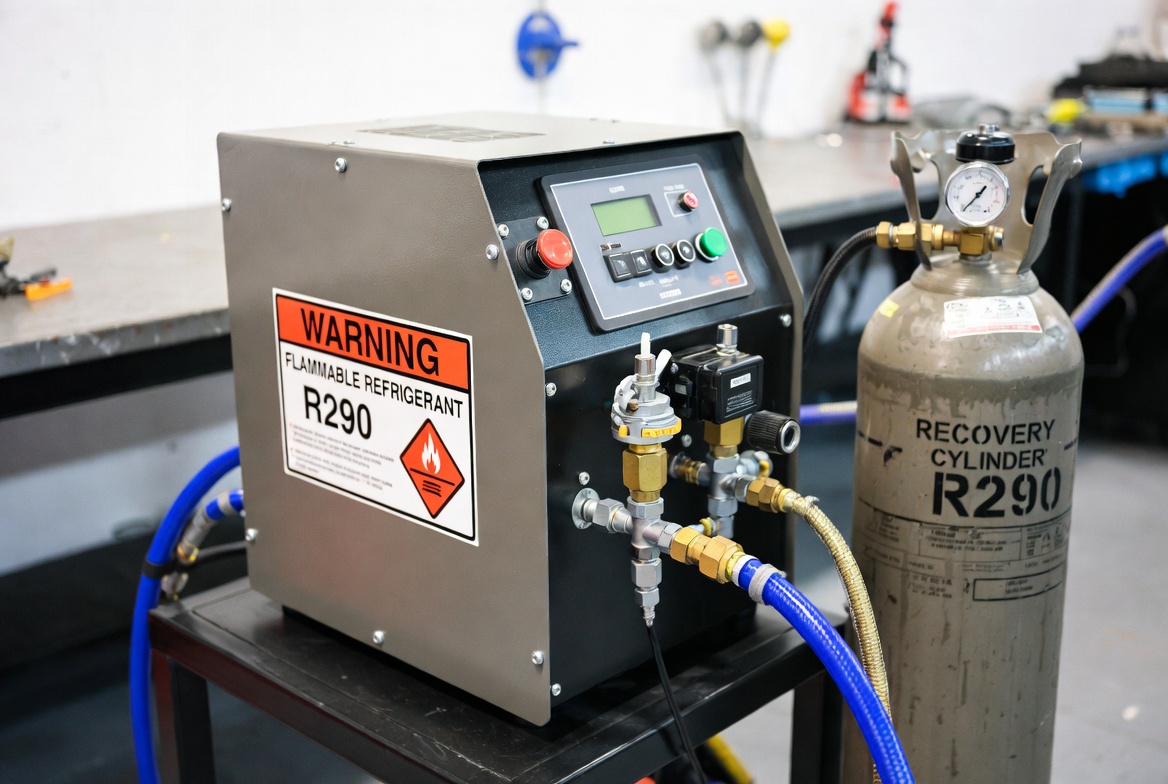
Modern units rely on completely different synthetic or natural chemical blends. Today, most systems use hydrofluorocarbons (HFCs) or entirely natural hydrocarbon alternatives to bypass environmental harm. To offer you the absolute best in performance and sustainability, our commercial fridges and shop freezers feature eco-friendly R290 Refrigerant, a highly efficient natural gas with a negligible environmental impact. When you add refrigerant to commercial fridge equipment, you are introducing a compound that shifts back and forth between a liquid and a gas. As it travels through the evaporator coils inside your cabinet, it absorbs the ambient heat from your food and drinks. It then travels to the compressor and condenser outside the cabinet, where it releases that heat into the surrounding room.
So, if your system is short of this vital fluid, the entire heat exchange process breaks down. The compressor runs constantly in a desperate attempt to lower the temperature, burning excessive electricity and risking catastrophic mechanical failure. If you are constantly battling with an unreliable old unit, it might be time to bypass the hassle. We recommend browsing our sleek display fridges or our high-capacity open fridges to ensure your stock remains perfectly chilled without the constant worry of gas leaks.
The Legal Requirements When You Add Refrigerant to a Commercial Fridge
Navigating the UK’s regulatory landscape is your first major hurdle when dealing with chemical cooling systems. The government strictly controls who can buy, handle, and dispose of these greenhouse gases. Let’s break down the specific rules you must follow to remain compliant and avoid substantial fines.
F-Gas Regulations in the UK
The UK heavily regulates the use of fluorinated greenhouse gases through the F-Gas regulations. The core aim of this legislation is to drastically reduce emissions of industrial chemicals that contribute to global warming. You can read the comprehensive legal guidelines on the official gov.uk F-Gas guidance page. According to these laws, it is a criminal offence to intentionally release these gases into the atmosphere.
More importantly for business owners, it is strictly illegal to top up a leaking system without finding and permanently fixing the source of the leak. If an engineer arrives and simply offers to recharge commercial refrigerator freon without conducting a thorough pressure test and repair, they are breaking the law. Furthermore, the UK is currently enforcing a phasedown quota. This means the availability of high-Global Warming Potential (GWP) gases is artificially restricted year on year. As a result, the cost of older synthetic gases is skyrocketing. Eventually, servicing older cabinets will become economically impossible due to the sheer cost of the replacement chemicals.
Who Can Legally Handle Chemical Refrigerants?
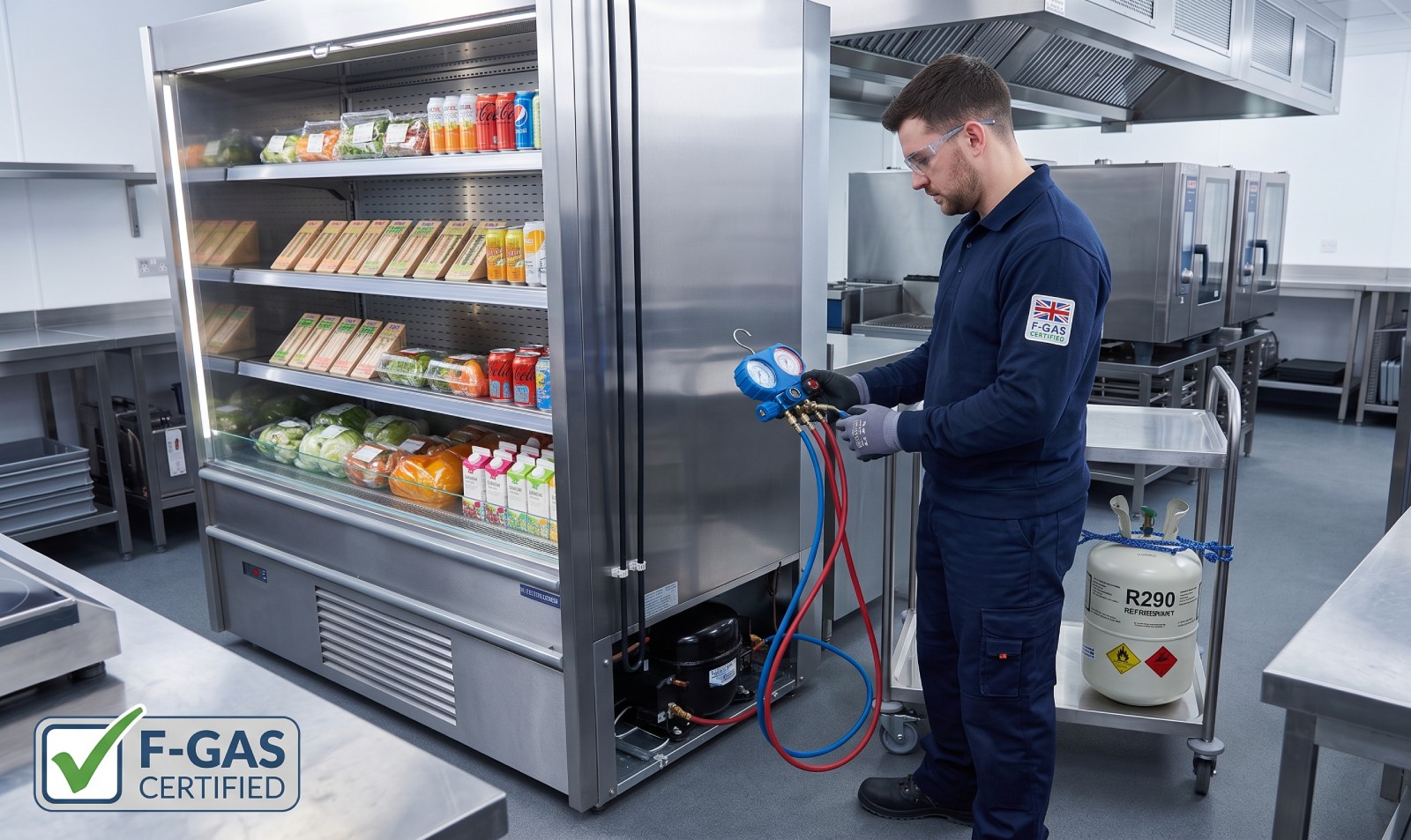
You might be wondering if you can simply buy a canister online and top up the system yourself. The answer is a definitive no. UK law dictates that any individual installing, maintaining, or servicing stationary refrigeration equipment containing F-Gases must hold a specific, recognised qualification. Companies employing these individuals must also hold an F-Gas company certificate.
In the UK, the primary register for these qualified professionals is REFCOM. You should always verify that your chosen engineer is actively registered on the REFCOM website before allowing them to touch your equipment. Allowing an uncertified person to add refrigerant to commercial fridge systems puts your business at risk of severe financial penalties from the Environment Agency. Have you checked your maintenance logs lately to see if your current technician holds the correct certifications? It is always better to be safe. If navigating these legalities feels overwhelming, upgrading your kitchen with our reliable countertop fridges or spacious under counter fridges provides a fresh start with fully sealed, compliant modern systems.
Environmental Impacts of Freon and Modern Alternatives
Understanding the environmental weight of your equipment helps clarify why the government is so strict about these chemicals. The shift away from older synthetic gases is entirely driven by their devastating ecological impact. Here is exactly why modern commercial kitchens must be vigilant about cooling gas management:
- Ozone Depletion Potential (ODP): Older chemicals literally tore holes in the Earth’s stratospheric ozone layer. While these are mostly eradicated, older units might still illegally house them.
- Global Warming Potential (GWP): Modern synthetic gases (HFCs) do not harm the ozone, but they act as a massive thermal blanket in the atmosphere. Some common refrigeration gases trap thousands of times more heat than carbon dioxide over a 100-year period.
- The Hydrocarbon Shift: The industry is rapidly moving towards natural hydrocarbons like Propane (R290) and Isobutane (R600a). These have a GWP close to zero and are incredibly energy-efficient.
- Energy Inefficiency from Leaks: A system running low on gas forces the compressor to work continuously. This excessive electricity consumption drastically increases your carbon footprint and inflates your utility bills.
- Responsible Disposal: When a unit reaches the end of its life, the remaining chemical agents must be painstakingly recovered into sealed cylinders and sent off for secure destruction or recycling by a licensed waste carrier.
If you want to future-proof your business against rising chemical costs and help the environment simultaneously, transitioning to newer technology is the smartest move. Take a look at our elegant cake fridges or our functional deli counters, which utilise the latest eco-friendly cooling technologies to keep your footprint small and your profits high.
Technical Steps to Recharge Commercial Refrigerator Freon
The physical process of restoring a depleted system requires specialised tools, deep technical knowledge, and absolute precision. It is a meticulous operation where even a tiny miscalculation can destroy the internal mechanics of your cooling cabinet.
Diagnosing the Leak Before You Recharge
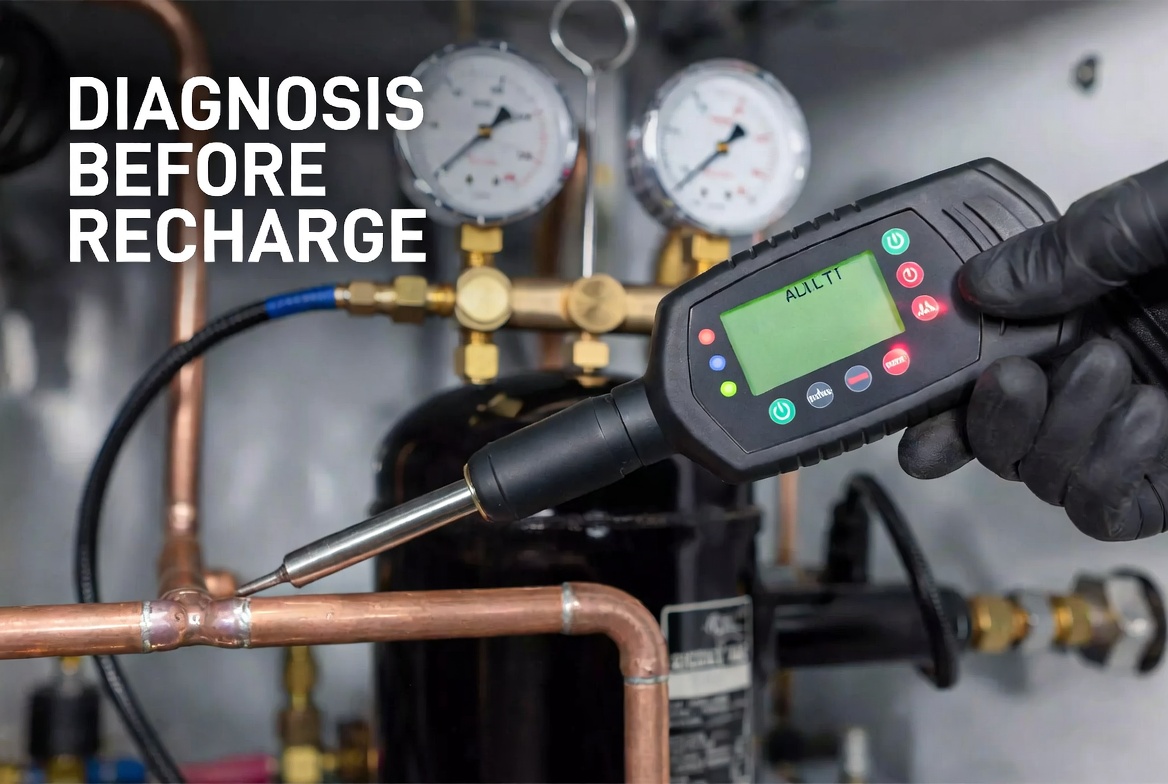
Before anyone attempts to add refrigerant to commercial fridge pipework, they must find the escape route. Think of this like finding a microscopic puncture in a bicycle inner tube, but infinitely more complicated. Because the gas is invisible and evaporates instantly at room temperature, it leaves very little trace.
Qualified technicians use several highly specific methods to pinpoint the failure. First, they might introduce oxygen-free nitrogen (OFN) into the empty system at a very high pressure. They will then monitor pressure gauges for any drops, indicating a breach. They often use electronic ‘sniffer’ devices that beep rapidly when they detect specific chemical molecules in the air. Alternatively, they might inject a specialised ultraviolet dye into the system, allowing it to circulate for a few days. The engineer then returns with a UV flashlight to spot the glowing chemical stains around joints, valves, or the evaporator coil. Only after the failed component is completely cut out, replaced, and brazed with a blowtorch can the engineer move forward.
The Recharging Process Explained
Once the system is physically sealed, the actual chemical transfer begins. The technician cannot simply hook up a bottle and let the gas flow freely. First, they must connect a powerful vacuum pump to the service valves. This pump sucks out all the air and, most importantly, boils off any microscopic moisture trapped inside the copper pipes. If moisture mixes with the new cooling chemical and the compressor oil, it creates a highly corrosive sludge that will eat the compressor motor from the inside out.
After holding the system in a deep vacuum to prove it is entirely dry and leak-free, the technician places a cylinder of the correct chemical onto highly sensitive digital scales. Every cooling unit has a data plate stating the exact type and weight of gas required, often down to the precise gram. The engineer carefully watches the scales as they recharge commercial refrigerator freon, ensuring the volume matches the manufacturer’s specification perfectly. Overfilling the system is just as dangerous as underfilling it, as too much liquid returning to the compressor will cause catastrophic mechanical failure. If you want to avoid this highly technical disruption entirely, our robust storage fridges come factory-sealed and rigorously tested for immediate reliability.
When to Repair Versus Replace Your Refrigeration Unit
Making the financial decision between paying an engineer or buying new equipment can be incredibly tough. You have to weigh the immediate cash flow against long-term reliability. Let’s look at this practically. If your cooling cabinet has a tiny pinhole leak on an easily accessible valve, the repair is usually straightforward and cost-effective. However, if the evaporator coil is heavily corroded and leaking in multiple inaccessible places, the labour costs alone will rival the price of a completely new appliance.
You must also consider the age and efficiency of the existing unit. A ten-year-old appliance uses drastically more electricity than a modern equivalent. When you factor in the high call-out fees, the skyrocketing cost of heavily regulated synthetic gases, and the inflated energy bills, holding onto a dying machine rarely makes financial sense. How much downtime can your kitchen really afford if the patch-up repair fails again during a busy Friday dinner service?
Sometimes, the smartest business decision is to cut your losses and invest in dependable, warranty-backed technology. If your frozen storage is letting you down, it might be time to explore our high-performance upright display freezers or our highly practical sliding glass chest freezers. For those needing vertical space, our glass door freezers and heavy-duty storage freezers offer incredible temperature stability. We even cater to specialized needs with our upright meat freezers and compact under counter freezers, ensuring you always have exactly the right equipment for your specific menu.
Frequently Asked Questions
Understanding the complexities of commercial cooling can be daunting. Here are clear, straightforward answers to the most common queries we receive regarding chemical top-ups and system maintenance.
Can I legally add refrigerant to my commercial fridge myself?
Absolutely not. UK law, specifically the F-Gas regulations, mandates that any individual handling these chemical cooling agents must hold a valid, recognized qualification and work for an F-Gas registered company. Attempting to top up the system yourself using DIY kits or unverified chemicals is a criminal offence that can result in massive financial penalties from environmental authorities.
How often should I recharge commercial refrigerator freon?
Ideally, never. A refrigeration system is a completely closed, hermetically sealed loop. The chemical agent is not a fuel that gets consumed over time; it simply travels endlessly around the pipework absorbing and releasing heat. If your system requires a top-up, it absolutely means there is a physical leak somewhere in the copper pipes or joints that must be located and permanently repaired.
What happens if I mix different types of refrigerants?
Mixing different cooling chemicals will cause immediate and severe damage to your equipment. Different gases operate at vastly different pressures and require specific types of synthetic or mineral oils for compressor lubrication. Mixing them alters the thermodynamic properties entirely, leading to overheating, frozen coils, and inevitable compressor burnout. You must strictly use the exact chemical specified on the manufacturer’s data plate.
How do I know if my fridge has a freon leak?
The most obvious sign is a cabinet that fails to reach its target temperature, despite the compressor running continuously. You might also notice a thick, abnormal buildup of solid ice on the evaporator coils inside the cabinet, as the altered pressure changes the boiling point of the remaining gas. Occasionally, if the leak is large enough, you might hear a faint hissing sound coming from the pipework or notice an oily residue around a joint, as the compressor oil often escapes alongside the gas.
Recharging Your Refrigeration Equipment
Managing a commercial kitchen requires you to stay on top of your equipment’s health. While it might be tempting to seek a quick fix when temperatures start to rise, you now know that you cannot simply recharge commercial refrigerator freon without following strict protocols. The process demands professional diagnosis, permanent physical repairs, and precise legal compliance under UK F-Gas regulations. Understanding how to add refrigerant to commercial fridge systems properly ensures your business avoids heavy fines, minimizes its environmental impact, and protects the expensive internal components of your cooling cabinets. Always rely on certified REFCOM professionals for diagnostics, and carefully weigh the high costs of repairing outdated systems against the long-term savings of upgrading to modern, eco-friendly technology.
Display-Fridge Wholesale provides superior commercial fridge equipment to hospitality markets all over the United Kingdom. We supply commercial refrigerators and freezers to businesses throughout England at a wholesale price. Purchase an affordable commercial fridge now!
👉 SHOP OUR COMMERCIAL FREEZERS