
 0 items –
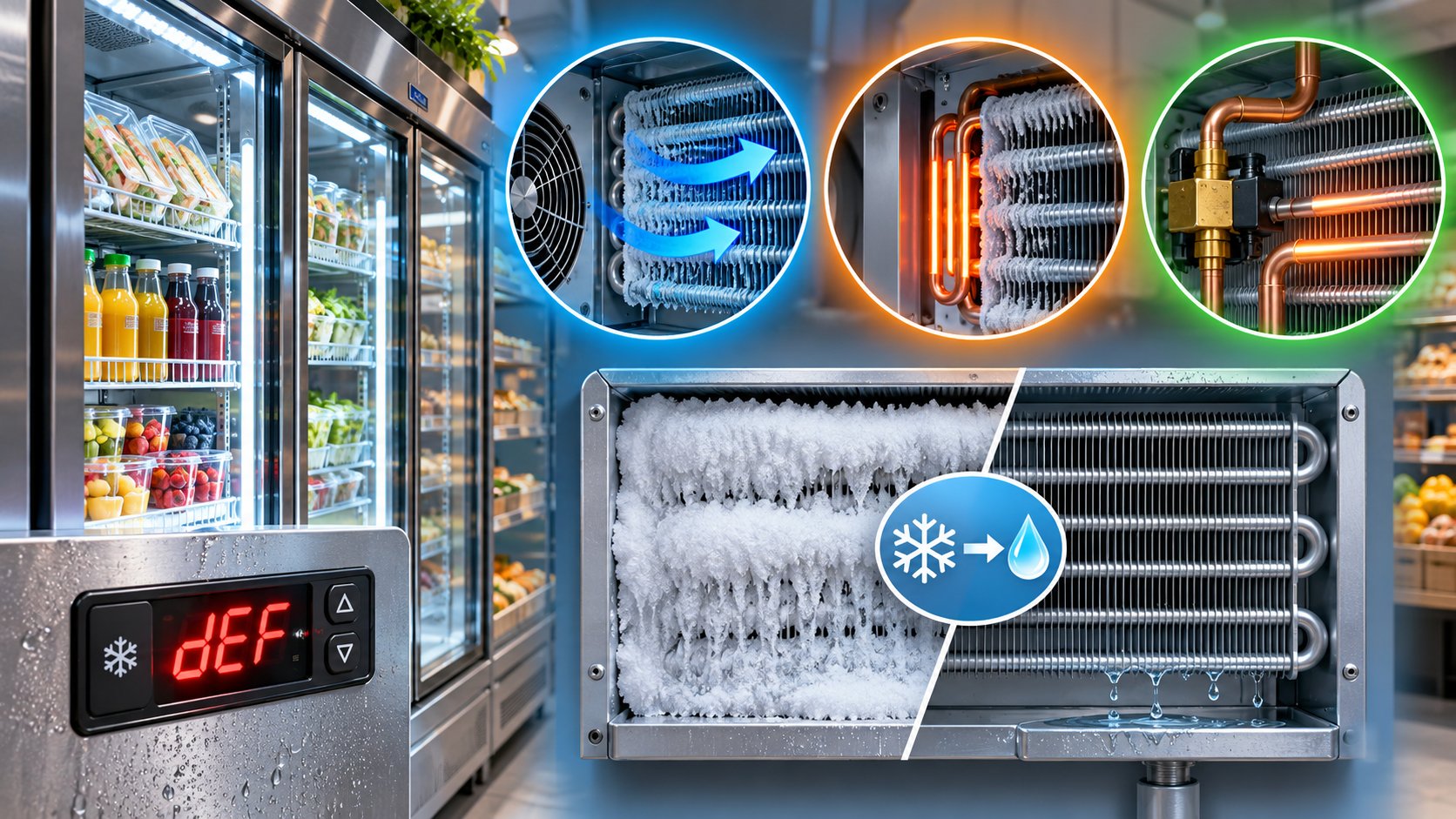
Commercial fridge defrost cycles are one of those things most food businesses never think about until something goes wrong. The display reads “dEF”, the fans stop for twenty minutes, a puddle appears under the cabinet or the back wall of a freezer turns into a block of ice. Behind all of these is the same simple fact: every fridge and freezer makes frost, and it has to get rid of that frost on a regular schedule to keep working properly.
In this guide you will learn why frost forms on the evaporator coil, how it slowly strangles cooling performance, and how the main defrost methods (off-cycle, electric and hot-gas) actually work. We also look at the energy trade-offs behind each method, the settings an engineer can adjust, and the everyday habits that keep frost to a minimum in your shop, café, pub or kitchen.
If your freezer is already icing up, start with our troubleshooting guides on why a commercial freezer freezes over and why the evaporator coil freezes up. This article explains the science underneath those problems, so you can prevent them.




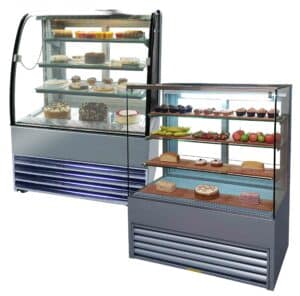
👉 SHOP OUR COMMERCIAL FREEZERS


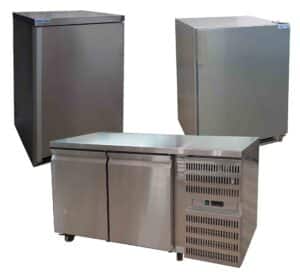

💡 Key Takeaways
- Frost forms when moist air meets an evaporator coil that is colder than 0°C and colder than the air’s dew point.
- A layer of frost insulates the coil and blocks airflow, so the compressor runs longer and uses more electricity.
- Most chillers use off-cycle defrost; most freezers use electric heaters or, in larger systems, hot-gas defrost.
- Too few defrosts waste energy through frost; too many waste energy through heat. Demand defrost aims for the balance.
- Door discipline, covered food, clear vents and good door seals reduce frost before any defrost cycle is needed.
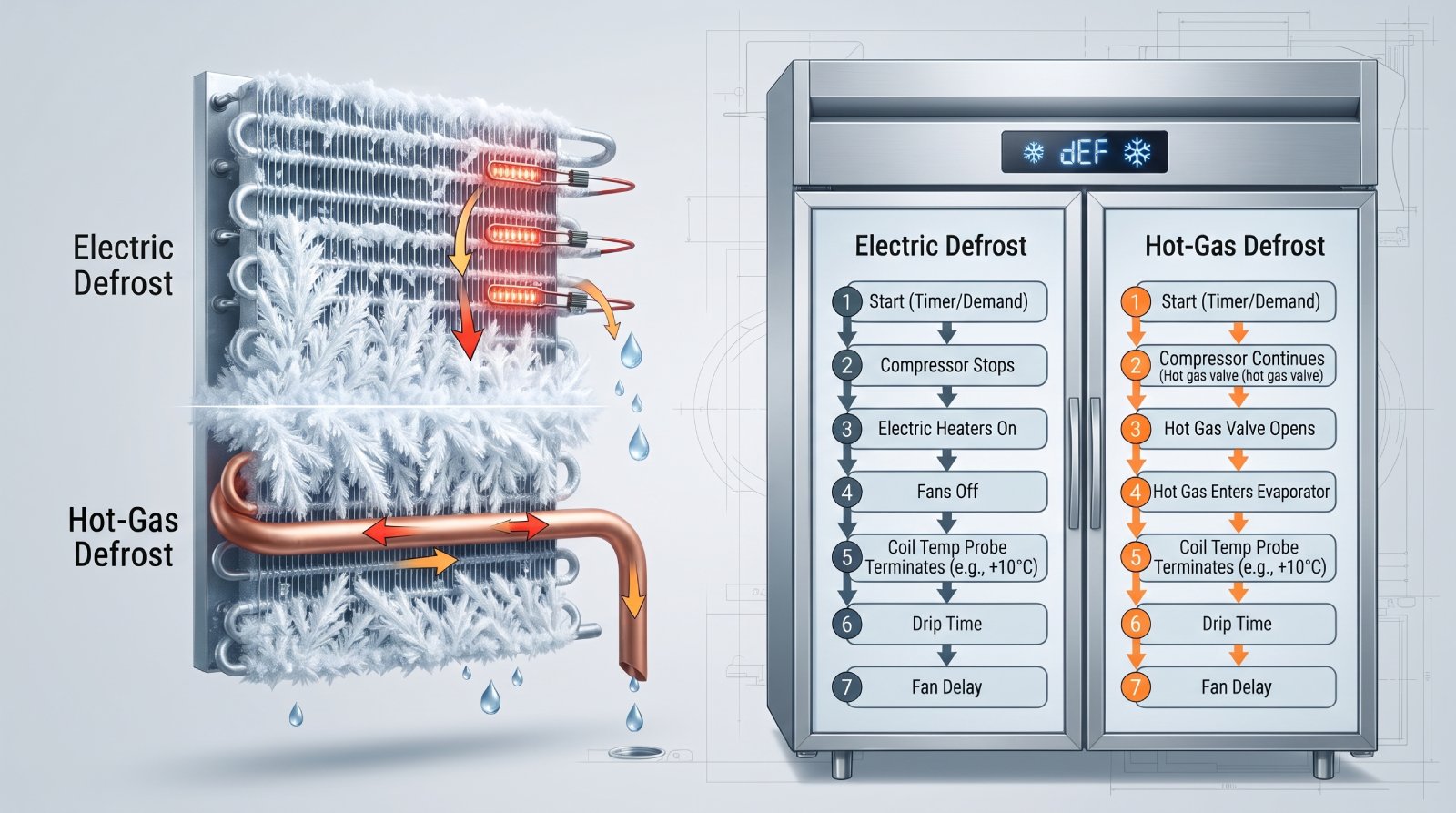
Why Frost Forms on a Commercial Fridge Evaporator
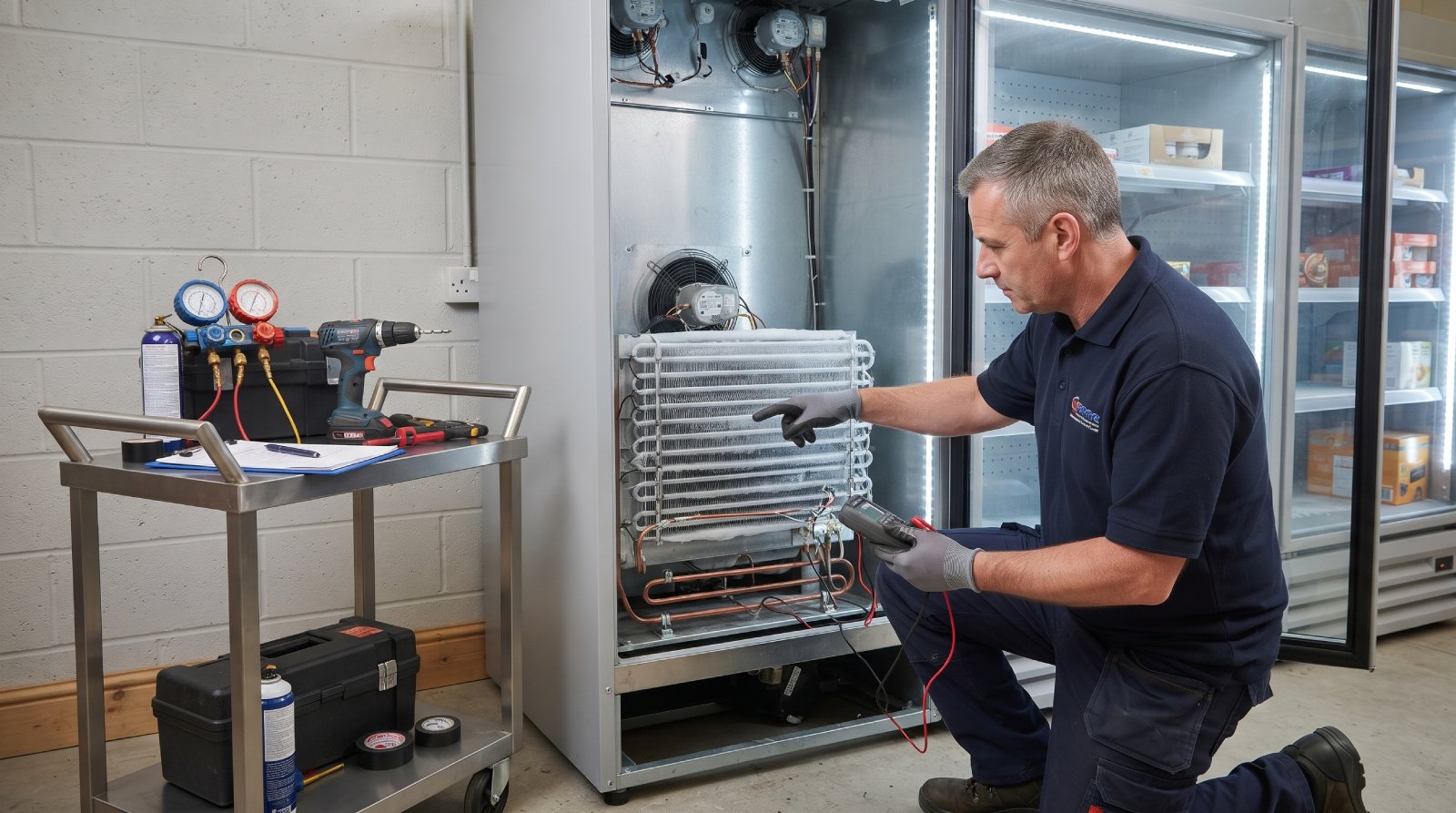
Inside every fridge and freezer there is an evaporator coil, a block of thin aluminium fins wrapped around copper tubes, usually hidden behind a panel at the back or top of the cabinet. Refrigerant boils inside the tubes and absorbs heat from the air that a fan blows across the fins. Our guide to evaporator vs condenser coils explains the full cycle.
To pull heat out of the cabinet, the coil has to be colder than the air around it. In a freezer running at −18°C to −22°C, the fins may sit at −25°C to −30°C. Even in a chiller holding food at 1°C to 5°C, the coil often runs a few degrees below 0°C.
Air always carries some water vapour. When that air touches a surface colder than its dew point, the vapour comes out of the air. If the surface is also below 0°C, the water does not form droplets first: it turns straight from vapour into ice crystals. Physicists call this deposition (or desublimation), and it produces the light, feathery frost you see on a neglected freezer coil.
The moisture comes from several places:
- Door openings. Every time a door opens, warm, humid shop air rushes in and cold, dry air falls out.
- Open-fronted cabinets. Multideck open fridges rely on an air curtain, and some room air always mixes into it.
- The food itself. Uncovered food, fresh produce and warm products give off water vapour.
- Leaks. Torn door gaskets, a door that does not close fully or damaged cabinet panels let humid air in all the time.
The warmer and more humid your shop, and the busier the doors, the faster frost builds up. That is why the same freezer can need very different defrost settings in a cool storeroom and next to a busy café counter.

How Frost Reduces Cooling Performance
A thin film of frost does little harm. A thick one acts like a winter coat wrapped around the coil, and it causes two problems at once.
It insulates. Aluminium conducts heat extremely well; loose frost conducts it very poorly, because it is full of trapped air. As the layer grows, heat from the cabinet air struggles to reach the refrigerant.
It blocks the airflow. The fins on a commercial evaporator are only a few millimetres apart. As frost fills the gaps, the fan pushes less and less air through the coil, and less air means less heat removed.
The fridge reacts in the only way it can. The refrigerant runs colder, the compressor runs for longer and the cabinet temperature drifts upwards, especially after busy periods. You may notice:
| Symptom | What is happening |
|---|---|
| Cabinet temperature slowly rising between defrosts | Frost is insulating the coil and blocking the airflow. |
| Compressor running almost non-stop | The system is working harder to move the same amount of heat. |
| Weak or uneven airflow from the vents | The gaps between the fins are filling with ice. |
| Ice on the back wall, ceiling or products | Defrost is not clearing the coil, or humid air is leaking in. |
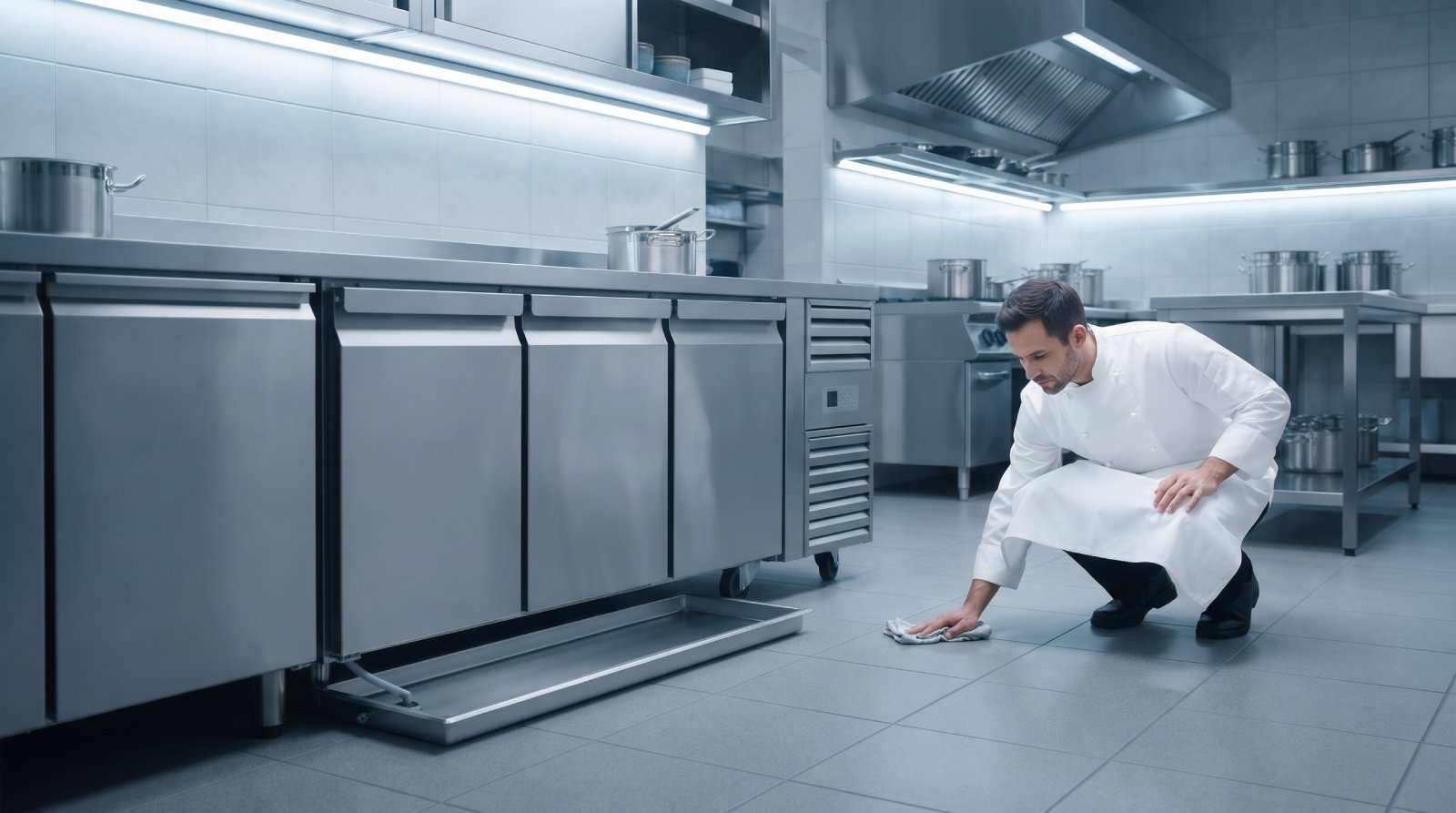
| Water on the cabinet floor or under the unit | Melted frost is not reaching the drain, or the drain is blocked. |
Left alone, a heavily frosted coil can turn into a solid block of ice, and the cabinet can no longer hold a safe temperature. Chilled food must be kept at 8°C or below by law in England, Wales and Northern Ireland, and the Food Standards Agency recommends a fridge setting of 5°C or below, so a coil that cannot breathe quickly becomes a food safety problem as well as an energy problem.
📖 Related reading: How to Keep Your Display Fridge Running Efficiently
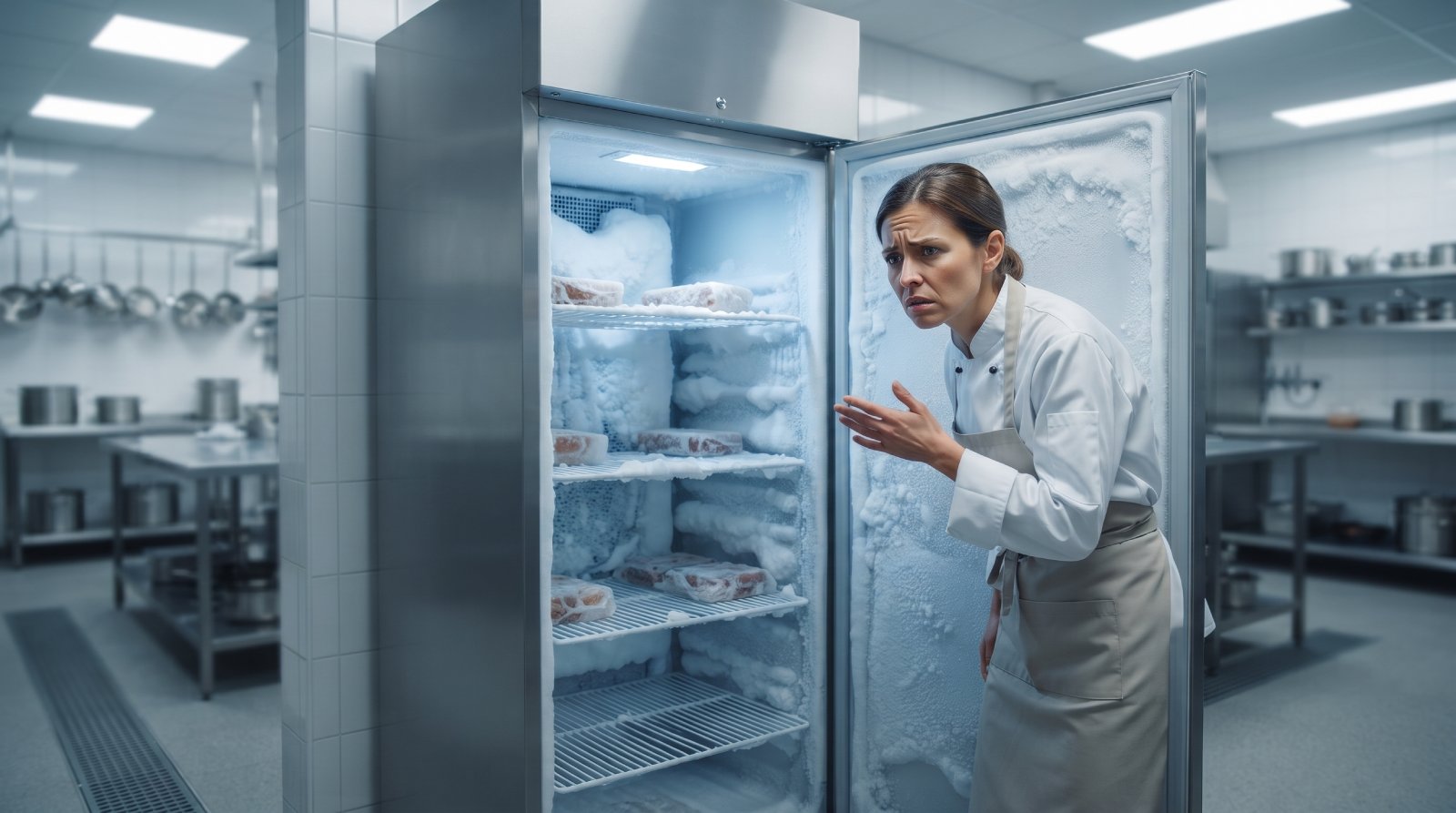
The Main Defrost Methods: Off-Cycle, Electric and Hot-Gas
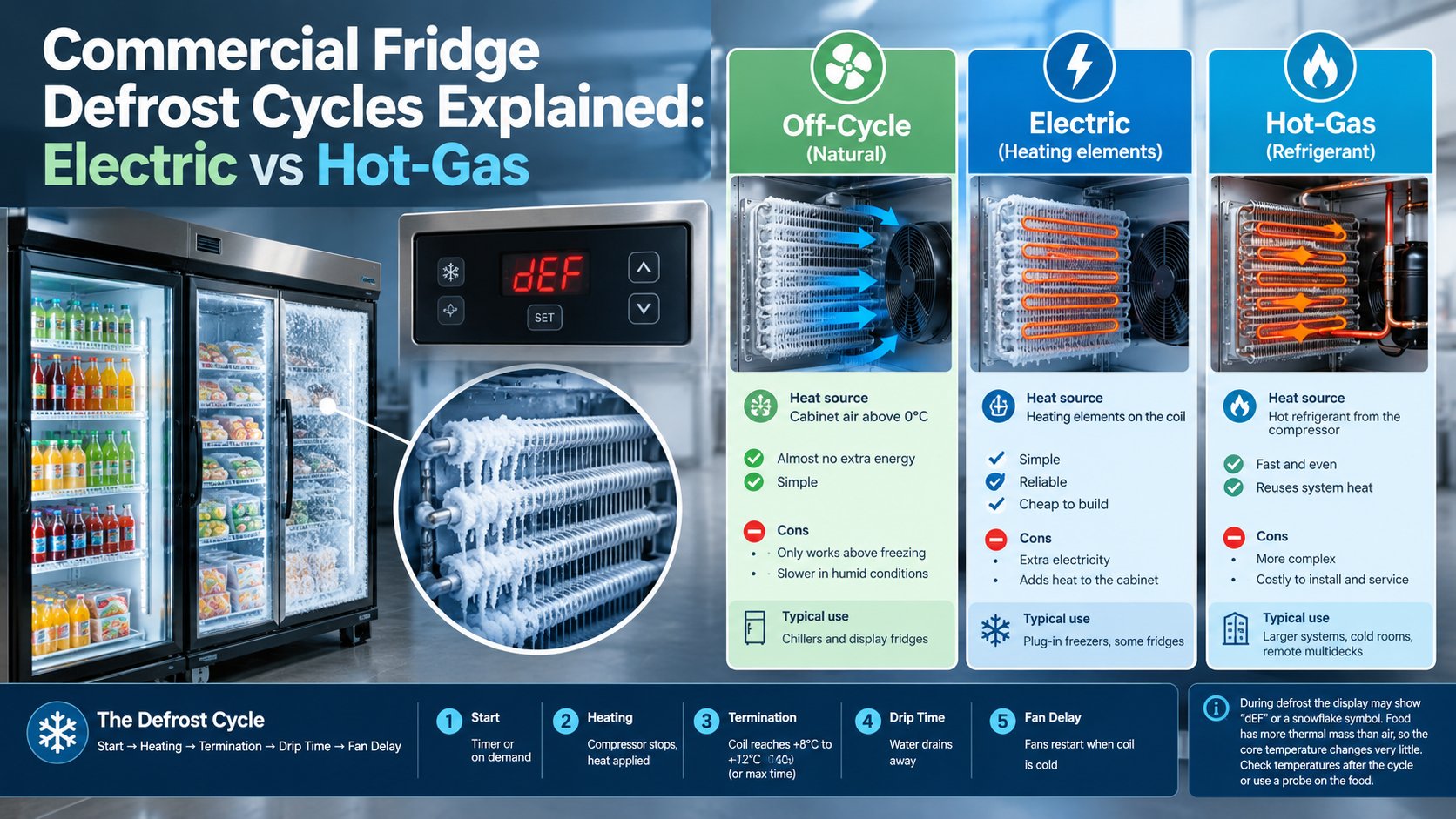
A defrost cycle simply warms the coil above 0°C for long enough to melt the frost, lets the water drain away and then restarts normal cooling. The difference between the methods is where the heat comes from.
Off-cycle (natural) defrost
In most chillers that hold food above 0°C, the controller just stops the compressor for a set time while the evaporator fans keep running. The cabinet air, which is a few degrees above freezing, flows over the coil and melts the frost. It needs no extra heaters, so it costs almost nothing in energy, but it only works when the cabinet air is warm enough to melt ice. That is why it suits fridges, not freezers.
Electric defrost
Most plug-in freezers, and some fridges in humid locations, have electric heating elements fixed to or beside the evaporator coil, often with a second small heater on the drain line so the meltwater does not refreeze on its way out. During defrost the compressor stops, the fans usually stop so heat is not blown into the food, and the heaters switch on until the coil is clear. Electric defrost is simple and reliable, but every watt the heaters use, and every bit of heat that escapes into the cabinet, has to be paid for twice: once to make the heat and again to remove it afterwards.
Hot-gas defrost
Hot-gas defrost uses heat the system already has. A valve sends hot refrigerant gas from the compressor discharge straight into the evaporator, warming the coil from the inside. Because the heat starts inside the tubes, where the frost is attached, defrost is usually quicker and more even than with external heaters. The downside is complexity: extra valves, pipework and controls, careful design so liquid refrigerant does not return to the compressor, and a qualified engineer to set it up. You will mostly find hot-gas defrost on larger systems, walk-in cold rooms and remote multideck installations, rather than small plug-in cabinets.
| Method | Heat source | Typical use | Pros | Cons |
|---|---|---|---|---|
| Off-cycle | Cabinet air above 0°C | Chillers and display fridges | Almost no extra energy; simple | Only works above freezing; slower in humid conditions |
| Electric | Heating elements on the coil | Plug-in freezers, some fridges | Simple, reliable, cheap to build | Extra electricity; adds heat to the cabinet |
| Hot-gas | Hot refrigerant from the compressor | Larger and remote systems, cold rooms | Fast and even; reuses system heat | More complex and costly to install and service |
Many modern cabinets also melt condensate in an evaporation tray heated by the hot gas line or a small heater, so the water disappears instead of needing a floor drain. Check the manual or the product page for your model to see which defrost method and drainage it uses.
Inside a Defrost Cycle: Start, Termination and Drip Time
Whatever the method, a defrost cycle follows the same basic steps, managed by the cabinet’s electronic controller (or, on older equipment, a mechanical timer).
- Start. Most commercial cabinets start defrost on a timer, for example every six to eight hours, or at fixed times of day. More advanced controllers start it on demand.
- Heating. The compressor stops and heat is applied by cabinet air, heaters or hot gas. Fans are usually stopped on freezers.
- Termination. A probe on the coil ends the defrost when the coil reaches a set temperature, often around +8°C to +12°C, so it is clearly above freezing. A maximum time acts as a safety limit in case the probe fails.
- Drip time. Everything pauses for a few minutes so the last water can run off the fins and into the drain.
- Fan delay. Cooling restarts, but the fans wait until the coil is cold again, so they do not blow warm, wet air and water droplets into the cabinet.
During defrost the air temperature inside the cabinet rises for a short time, and many controllers show “dEF” or a snowflake symbol. Food has much more thermal mass than air, so the core temperature of well-chilled or frozen products barely changes. This is worth knowing when you record temperatures: if you read the display in the middle of a defrost, you may see a misleadingly high figure. Check again once the cycle has finished, or use a probe thermometer on the food itself.
Defrost Settings and the Energy Trade-Off
Every defrost costs energy, and so does every hour a frosted coil runs inefficiently. The art of defrost control is finding the point where the two are balanced.
Too few defrosts let frost build up, so the compressor runs longer, airflow falls and the cabinet temperature drifts. Too many, or too long, waste heater energy, add heat to the food and give the compressor extra work to pull the temperature back down.
Here is a simple illustration for a plug-in freezer with electric defrost. The figures are examples only, so ask for the real heater rating and settings for your model.
| Example | Value |
|---|---|
| Defrost heater rating | 600 W |
| Defrost length | 25 minutes |
| Defrosts per day | 3 |
| Heater energy per day | 0.6 kW × 0.42 h × 3 ≈ 0.75 kWh |
| Heater cost per year at 25p per kWh | about £68, before the extra compressor work to remove that heat |
Cut one unnecessary defrost a day and you save around a third of that cost on a single cabinet. Multiply it across several freezers and the savings add up. Our free running cost calculator lets you test different energy figures for your own equipment.
Demand (adaptive) defrost goes further. Instead of defrosting by the clock, the controller watches signals such as coil temperature, how long the compressor has been running or how often the doors open, and only defrosts when frost has actually built up. In a quiet period it may skip defrosts altogether; on a hot, busy Saturday it defrosts more often. Our articles on how smart commercial refrigerators work and how smart sensors reduce energy waste explain how connected controllers make these decisions.
Defrost settings should only be changed by a competent refrigeration engineer. Members of the Institute of Refrigeration and F-gas certified technicians can check that the settings suit your site, your products and your opening hours, for example timing defrosts for quiet periods or overnight rather than the lunchtime rush.
How to Reduce Frost Build-Up in Your Business
The best defrost cycle is the one your fridge does not need. These habits cut the moisture that reaches the coil:
- Keep doors closed. Open them briefly, never prop them open during restocking, and check that self-closing doors shut fully.
- Cover and wrap food. Lidded containers and wrapped products give off far less moisture.
- Cool hot food before it goes in. Hot food releases a lot of steam. Cool it quickly, ideally within 90 minutes, then refrigerate. Our food cooling log helps you record it.
- Do not block the vents. Overloaded shelves and boxes pushed against the back panel stop air reaching the coil. Our article on airflow rules for food storage shows where to leave space.
- Check door seals. Run a sheet of paper around the door: if it slides out easily when closed, the gasket is not sealing.
- Use night blinds on open displays. Night blinds keep warm, humid air out of multidecks when the shop is closed.
- Mind the location. Keep cabinets away from ovens, dishwashers, doors to the street and direct sunlight, and stay within the cabinet’s climate class.
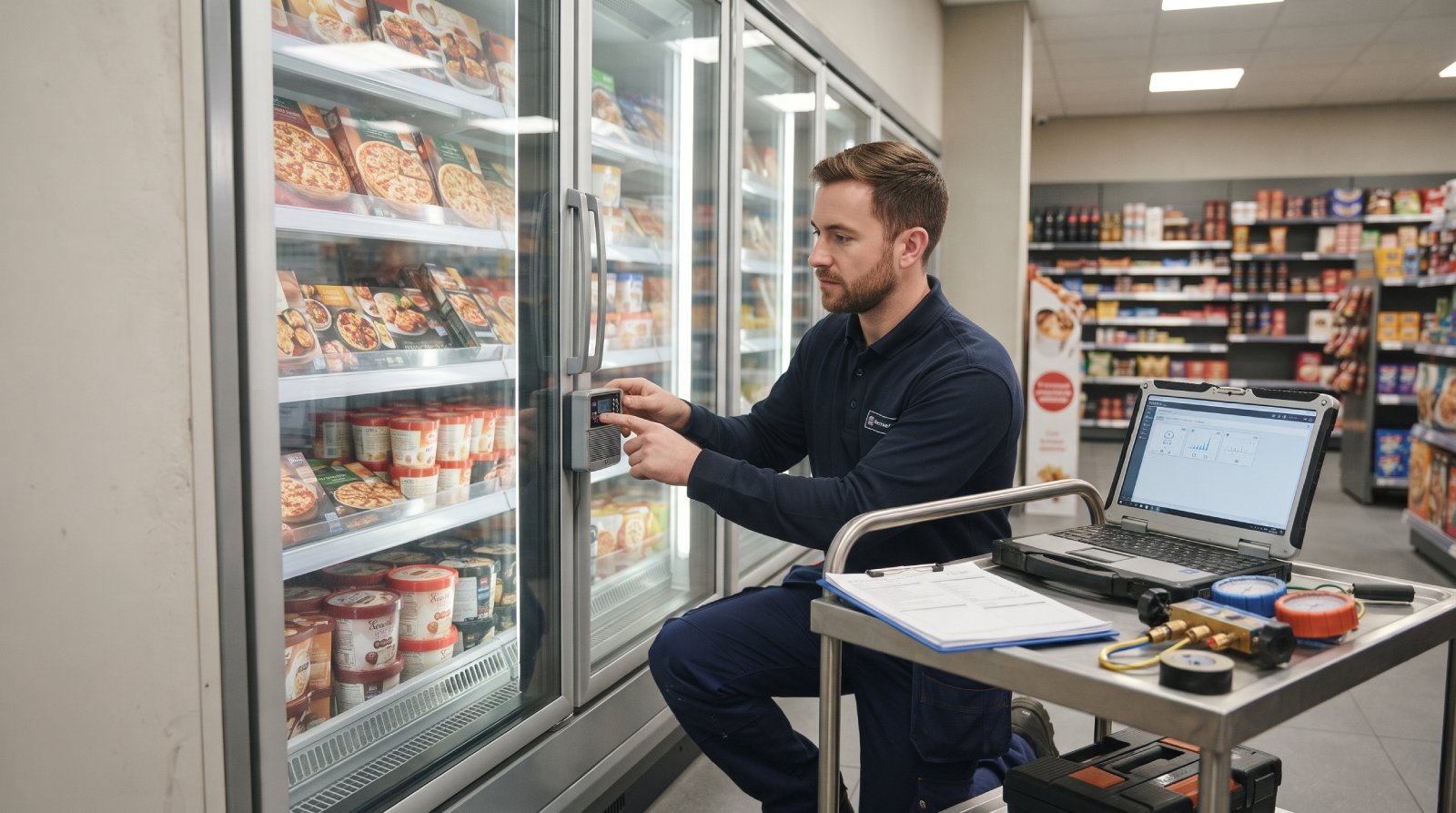
- Keep the drain clear. Check the drain hole and tray during your weekly clean.
For more ways to cut your bills, read our guide on how to make your commercial refrigerator more energy efficient and our explanation of the coefficient of performance.
Common Defrost Problems and Their Warning Signs
When defrost stops working properly, frost and ice build up quickly. These are the faults engineers find most often:
- Failed defrost heater. Ice builds up on the coil in a solid block, often more on one side than the other.
- Faulty termination probe. The defrost ends too early and leaves ice behind, or runs too long and warms the cabinet.
- Timer or controller fault. Defrost never starts, or starts far too often.
- Blocked or frozen drain. Meltwater refreezes in the base of the cabinet or overflows onto the floor. A failed drain line heater is a common cause in freezers.
- Fans starting too soon. Water droplets are blown off the coil and freeze on the ceiling, products or fan blades.
- Damaged door gaskets. Humid air leaks in all day, so frost builds faster than any defrost can clear. See our guide to cleaning commercial refrigerator door gaskets.
Never chip ice off a coil with a knife or scraper. One puncture in a tube means a refrigerant leak and an expensive repair. If the coil is iced solid, move the food to another cabinet, switch the unit off with the doors open, let it melt fully with towels in place, then call an engineer to find the cause.
Many of these faults involve replaceable parts such as switches and controllers and door gaskets. A planned service once or twice a year catches them before they cost you a cabinet of stock.
Frequently Asked Questions
What is a commercial fridge defrost cycle?
A commercial fridge defrost cycle is a timed or sensor-controlled period in which the cabinet stops cooling and warms the evaporator coil above 0°C to melt the frost on it. The water drains away, then normal cooling restarts.
How often should a commercial freezer defrost?
Many commercial freezers defrost every six to eight hours, often three or four times a day, but the right frequency depends on the cabinet, the room conditions and how often the doors are opened. Demand defrost controllers adjust it automatically. A refrigeration engineer should set or change it.
What is the difference between electric and hot-gas defrost?
Electric defrost uses heating elements on or near the evaporator coil. Hot-gas defrost sends hot refrigerant gas from the compressor through the coil, so it heats the coil from the inside and is usually faster, but the system is more complex. Electric defrost is common on plug-in freezers; hot-gas defrost is common on larger and remote systems.
Is it normal for the temperature to rise during a defrost cycle?
Yes. The air temperature inside the cabinet rises briefly during a defrost cycle, and the display may show “dEF”. Well-chilled or frozen food changes very little because it holds much more cold than the air. Record temperatures after the defrost has finished, or probe the food itself.
Why is my commercial freezer still icing up after defrost cycles?
If a commercial freezer still ices up, the defrost cycle may not be working (failed heater, probe, timer or controller), the drain may be blocked or frozen, or humid air may be leaking in through damaged door gaskets. Move the food, switch the unit off to melt the ice and ask an engineer to find the cause.
Do defrost cycles increase energy bills?
Defrost cycles use some energy, especially electric defrost, but a frosted coil wastes even more by making the compressor run longer. Correct defrost settings, demand defrost and good habits such as keeping doors closed and covering food keep the total cost as low as possible.
Keep Frost Under Control and Your Costs Down
Frost is a normal by-product of refrigeration, and commercial fridge defrost cycles are the system that keeps it in check. Understanding how off-cycle, electric and hot-gas defrost work helps you spot problems early, set sensible expectations for your temperature checks and ask the right questions when you buy or service equipment.
Reliable defrost starts with well-designed equipment. Display-Fridge Wholesale supplies commercial fridges and commercial freezers by Frost-Tech to shops, cafés, pubs, restaurants and hotels across the United Kingdom at wholesale prices, from our base in Buckingham. Browse our glass door display freezers, upright storage freezers and chest display freezers, or our upright storage fridges, under-counter fridges and multideck open fridges. We also stock spare parts including controllers, gaskets and night blinds.
Explore our free food safety and refrigeration resources, read our FAQ or call us on 01280 852139 and we will help you choose the right fridge or freezer for your business.
👉 SHOP OUR COMMERCIAL FREEZERS